


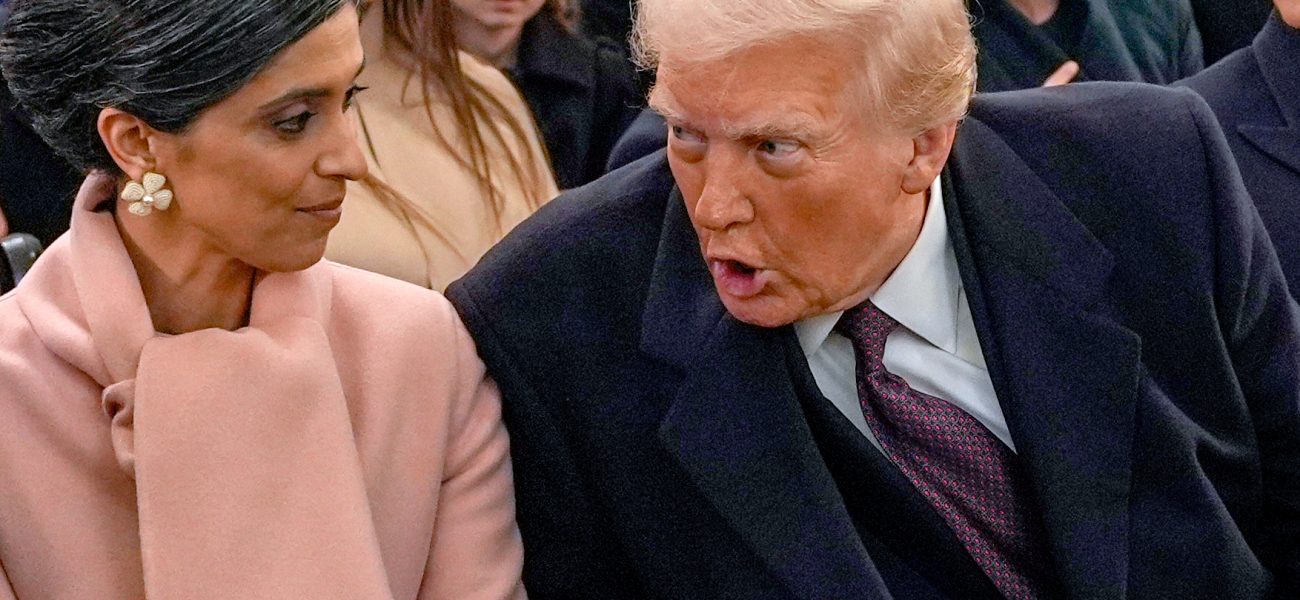
Trump’s Fable: Podcast Performance Blurs Policy and Playtime
POLICY WIRE — Washington D.C., USA — The peculiar dance of modern American politics found itself a new stage this week: a podcast. Specifically, that hosted by Usha Vance—wife of Senator J.D....

POLICY WIRE — Washington D.C., USA — The peculiar dance of modern American politics found itself a new stage this week: a podcast. Specifically, that hosted by Usha Vance—wife of Senator J.D. Vance—where former President Donald J. Trump didn’t drop a policy bombshell. No, he read a children’s book. Not just any book, but one aimed squarely at a demographic unlikely to be found tuning into political audio streams: the kindergarten set. It was a moment, surely, for the ages. Or, at least, for the campaign highlights reel.
It’s all part of the act, isn’t it? The former President, a figure synonymous with bombast and executive orders, settling in to narrate a tale for toddlers. After the storytelling, he veered into his usual freewheeling reflections on past presidents—always measured against himself, naturally—and his own perceived successes. An electoral strategy, perhaps, to demonstrate range, or maybe just a bit of light relief from the relentless grind of campaign rallies and court dates. Whatever it was, it wasn’t quiet. But then, when is anything with him?
“Nobody does media like me. Nobody. They talk about traditional interviews, sure, but what about reaching real Americans where they’re?” President Trump reportedly remarked, in a way only he can, to campaign aides following the appearance. “People love seeing this side. They’re tired of the doom and gloom, the deep state—all of it. They just want someone to connect with. And I do that better than anyone.”
This unconventional pivot towards softer media appearances, some political observers contend, isn’t entirely new. But its timing feels quite deliberate. It’s a distinct play for voter affections, a departure from the combative posture that usually defines his public persona. One might even call it a strategic vulnerability display—a way to chip away at negative perceptions, painting him not as a perpetual fighter, but as a grandparent. A grandfather, mind you, with access to nuclear codes, but a grandfather nonetheless.
“We’re not in a traditional political environment, are we?” noted Alyssa Chambers, a veteran Republican strategist based in Ohio, speaking to Policy Wire. “Our candidates need to engage differently. This isn’t about winning debates; it’s about winning hearts, even if it means reading to kids. It’s showing humanity, showing he’s not just the guy from the rallies. It’s smart. And it’s getting noticed, isn’t it?”
Indeed, a 2023 study by Pew Research Center indicated that nearly half of all American adults, 48%, now regularly listen to podcasts, showcasing the broadening, often intimate, reach of digital audio platforms far beyond conventional news cycles. It’s a vast landscape where narratives, no matter how whimsical, can take root. Because if you’re not talking to people where they’re, well, then you’re not talking to them at all.
But many Democrats weren’t buying the wholesome veneer. “It’s pure optics, a thinly veiled attempt to distract from his serious legal challenges and the chaos he brings,” countered State Representative Fatima Khan, a Democratic voice from Michigan known for her advocacy in Muslim-American communities. “While he’s spinning fables on podcasts, families are worried about their livelihoods, and our nation’s standing with crucial partners like Pakistan—partners where stability is always a tightrope walk—remains a persistent, serious concern for many. It’s disheartening to see the political discourse so easily diverted.” Her observation rings true; the international community, including leadership in Islamabad, frequently scrutinizes American political theater, weighing its domestic eccentricities against perceived stability and policy consistency abroad. For nations navigating their own complex geopolitical landscapes, such displays don’t always inspire confidence.
And let’s not forget the sheer irony. A former commander-in-chief, whose political brand is often built on eschewing norms, embracing precisely the kind of homespun media strategy that once seemed unimaginable for a presidential candidate. The whole affair reminds you that what makes headlines isn’t always the pressing policy debate, but often the unexpected human (or seemingly human) touch. It’s messy, it’s theatrical, — and it’s terribly effective at cutting through the noise.
What This Means
This podcast appearance by Donald Trump, reading a children’s book and then launching into familiar territory, isn’t just a quirky sidebar. It’s a shrewd, calculated move within a campaign strategy acutely aware of media fragmentation — and voter cynicism. Politically, it aims to soften his image, casting him as a relatable, even benign, figure amidst the constant barrages of criticism and legal entanglements. It’s about cultivating an emotional connection that transcends policy discussions. This could potentially resonate with undecided suburban voters or those feeling fatigued by conventional politics, particularly women and parents who might not engage with traditional political programming. It shows a candidate willing to break the mold again, which has always been his particular brand. Economically, these sorts of engagements, while not directly impactful on market dynamics, contribute to a broader perception of his campaign’s resilience and adaptability, influencing donor confidence and grassroots enthusiasm. And these alternative media channels—like podcasts—are incredibly cheap to produce and distribute compared to traditional ad buys. For a candidate with immense name recognition, it’s a high-impact, low-cost way to reach an enormous, engaged audience.
Internationally, however, such performances contribute to an image of American political leadership that can be perceived as increasingly unserious, almost farcical. For allies and adversaries alike, navigating the serious issues of global trade, regional conflicts, and diplomatic agreements, a leader known for such theatrics can either be seen as uniquely engaging or alarmingly unpredictable. Nations in volatile regions, watching for signs of stability and principled governance, often read into these signals. The blurred line between political showmanship and serious leadership doesn’t always translate well on the global stage. It’s a gamble, always, but one he’s clearly comfortable making.