


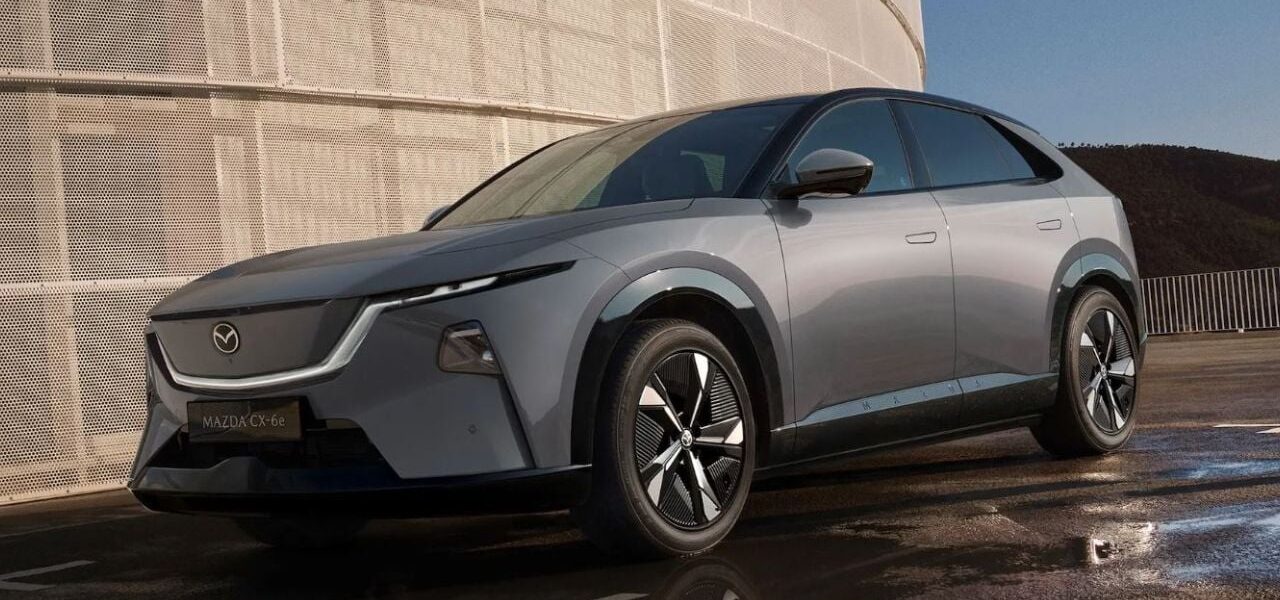
Mazda Calls EV Boom a ‘Temporary Spike’
Mazda's chairman calls the EV sales surge a 'temporary spike.' Explore challenges to mass adoption, from infrastructure to cost, and Mazda's multi-solution strategy.

POLICY WIRE — Tokyo, Japan — For years, the automotive industry has hummed with the electrifying promise of an all-EV future, a green utopia paved with charging stations and silent motors. Investment rounds balloon. Government mandates pile up. And then there’s Mazda.
It’s not exactly a renegade outfit, but its chairman, Masahiro Moro, has just uncorked a statement that could leave the cheerleading squad for battery-powered cars feeling a bit deflated. Moro reckons the recent surge in EV sales? It’s just a “temporary spike.” Not a paradigm shift. Not a full-blown revolution. A spike. Small word, enormous implications, especially when the entire planet is supposedly hurtling towards a zero-emissions transport grid. But he’s not alone in this cautious take, not entirely.
This isn’t just about Mazda being a laggard; they’ve been at the forefront of internal combustion efficiency for ages. But now, it seems, their strategy — a mix of hybrids, cleaner ICEs, and targeted EVs — looks less like hedging and more like a carefully considered, if not a tad contrarian, roadmap. Moro, speaking with an almost disarmingly dry frankness, seems to suggest the current excitement overshadows some messy realities. And those realities? They’re stark.
“We see a different road ahead, one where the immediate ‘gold rush’ mentality might well trip over its own feet. Hybrids? They’re the sensible shoes for this journey, not a detour,” Moro is rumored to have conveyed during a recent private briefing, echoing the company’s persistent belief in a multi-solution approach to decarbonization. Because, let’s face it, one size rarely fits all.
Charging infrastructure, particularly outside of hyper-developed urban cores, remains a Wild West. Purchase prices are still stubbornly high. And the supply chains for raw materials — lithium, cobalt, nickel — are as geopolitically tangled as an old fishing net after a hurricane. Many consumers, those outside the early adopter bubble, are looking at these issues, scratching their heads, and sticking with what they know. The novelty? It wears off when the electricity bill lands or when a cross-country trip requires a strategic planner and an existential crisis.
This isn’t merely an academic debate playing out in Tokyo boardrooms. Take a country like Pakistan. They’ve been trying to incentivize EV adoption, aiming for a quarter of all vehicles to be electric by 2025. Grand ambitions, right? But the hurdles are immense: an unreliable electricity grid, sparse charging infrastructure outside major cities, and the steep upfront cost of EVs for a population with constrained incomes. Imported second-hand EVs might offer some respite, but it’s hardly the mass market shift Western markets envision. It’s a very different set of priorities, a completely different game.
“The global south deserves reliable, affordable transport options that genuinely address their needs, not just a one-size-fits-all export strategy. Sometimes, the enthusiasm of the few outweighs the pragmatic requirements of the many,” a policy analyst specializing in developing markets, Dr. Zara Khan from the Institute for Energy Futures in Islamabad, remarked, summing up the exasperation felt in many emerging economies. But Europe, meanwhile, keeps its foot firmly on the accelerator pedal of full electrification. “The data is clear. Our collective future hinges on a rapid pivot to zero-emission vehicles. Any skepticism now feels like clinging to the past while the planet burns,” European Environment Commissioner Helga Schmidt stated recently, reaffirming the EU’s unwavering commitment to aggressive emissions targets.
📄 POLICY WIRE WHITEPAPER PUBLISHED: PAKISTAN'S NATIONAL SECURITY POLICY PRIORITIES
👉 READ BY CLICKING HEREThe numbers don’t lie. For example, while global EV sales surged by over 60% in 2022, traditional hybrid sales also saw significant growth, hitting record numbers in several markets as reported by Bloomberg Intelligence. People aren’t necessarily ditching internal combustion; they’re augmenting it, hedging their bets. Mazda seems to be reading that tea leaf pretty intently.
What This Means
This declaration from a seasoned auto executive isn’t just corporate musing; it carries policy weight. For governments hell-bent on aggressive EV timelines, it’s a stark reminder that market adoption isn’t just about mandate; it’s about consumer psychology, infrastructure reality, and economic feasibility. The political implications are palpable: too fast a transition, and you risk a consumer revolt or, worse, a lopsided energy grid that can’t handle demand. Economically, a slower, more measured pace suggests a longer life for traditional engine components and—perhaps a re-evaluation of massive, singular investments—in just one technology. Oil-producing nations might breathe a sigh of relief, if only temporarily, while mineral-rich countries involved in lithium or cobalt extraction might see their projected windfalls spread out over a longer period. It also shines a light on trade policies; what cars are best suited for export to markets that lack Western infrastructure? Because it’s not always the fully electric dream machines that are moving off the lot. And that’s the bottom line, isn’t it?
The debate isn’t over. Not by a long shot. The road to decarbonization is still being paved, — and apparently, there’s more than one route to get there.