

Exit in Charlotte: Scotland’s Tartan Dreams, Unfurled Far from Home
POLICY WIRE — Charlotte, USA — When a national football coach steps down, you generally picture a damp press conference back home. Perhaps in some grey, imposing stadium or a soulless FA...

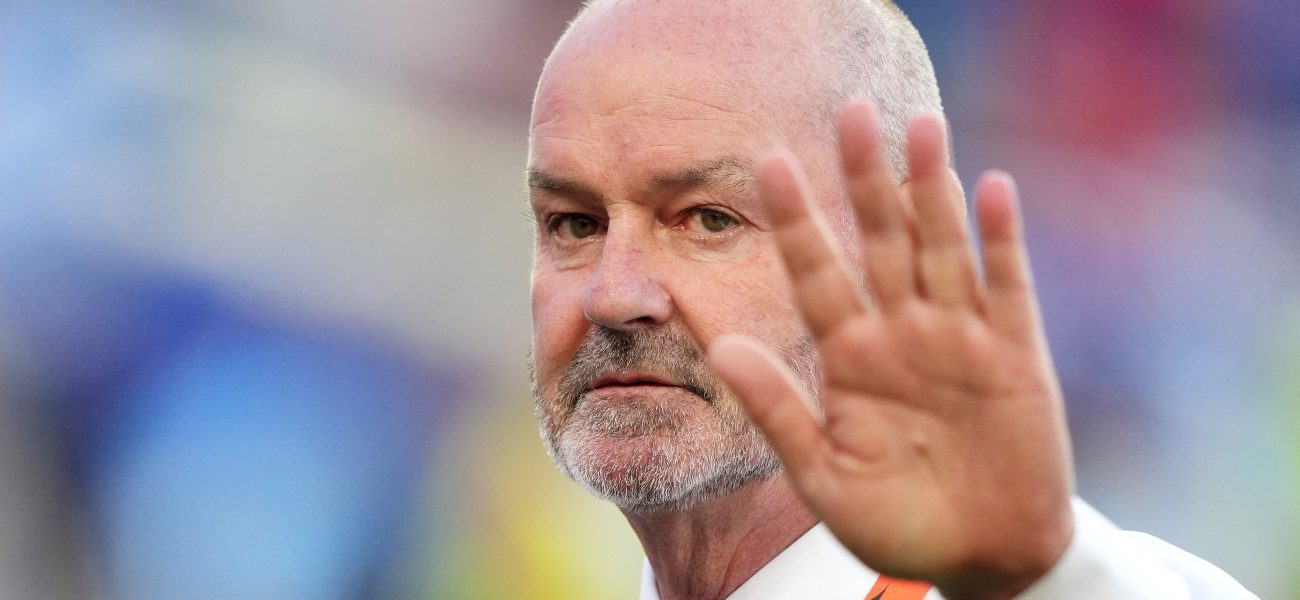
POLICY WIRE — Charlotte, USA — When a national football coach steps down, you generally picture a damp press conference back home. Perhaps in some grey, imposing stadium or a soulless FA headquarters. Not Steve Clarke, though. His seven-year stewardship of the Scotland squad—a tenure that brought improbable hope and gallons of national pride—flickered out, strangely enough, in Charlotte, North Carolina. Half a world away from the misty, rain-swept pitches of Scotland.
It’s an oddly fitting curtain call, isn’t it? The dream, often so tantalizingly close, ending far from the adoring (or often, despairing) throngs of the Tartan Army. Clarke penned an emotional, candid missive from the squad’s American base camp, addressing the fervent faithful. His words laid bare the journey, from taking on a “poisoned chalice” to uniting a nation through the beautiful game. Because, let’s face it, Scottish football has a way of turning everyone into a cynic, even if just for a moment.
Clarke’s reign, which culminated in three major tournament qualifications—a feat unseen in decades—proved that national teams, much like geopolitical alliances, thrive on stability and a dash of calculated risk. He engineered Scotland’s first World Cup finals win in 36 years—a milestone the Scottish Football Association’s historical records confirm. Quite the turnaround from the dark ages, wouldn’t you say?
“Steve delivered beyond what many thought possible for a nation often battling above its weight,” mused Ian Maxwell, Chief Executive of the Scottish FA, in a statement obtained by Policy Wire. “But the expectation, especially after our recent World Cup journey, just keeps climbing. We owe him a great debt, but the future calls.” That’s the cold reality of the top job; yesterday’s miracles are today’s minimum requirement.
And what about the faithful? The ‘Tartan Army,’ an almost mythic entity of blue-and-white clad supporters, traversed continents to watch their lads. They arrived in Germany for the Euros, then in America for the World Cup—even for that disappointing goalless draw against England back in 2021, when COVID restrictions robbed Wembley of their tens of thousands. Clarke rightly championed their passion. He understood. That connection, from an apathetic Hampden Park to roaring stadiums across the Atlantic, it’s what he considered his greatest triumph.
“The impact Steve Clarke had on unifying Scotland, even through football, shouldn’t be underestimated,” commented Fiona Hyslop MSP, Cabinet Secretary for Culture, Tourism and External Affairs. “In a world often fractured, these shared national moments, however brief, truly matter. We’ll certainly miss his steady hand.” Such sentiments always follow, especially when the scoreboard didn’t quite reflect the effort.
📄 POLICY WIRE WHITEPAPER PUBLISHED: PAKISTAN'S NATIONAL SECURITY POLICY PRIORITIES
👉 READ BY CLICKING HEREBut the raw emotion of Clarke’s exit also raises broader questions about national identity and sporting ambition, particularly for smaller nations navigating a global stage dominated by economic superpowers. Think of the intense footballing cultures across South Asia—nations like Pakistan, with an estimated 220 million people, where local club structures are nascent, but English Premier League matches draw massive, passionate audiences. They, too, understand the deep yearning for national sporting success, even if it’s currently focused on cricket rather than football. The ability of sport to act as a powerful unifier, a form of soft power and national self-expression, resonates far beyond Scotland’s borders. And in this increasingly interconnected world, where results flash instantly across time zones, Scotland’s on-field struggles, and Clarke’s departure, get noticed everywhere.
What This Means
Clarke’s departure, effective immediately, plunges the Scottish FA into an unpredictable, almost immediate search for a successor. The next manager won’t just be inheriting a team but a rekindled national spirit, yet also a sharpened expectation. The political implications? Success in sports often offers a potent, if ephemeral, balm for societal anxieties. For the Scottish government, continued qualification for major tournaments is an invaluable source of national pride, offering moments of collective celebration that transcend day-to-day politics. Conversely, a regression could deflate morale, adding to other domestic pressures.
Economically, the absence of Scotland from major tournaments has a tangible cost: less tourism from travelling fans, reduced merchandising, and a quieter domestic broadcasting market. The ‘Tartan Army’ is a significant economic engine, a mobile, vocal contributor to local economies wherever Scotland plays. Losing that presence, as nearly happened pre-Clarke, isn’t just about football; it’s about tourism revenue and national branding. The onus is now squarely on the Scottish FA to secure someone capable of not only winning games but—perhaps more importantly—sustaining this fragile, rediscovered connection between a team and its people, ensuring those economic benefits don’t vanish with Clarke’s Charlotte-based goodbye. It’s a management decision that’ll ripple out far more widely than just who lines up at Hampden next season. This isn’t just a sport; it’s part of the national identity, intertwined with larger geopolitical narratives and perceived stature on the global stage. Whoever comes next, they’ve got their work cut out for them, don’t they?