


World Cup Tech: Is AI Ruining Football?
The World Cup's algorithmic decisions spark controversy. Is advanced tech ensuring fair play or eroding football's human spirit? Policy Wire investigates the future of sports.

POLICY WIRE — TORONTO, Canada — They call it the beautiful game, yet increasingly, its most gut-wrenching climaxes are adjudicated not by a fallible human eye, but by the relentless, emotionless logic of a silicon chip. Deep into added time during a recent World Cup clash, Croatia’s Josko Gvardiol thought he’d scored the equalizer against Portugal, a moment of unadulterated elation for players and fans. The referee initially agreed. Then came the chilling silence, the digital inquest, and finally, the void—a goal scrubbed from history by a barely perceptible contact detected by sensors unseen.
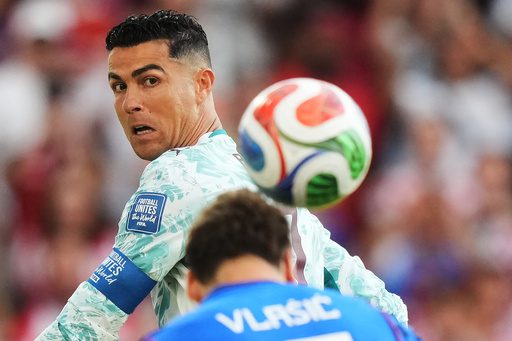
It was a micro-touch, a whisper of a graze on Igor Mantanovic’s head before Mario Palasic’s crucial offside, according to the officiating overlords. The world saw nothing—not with the naked eye, not even in slow-motion replays, no matter how many angles one squinted at. But the ball, the Adidas-manufactured “Trionda,” did. Because it had to. It’s got a small inertial measurement unit (IMU) sensor humming within it, you know, capturing data a staggering 500 times per second, at around 500Hz, as FIFA says. This little marvel tracks everything: ball acceleration, granular movements across three dimensions, pinpointing the exact microsecond any player makes contact. That’s what decided Croatia’s fate; that’s what sent Portugal into the round of 16.
And what a controversy it’s brewed. This connected ball technology—it isn’t new. FIFA put it to work in the 2022 World Cup, then at the 2024 men’s European Championship. But this latest incident? It’s pushed the simmering debate right to a rolling boil. On one hand, you’ve got professor Manos Tentzeris from Georgia Tech’s school of electrical and computer engineering, insisting the precision is virtually perfect. [QUOTE_PLACEHOLDER] he was quoted telling The AP. It’s a clean, cold, unimpeachable certainty in an arena famous for its passionate arguments.
But the human element, where does that go? Croatia coach Zlatko Dalić captured the despair succinctly: [QUOTE_PLACEHOLDER] And he wasn’t alone in that sentiment. Earlier, Denmark coach Kasper Hjulmand had similar feelings when his side was dealt a digital blow in Euro 2024. Joachim Andersen’s handball was flagged, a penalty awarded, Germany scored, — and Denmark’s chances deflated. [QUOTE_PLACEHOLDER] Hjulmand pronounced, his words echoing across locker rooms where tradition fights an uphill battle against technological incursion.
This tech, mind you, doesn’t just sniff out offsides. Nope. It works with a battalion of in-stadium cameras, transmitting real-time tracking data to those video assistants lurking off-field. Handballs, penalties—it’s all fodder for the algorithms. They’ve even got this “heartbeat graphic” display, a stark visual that shows officials when and where a touch occurs. It’s efficient, sure, — and minimizes obvious human error, that’s the pitch anyway. But it also creates a new kind of fallibility—a trust in the invisible, the inscrutable, the non-negotiable data point that leaves no room for human interpretation, let alone redemption. And let’s be honest, those visual confirmations, the ones fans desperately hunt for, were visually inconclusive. So we’re supposed to simply believe the machine.
The push for such advanced digital oversight isn’t contained to the West, either. The global football community, stretching from the stadiums of Brazil to the passionate fan bases in Lahore, Pakistan, watches these developments closely. Think about the cultural weight football carries in many parts of South Asia and the Muslim world, where a match result can mean everything from local pride to national identity. The introduction of highly expensive, technologically demanding systems can raise questions of equity and accessibility across the sport’s broader ecosystem, particularly for developing leagues that may struggle to afford the initial investment and ongoing maintenance of such infrastructure. Beyond that, the broader implications for the perceived integrity of the game—that elusive ‘joy’—in cultures that value spontaneous human drama over clinical exactitude, remains a vexing policy question. Will a world governed by machine accuracy eventually alienate the very fan base it claims to serve?
📄 POLICY WIRE WHITEPAPER PUBLISHED: PAKISTAN'S NATIONAL SECURITY POLICY PRIORITIES
👉 READ BY CLICKING HEREWhat This Means
The burgeoning integration of hypersensitive technology into sports isn’t just about fair play; it’s a profound political and economic shift. It signals a move towards what you might call algorithmic governance—not just in football, but across sectors. Who designs these systems? Who profits from them? And, crucially, who oversees the supervisors of these algorithms? Because right now, FIFA is both judge and jury, asserting its 99.99% accuracy claim while simultaneously reaping the economic benefits of fostering a tech-heavy game that demands specialized infrastructure and training. The stakes here stretch far beyond a World Cup qualification.
Economically, we’re looking at a burgeoning industry of sports tech, from sensor manufacturers to data analytics firms. This creates jobs, sure, but it also creates potential monopolies and raises the barriers to entry for smaller sporting nations, exacerbating the wealth gap between elite leagues and their developing counterparts. Imagine, for instance, a nation like Argentina’s Marathon Men striving for excellence, but facing technological deficits compared to European giants. It impacts player development, league sustainability, and global competition for everything, even something as basic as the Golden Boot Melee. And who’s to say a future iteration won’t monitor player biometrics, turning human performance into another data stream for commercial exploitation?
Politically, the shift hands power to a technocratic elite. The cold, impartial ‘truth’ delivered by a machine can certainly bypass human bias, that’s the theory. But it also bypasses human intuition, common sense, and the spontaneous moments of genuine, contested drama that are the lifeblood of the sport. As decision-making gets further centralized — and outsourced to black boxes, the accountability framework gets foggier. Can a coach appeal to a machine? Or protest an algorithm? The questions arising from a few pixels on a screen deciding an international match should make policy makers and sports governing bodies think twice, because what starts on the football pitch often—it doesn’t just stay there. It leaks into our broader understanding of justice — and authority. This isn’t just about football; it’s a dry run for the future of almost everything else.