


EU Border Delays: Ryanair Reveals Europe’s Systemic Strain
Ryanair exposes looming EU border chaos due to new EES and post-Brexit complexities. Learn how these systemic delays threaten Europe's economy and image.

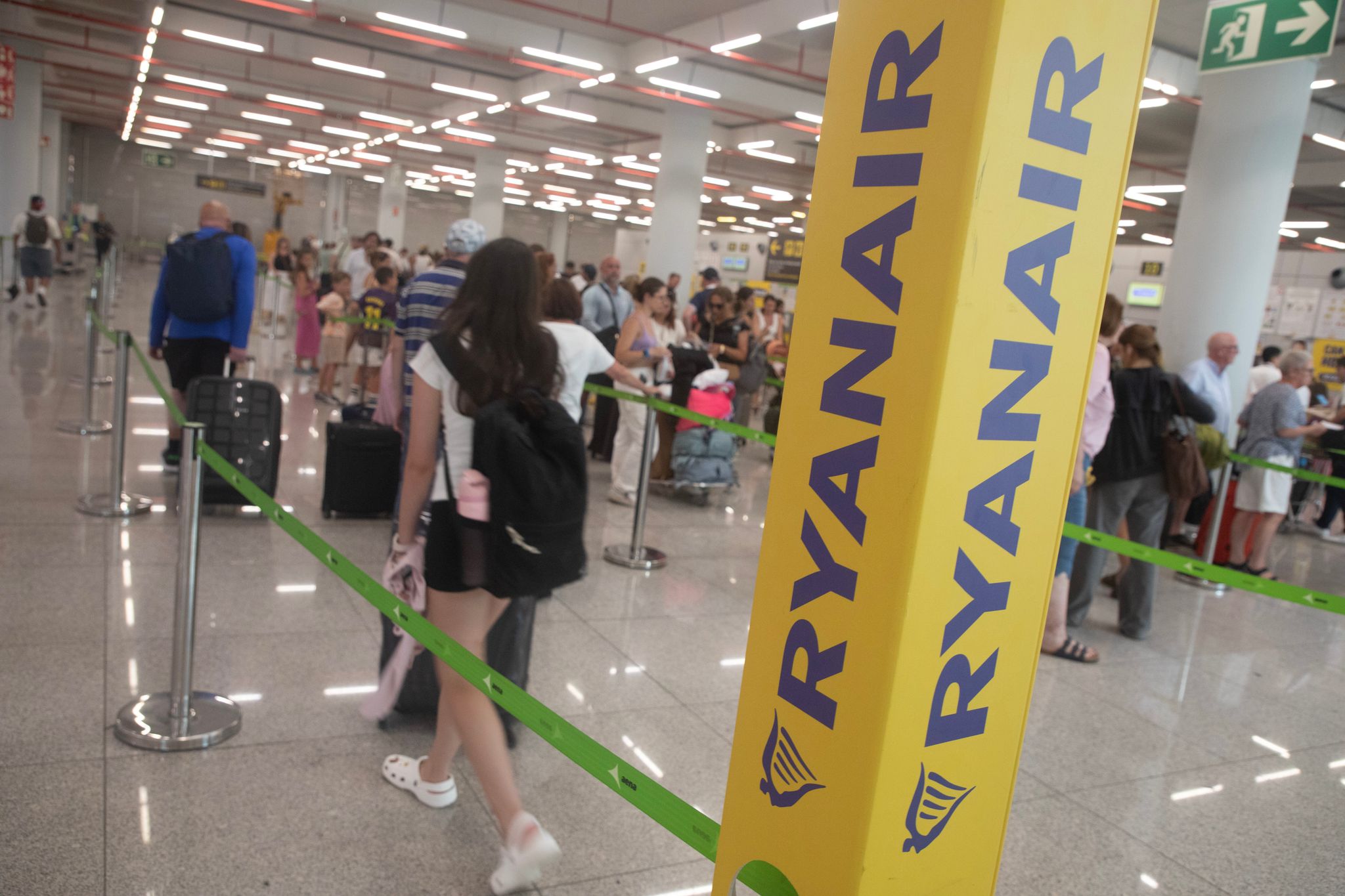
POLICY WIRE — Brussels, Belgium — The skies over Europe, perpetually a metaphor for ambition and connectivity, are instead now shadowed by the prospect of prolonged standstill. Ryanair, the continent’s colossal budget carrier, has reportedly sounded the alarm—not about typical airline woes, but a more systemic snarl: escalating queues at EU border checks in a growing list of airports.
It’s not often an airline becomes a bellwether for continental bureaucracy, but then, we aren’t living in ordinary times, are we? This isn’t just about frustrated holidaymakers or missed connections; it points to the deepening capillaries of administrative burden now choking what was once a relatively fluid travel experience. The seemingly innocuous problem of long lines quickly metastasizes into a broader indictment of post-Brexit travel complexities and, perhaps, the Schengen Area’s strained elasticity. [QUOTE_PLACEHOLDER]
While the airline’s communication specified affected airports as a litany of headaches for summer travelers and operational planners, the actual implications reach further than tarmac delays. Consider Dublin, London Stansted, Madrid, Milan Bergamo, Paris Beauvais, Porto, and Brussels Charleroi – all identified hubs where passenger throughput grinds down. These aren’t just names on a departures board; they’re gateways to major economic zones, tourism engines, and transit points connecting vast diasporas, including a substantial South Asian population now finding intra-European travel just that little bit more cumbersome. It’s a logistical bottleneck with cultural reverberations, I’d wager.
And let’s be frank: the problem, for much of officialdom, was entirely predictable. The new EES (Entry/Exit System) for third-country nationals, set to become mandatory, means biometrics and digital processing for those outside the Schengen zone. It’s a leap forward in theory for security, but an acknowledged hurdle for speed. Ryanair’s outcry now highlights a systemic failure to adequately prepare the operational ground for this seismic shift in border management. It’s akin to upgrading a motorway without widening the entry ramps.
Because, for any European capital trying to maintain its global allure, efficiency at its gateways is non-negotiable. Brussels Charleroi, for instance, serves as a significant transit point, handling millions of passengers annually. The slowdown there, or at any of these primary airports, isn’t simply an inconvenience; it’s a minor amputation to the free flow of goods and people—a fundamental tenet of the European project itself.
The situation casts a long shadow over European competitiveness, too. Remember, tourist economies depend heavily on smooth access. The World Travel & Tourism Council reported that the travel and tourism sector contributed 8.8 trillion USD to global GDP in 2019. Delays at critical hubs directly jeopardize this recovery and future growth, particularly as regions like South Asia increasingly look to European leisure and business destinations. They’ve got options, after all.
This whole situation hints at a deeper systemic sclerosis. The continent is struggling with a patchwork of national priorities attempting to conform to supra-national regulations, often without the granular coordination needed to avert precisely these kinds of pinch points. It’s not malicious intent; it’s the inevitable friction of diverse nation-states trying to function as a singular, frictionless bloc.
But when a private airline, whose very business model depends on relentless efficiency, starts publicly shaming governmental systems, you know the threshold of frustration has been well and truly crossed. It’s a pragmatic assessment, a bare-knuckles reality check for the EU, forcing them to reckon with the practical fallout of its policies and the sometimes-slow pace of public sector adaptation.
What This Means
This kerfuffle with airport queues, while seemingly an operational issue, carries significant political and economic weight. Politically, it exposes the continuing challenges of implementing unified EU border policies, especially in a post-Brexit landscape where the flow of British passengers through EU gates becomes more complex. It’s a sharp reminder of the operational debt incurred when political decisions — like the UK’s departure from the EU or the expansion of digital border controls — aren’t fully costed for ground-level impact. The backlash from major carriers like Ryanair isn’t just noise; it’s a direct plea for more coordinated action, and if ignored, it could escalate into a political football ahead of regional elections.
Economically, prolonged border delays are a drag on productivity — and an indirect tax on travel and trade. They dent Europe’s image as an accessible tourist destination, potentially diverting millions of euros in revenue to regions perceived as having fewer logistical hurdles. Think of the diaspora flying between Europe — and South Asian countries like Pakistan. Lengthy waits become deterrents, affecting family visits, business travel, and cultural exchange. It’s an economic efficiency drain we just can’t afford, particularly as global competition for tourist and business investment intensifies. If Europe wants to remain a top-tier global player, it needs to ensure its gates are welcoming, not bottlenecked. Ultimately, it’s about more than queues; it’s about the very credibility of Europe’s promise of seamless connection.