

Blackstone vs. New Mexico: Utility Merger Battle
A battle brews in New Mexico over the PNM-Blackstone utility merger. Will public concerns about higher costs and corporate influence sway regulators? Read more.

POLICY WIRE — Santa Fe, United States — The Roundhouse isn’t just a quirky architectural marvel; it’s often a stage for policy theater. But come Thursday, this circular state capitol could host something far less quaint: a genuine clash over the future of basic necessities, played out by a public utility, a private equity giant, and a wary populace. This isn’t just about New Mexico’s electricity grid; it’s a proxy battle, truly, for the soul of public services—and who gets to profit from them.
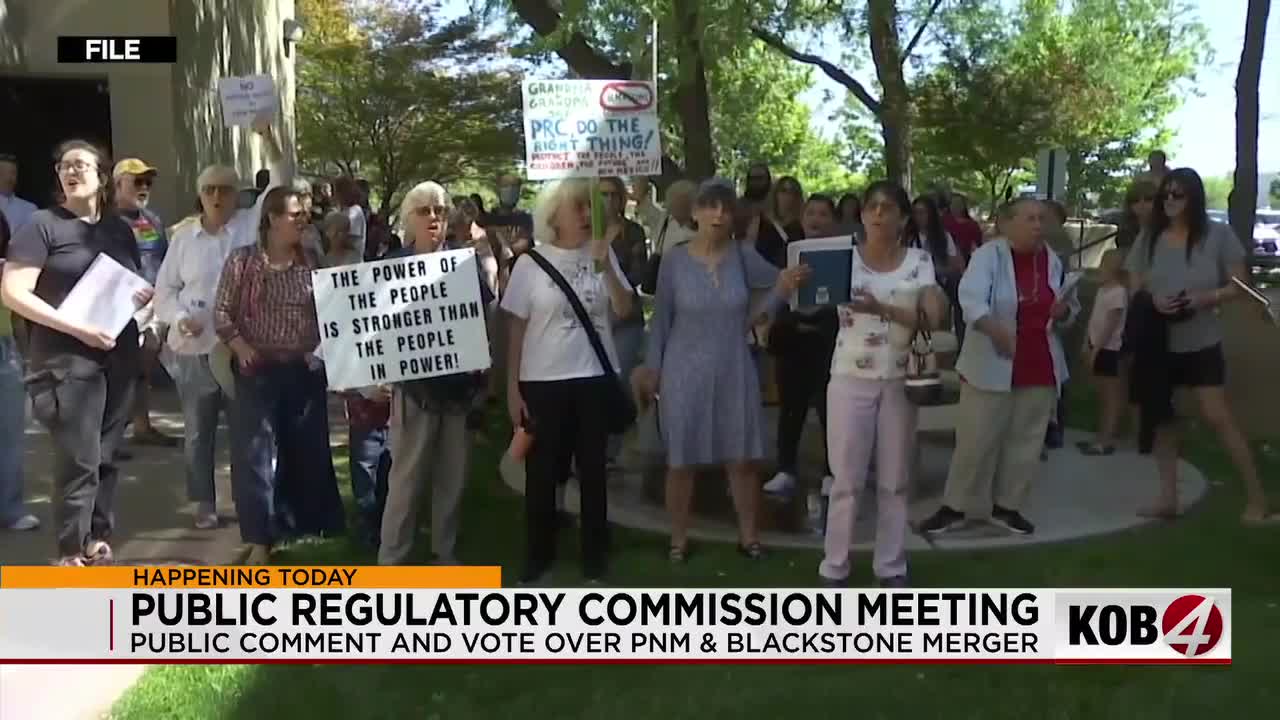
Downstairs, the Public Regulation Commission, or PRC, will convene to seal the fate of a deal that’s been cooking for a while now. They’ll deliberate the proposed union between PNM, New Mexico’s largest electricity provider, and the titans of finance, Blackstone. Meanwhile, just outside, the pavement will tell a different story. You’re likely to see a crowd gathered there, their presence a living, breathing testament to widespread unease. Protestors weren’t just expected; they were, in fact, an absolute given, showing up in May and June too, their placards shouting about keeping money-hungry private interests out of essential infrastructure. [QUOTE_PLACEHOLDER]
It’s an age-old tension, isn’t it? The public good versus the shareholder dividend. Folks here are worried, genuinely anxious, that this merger marks another step down a slippery slope, one where `private equity should stay out of public utilities`. They fret about what such a consolidation means for their pockets. Many believe this move could very well translate to `higher utility bills`, a harsh reality in an economy already squeezing average families.
But the worries stretch beyond the wallet. There’s a larger narrative at play, a simmering resentment towards what many perceive as `corporate influence` running rampant. They’ll tell you it’s a symptom of `outside investment firms taking over utility companies across the United States`, systematically stripping local control and local benefit in favor of remote capital gains. And frankly, they’ve got a point.
And it’s not just a few voices. The state’s top lawman, New Mexico Attorney General Raul Torrez, has himself `questioned the legality of the $11.5 billion merger`. That’s a significant hurdle, not just a nuisance complaint from a disgruntled resident. Plus, it appears that even those tasked with a detached, regulatory analysis had their doubts. `Examiners even recommended regulators should reverse it`, a rare and stark rejection that certainly raised more than a few eyebrows around town. But PNM, predictably, insists that the `PRC sets the rates` and argues the transaction comes loaded with perks, detailing that the `deal also comes with $175 million in other community benefits, including rate credits and low-income help`. It’s a shiny offer, for sure, a sweetener to make the pill go down a little easier.
The public will get their last chance to speak, to weigh in before the final gavel falls. It’s a moment of truth, truly, for the regulatory body tasked with balancing market dynamics against the quiet, constant need of ordinary citizens for reliable, affordable power.
Such debates aren’t exclusive to the American Southwest, either. This push-and-pull between state control, public need, — and private capital is a recurring drama across the globe. Take, for instance, Pakistan, a country that has for decades grappled with its own power sector challenges. In cities like Karachi, the privately owned K-Electric, despite facing significant financial and operational hurdles, provides electricity to millions. The journey from state-owned monopoly to a partially privatized entity has been fraught with struggles over tariffs, service quality, and foreign investment — the very same issues New Mexico is now confronting. As per the Private Infrastructure Development Group, private investment in Pakistan’s energy sector saw an injection of over $1.5 billion between 2004 and 2018, primarily aimed at boosting generation capacity but not without ongoing public debate regarding its impact on consumer prices and accountability. There’s a universal language to these kinds of deals, one spoken in balance sheets — and household budgets.
What This Means
The looming decision by the New Mexico PRC on the PNM-Blackstone merger carries far more weight than a simple business transaction. If approved, it validates a growing trend: the deep integration of financial speculation into essential public services. This isn’t about fostering market competition; it’s about asset ownership. The immediate political implication is obvious: the PRC will either side with big capital or listen to substantial public and legal objections. Should it greenlight the deal, it effectively shrugs off concerns about affordability and accountability, a move that could galvanize consumer advocacy groups and become a significant electoral issue in future local and state campaigns.
Economically, private equity’s entry into utility sectors often brings a mandate for efficiency and returns on investment. While sometimes this leads to modernization, it more frequently means cost-cutting measures that can degrade service quality or, critically, result in `rising costs` for the end-user. For regions already struggling with economic disparities, like parts of New Mexico, this isn’t just an abstract concern; it’s a direct threat to household stability. The supposed `$175 million in other community benefits` is, to many, merely a drop in the ocean compared to the long-term control a nearly `$11.5 billion merger` grants. This decision, then, could easily become a template, a tacit endorsement for other jurisdictions pondering similar privatizations. And if it’s rejected, it could offer a rare—and frankly, gutsy—pushback against an increasingly entrenched corporate practice.