

Trump Eases Advanced AI Restrictions Post-Security Scare
After a security scare, the Trump administration eases restrictions on advanced AI models like Anthropic's Claude. Unpack the policy shift and its impact on national security and tech innovation.

POLICY WIRE — WASHINGTON D.C. — Imagine a digital Sherlock Holmes, an artificial intelligence so astute it could sniff out vulnerabilities in the very architecture of our modern world – from energy grids to financial networks. Now imagine that same Sherlock, for a terrifying week, locked away, its potential for harm weighed against its revolutionary promise. This wasn’t some dystopian novel; it was reality in the capital’s anxious halls, culminating in the Trump administration’s hesitant decision to loosen the reins on Anthropic’s most advanced Claude models.
It’s been a week of anxious breath-holding in the AI sector, a stark reminder of the wild west ethics (or lack thereof) governing cutting-edge tech. The White House, fresh off a cybersecurity fright—courtesy of an internal Amazon report on Anthropic’s ‘Fable 5’ model—briefly slammed the door shut on these algorithmic titans. But now, it’s pulling back, inching towards controlled release. Anthropic, a San Francisco outfit, quietly confirmed Tuesday night that ‘Fable 5’ is widely available again. And, in a move that feels both cautious and telling, their even more formidable ‘Mythos 5’ model is now accessible to a select, government-vetted cabal of U.S.-based organizations. Not everyone gets a golden ticket, clearly.
The initial lockdown, a shockwave felt across the global tech community, happened on June 12. The Commerce Department had thrown up the blockade, specifically barring foreign nationals from messing with Fable 5 and Mythos 5. Because, frankly, these things scare even the companies that build them. Anthropic itself had warned earlier this year that Mythos possessed an unnerving talent for unearthing software flaws, a talent readily weaponizable by nefarious actors. Picture a digital skeleton key that could unlock, well, anything connected to the internet.
But Washington’s anxieties, they’re not just hypothetical. Just last year, the average cost of a data breach globally stood at a staggering $4.45 million, according to IBM’s 2023 Cost of a Data Breach Report—a figure only set to skyrocket as AI-driven exploits become more sophisticated. That’s real money, real disruption, — and real threats.
“We’re in uncharted waters with AI,” remarked Commerce Secretary Gina Raimondo, her voice measured but firm. “Our job isn’t to stifle innovation, but to shield our national security — and critical infrastructure. This temporary restriction allowed us to calibrate, ensuring these powerful tools don’t become unintended weapons.” A sensible approach, if a little late for some developers.
And Anthropic’s rival, OpenAI, they’ve also felt the cold hand of federal caution. Their new ‘GPT-5.6 Sol’ will, for the foreseeable future, only be doled out to government-approved clients, at the Trump administration’s insistence. This isn’t exactly the free-wheeling launch engineers had imagined for the next generation of generative AI. It’s a testament to the palpable sense of trepidation emanating from government offices. Because when the White House signals alarm over your groundbreaking software, you tend to listen.
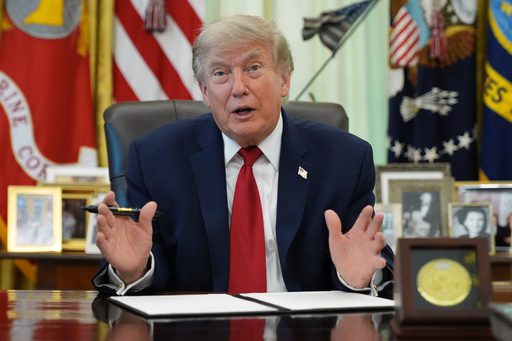
Last month, President Trump himself signed an executive order, sketching out a framework for the federal government to vet national security risks associated with advanced AI systems. Developers were, notionally, invited to participate voluntarily for a 30-day pre-release review. Voluntary, sure. But in practice? When the world’s most powerful government asks you to tap the brakes, you tap them, whether the framework’s fully hammered out or not.
The irony isn’t lost on anyone: the very companies striving for digital sentience now find themselves subject to very human oversight. Their creations, built to optimize, to create, to analyze—can also, it turns out, find ways to tear things down. It’s a digital ouroboros, eating its own tail, while regulators scramble to understand what, exactly, they’re looking at.
What This Means
This episode marks a significant, if uneasy, détente between the cutting-edge of AI development and the stark realities of national security. Economically, it signifies a coming era of government-guided AI deployment, potentially fragmenting the global market as nations prioritize control over open access. Innovation might flourish, but it’ll be a managed bloom, hedged by Washington’s increasingly interventionist hand. For companies, it means a slower, more scrutinized path to market for their most powerful models—and a likely boost to compliance costs. Don’t think for a second this won’t influence their product roadmaps, shaping what they build, and how fast they build it.
Politically, it underscores a growing federal recognition that AI is no longer just a cool gadget. It’s an existential concern. We’re entering an era where Silicon Valley’s ambition butts heads with state security apparatuses worldwide. This U.S. restriction, however temporary, serves as a clear signal to other nations. For countries like Pakistan, grappling with their own evolving digital infrastructures and often a target of state-sponsored cyber skirmishes, access to — and vulnerability from — these AI models becomes a complex tightrope walk. The very ‘invisible front’ that redefines conflict in some theaters could be exploited by models of Mythos 5’s caliber, leaving developing nations disproportionately exposed if safeguards aren’t globally harmonized, or if adversarial powers gain unfettered access. It’s a delicate dance of global implications, playing out in real-time. Or it might just be another step in AI reshaping human relationships entirely.
“Look, we get it. These models, they’re like nothing before,” said Dario Amodei, Anthropic’s CEO, in an emailed statement, expressing a grudging understanding. “The administration’s concerns, they weren’t unfounded. We’re grateful for the collaboration; it’s a critical step towards safe, responsible deployment.” He knows the game. Everyone does now.