

Colombia’s Maverick Ascendant: A Post-Petro Pivot Fueled by Foreign Endorsement
POLICY WIRE — BOGOTA, Colombia — Sometimes, an election isn’t about the winner; it’s a scathing referendum on what came before. For Colombia, that meant discarding a familiar political...

POLICY WIRE — BOGOTA, Colombia — Sometimes, an election isn’t about the winner; it’s a scathing referendum on what came before. For Colombia, that meant discarding a familiar political path, opting instead for a brash newcomer, Abelardo de la Espriella, whose ascent to the highest office has less to do with his policy prowess (he’s never held elected office) and everything to do with a weary populace saying, ‘Anything but this.’
It wasn’t a slow build, folks. Rather, it was a sudden, seismic shift. Electoral authorities, after a recount (because of course, there was a recount), finally declared the millionaire lawyer and businessman the victor. This seals the deal, ushering in a decidedly conservative era following the progressive leanings of outgoing President Gustavo Petro. [QUOTE_PLACEHOLDER]
De la Espriella, a man who peddles clothing, fine wines, and rum brands (a truly diverse portfolio, if you think about it), didn’t just walk into the Casa de Nariño uninvited. He arrived with a particular tailwind: a nod from none other than U.S. President Donald Trump himself. This kind of cross-border political patronage isn’t unique to Latin America, mind you. You see its echoes in how political figures across South Asia, like Pakistan, often gauge their own international standing and strategic leverage based on perceived endorsements or even outright silence from global powers.
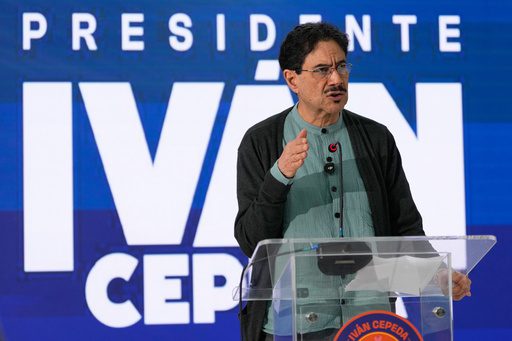
His opponent, Iván Cepeda, a progressive lawmaker, barely missed the mark, losing by just 1 percentage point—a hair under 251,000 votes, as the Associated Press reported. That narrow margin speaks volumes, revealing a deeply divided nation, not just a casual preference. Cepeda, bless his heart, had promised to carry forward Petro’s agenda, which included a rather ill-fated attempt to open dialogue with various armed factions. And, well, Colombians weren’t having it. That’s why de la Espriella, at 47, is set to start his four-year term come August 7. It’s a repudiation, plain and simple.
And so, another nation tacks right, joining the global queue of countries—they’re certainly piling up—that have turned to so-called political outsiders. These aren’t your typical establishment types, not by a long shot. Voters, tired of the usual suspects, are clearly desperate for novel solutions to knotty social, security, and economic quandaries. This particular outsider branded himself a representative of the never-before-seen
. He ran on a promise to clamp down hard on crime, borrowing liberally from Salvadoran President Nayib Bukele’s controversial playbook. Think mega-prisons, the whole enchilada.
Now, while such tactics have shown measurable success in Central America—lowering homicide rates there—they haven’t come without a price, drawing accusations of widespread human rights abuses. It’s always a trade-off, isn’t it? The question remains if Colombia’s populace is ready for that specific exchange. On the heels of his win, his campaign’s statement highlighted his purpose is to work for national unity, with the people and for the people
. Lofty words. But they also declared a commitment to guaranteeing the right to political opposition and peaceful protest, within the framework of the Constitution, the law and respect for democratic institutions.
Those are phrases you hear a lot these days.
A day before the official announcement, de la Espriella was already moving, shaping his cabinet. And then there was the foreign policy splash: he aims to integrate Colombia into what Trump famously dubbed the Shield of the Americas
. It’s presented as a coalition to bust criminal syndicates throughout Latin America. This move is indicative of a broader trend, where regional security alliances are often less about shared values and more about a strategic alignment against perceived common threats, frequently shaped by external power blocs, a dynamic not unknown in other parts of the world.
But despite the decisive victory, one can’t ignore the undercurrents. More than 26 million people voted in this incredibly polarizing runoff—a historic participation record, by the way. Within that massive turnout, over 426,000 Colombians actively opted for a ‘third, no-name’ choice on their ballots. And a further 29,000 simply cast blank votes. That’s a significant chunk of people, effectively saying, ‘A plague on both your houses.’ It doesn’t scream unified support, does it? Later, Cepeda conceded, taking his reserved Senate seat, stating, We assume with serenity, responsibility and absolute resolve — and let there be no doubt about it — the role that circumstances demand of us.
He vowed to exercise a democratic, vigilant and constructive opposition.
What This Means
De la Espriella’s triumph signals a definitive shift from the soft-on-crime, dialogue-first approach to a hardline, ‘law and order’ posture. Economically, this might attract foreign investment wary of instability, especially if the Trump endorsement translates into favored status for Colombia. But it’s not without peril; mirroring Bukele’s strategies risks international condemnation over human rights, potentially straining relations with Western European powers and international organizations, though it might endear him further to Washington’s more hawkish factions. Politically, the outcome also reinforces a global phenomenon: the powerful allure of populism, and frankly, the appeal of a ‘strongman’ narrative for populations grappling with insecurity. It’s a reminder that voters often prioritize perceived order over abstract democratic ideals, especially when feeling threatened. The narrow victory margin, however, means he inherits a fractured electorate. He won’t have the luxury of unchallenged power, not with a significant ‘none of the above’ vote, and Cepeda promising vigilant and constructive opposition
. It’s going to be a bumpy ride, I’d bet.