


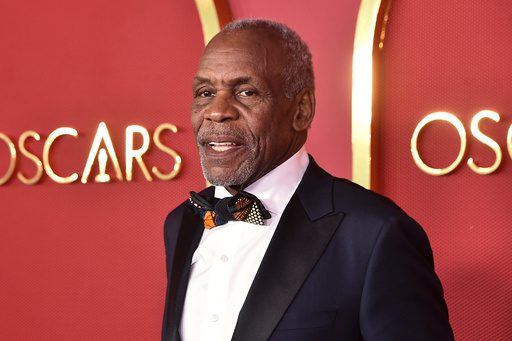
Danny Glover’s Alzheimer’s: Exposing a Policy Vacuum
Actor Danny Glover's Alzheimer's revelation exposes a critical global policy vacuum. Learn how his diagnosis highlights the urgent need for dementia care & research.

POLICY WIRE — NEW YORK, US — For a man whose career has been built on an almost preternatural ability to inhabit distinct, unforgettable roles—from a world-weary detective to a resilient patriarch—the idea of memory fading isn’t just a personal tragedy. It’s a national conversation, a global policy dilemma laid bare by the very public confession of a Hollywood giant. And that giant, as it turns out, is actor — and lifelong activist, Danny Glover.
It wasn’t a script reading; it was a candid, quiet admission. Glover, who’ll clock his eightieth birthday on the upcoming July 22nd, has revealed he’s been quietly grappling with an Alzheimer’s diagnosis for the past three years. This isn’t a fleeting affliction, mind you. It’s the progressive, merciless erasure of identity, the very stuff of our personal histories. “I’m still not accepting in my mind all parts of it,” he told People magazine, his words carrying the heavy weight of an unwelcome, intractable foe. “There are the moments that you keep remembering that validate the fact that you can remember stuff. And there are moments I’ll never forget.” He’s in a fight now, one no amount of cinematic bravery can win him, but one that throws an unforgiving spotlight on a broader, often ignored public health crisis.
Glover isn’t merely a recognizable face. For decades, he’s been an insistent voice for the marginalized, a UN Development Program Goodwill Ambassador from ’98 to ’04, traversing continents to address issues of poverty, disease, and development—especially in places often overlooked, like parts of Africa and the Caribbean. It’s a remarkable track record. His diagnosis, therefore, isn’t just a personal medical footnote. It forces us to ask tough questions about how societies, particularly rapidly aging ones, contend with the creeping economic and social burden of such diseases.
Because, frankly, this isn’t an isolated incident. There are over six million people battling Alzheimer’s in the United States alone, according to the Alzheimer’s Association. But it’s also a staggering global concern, especially impacting developing nations. You see the demographic shifts? The increasing longevity, often without a corresponding infrastructure for geriatric care, it’s setting up a quiet humanitarian emergency. Consider countries across South Asia—Pakistan, for instance. Its population of individuals over 60 is projected to more than double by 2050. The societal costs, both human and financial, when illnesses like Alzheimer’s grip such vast numbers of their elder citizens, they’re truly terrifying to contemplate. Who pays? How do you even begin to manage it?
US Health — and Human Services Secretary, Dr. Evelyn Vance, touched on this when queried last week. “Mr. Glover’s openness gives a voice to millions, not just here at home, but worldwide,” she stated, a rare moment of clarity from the often-guarded department. “We’ve got to see this for what it’s: a societal reckoning that demands innovative research funding, accessible care pathways, and above all, compassion. Ignoring it isn’t an option. We simply can’t afford to.”
And she’s not wrong. Her agency’s got its work cut out for it. This isn’t just about big pharma finding a magic pill; it’s about systemic policy overhauls. Think about the strain on families, the productivity lost, the long-term care infrastructure that, in most places, just doesn’t exist or is prohibitively expensive. It’s not just America. Look at the increasing prevalence in aging societies like Japan or Europe. They’re wrestling with it, too, figuring out ways to adapt. But the developing world? It’s often unprepared. Utterly.
What This Means
Danny Glover’s courageous revelation might well be remembered not just for its personal pathos, but for its ripple effect through public discourse. The political implications are immense. Alzheimer’s — and other dementias already represent a colossal financial drain on national health systems. We’re talking about billions, maybe even trillions, in healthcare expenditures — and lost economic productivity globally. As life expectancies lengthen, particularly in burgeoning economies where population health infrastructure often lags behind, the sheer weight of these diseases threatens to overwhelm nascent social support systems. This isn’t an abstract future; it’s happening now. Policymakers, from Washington to Islamabad, aren’t simply debating a rare disease, but confronting a looming tsunami of care needs.
But there’s an opportunity here. High-profile diagnoses like Glover’s compel governments to prioritize funding for neurodegenerative research. They spur philanthropic efforts. And they shine a bright light on the desperate need for expanded, affordable long-term care facilities, alongside increased training and support for caregivers who—let’s be honest—are often overlooked in policy debates. Glover’s history as a UN ambassador also frames this within a broader geopolitical context. He worked to address policy outcomes related to global health, poverty reduction, and human development. It makes his current struggle not just about personal health, but about the effectiveness of global strategies to protect vulnerable populations as they age. Policy decisions now dictate whether this generation of elders crumbles into destitution or ages with dignity.
His story, undoubtedly tragic, has provided an unlikely, if forceful, impetus. It forces a much-needed conversation that extends far beyond Hollywood’s glittery gates and into the halls of public policy. It asks us, pointedly: what are we going to do when memory fails not just one of us, but millions?