


Russia’s Fuel Lines Fraying Under Kyiv’s Relentless Air Offensive, Kremlin Concedes ‘Difficult Period’
POLICY WIRE — MOSCOW/KYIV — The hiss of a gas pump filling an ordinary car, a sound so mundane in most corners of the world, has started to echo with an unsettling new strain across vast swathes of...

POLICY WIRE — MOSCOW/KYIV — The hiss of a gas pump filling an ordinary car, a sound so mundane in most corners of the world, has started to echo with an unsettling new strain across vast swathes of Russia. Not with plenty, but with scarcity. Because while Vladimir Putin talks of national resilience and navigating a “difficult period,” Kyiv’s relentless, grinding air campaign is methodically — if often silently — taking chunks out of Moscow’s fuel supply lines, miles from any frontline.
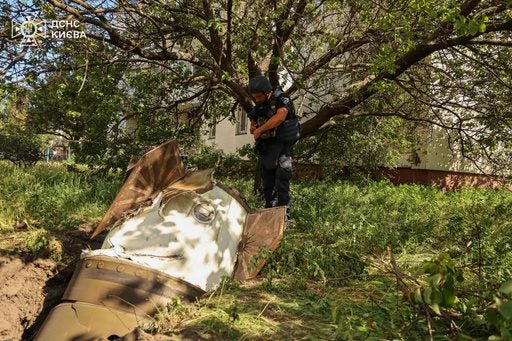
It’s a nasty little problem, this growing fuel crunch, manifesting in ways official channels just aren’t prepared to discuss candidly. Last weekend’s spectacle, with Ukrainian drones blitzing a major refinery in Russia’s south and likely another deep inland, wasn’t merely about hitting targets. It was about ratcheting up the economic pressure, right on the Kremlin’s doorstep (or close enough for discomfort).
Take the Slavyansk-na-Kubani refinery, for instance, a workhorse down in Krasnodar, a stone’s throw from occupied Crimea. Debris from downed drones reportedly set it ablaze. Local authorities even confirmed fatalities—one person dead in Slavyansk itself, another injured nearby. Not good, not for appearances, — and certainly not for their operations. This plant, mind you, churns out roughly 4 million tons of crude per year, according to its operator’s own website. It’s a key artery for Russia’s Black Sea exports — fuel oil, naphtha, the whole lot.
And then there was the whisper, not confirmed by Moscow, of a second strike, way up in Yaroslavl, nearly 700 kilometers from the Ukrainian border. Local governors were cryptic; roads shut down between Moscow and the region’s capital due to “an enemy attack,” as one put it. Airfields closed. Little snippets, you know? But they paint a pretty clear picture of Kyiv’s expanded reach.
Ukrainian President Volodymyr Zelenskyy, for his part, isn’t holding back. “Our ‘long-range sanctions’ reached two oil refineries in Russia,” he reportedly posted on Telegram. “Each (strike) means a reduction in the resources that fuel the Russian war machine, and another step toward peace.” He’s quite convinced, isn’t he? It’s a blunt assessment of his strategy: bleed Russia’s war chest dry, one oil drum at a time.
Meanwhile, the repercussions? They’re already biting. Remember Crimea, illegally annexed years ago? Last week, Kremlin-installed officials had to put a stopper on civilian gasoline sales because Kyiv kept hammering their supply routes. Now it’s not just Crimea. Far, far away in Siberia’s Irkutsk region, drivers are capped at 50 liters of fuel a day at state-run stations. Even private networks like KreisNeft are getting into the rationing game. Because logistics, darling, logistics — they can be a real headache.
But Vladimir Putin? He’s sticking to the script, isn’t he? “We’re going through a difficult period,” he admitted at a United Russia party conference, not directly mentioning the strikes or fuel woes. Instead, he spun it as a teachable moment. “This has taught us a great deal, and allowed us to grasp the very essence of what it means to be a Russian citizen.” The essence, apparently, includes making do with less gas. And, you know, being strategically vague while your deputy prime minister, Alexander Novak, publicly admits Moscow’s “actively reviewing fuel export agreements” to protect domestic needs. You don’t say!
But this isn’t just about Ukraine versus Russia; the energy markets feel it. Any disruption in Russia, one of the planet’s top oil exporters, inevitably ripples out. Think about places like Pakistan or even some Gulf states. Global energy stability can be a house of cards, always has been, and interruptions in a major supplier’s flow often mean a jolt, price-wise or supply-wise, even if Moscow just has to divert shipments from one buyer to another, or refine less for export. Pakistan, often walking a tightrope of energy security, keenly watches global oil dynamics. Any constraint in Russian supply can nudge global prices upwards, adding pressure to their own import bills and domestic inflation, exacerbating already delicate economic situations within the broader Muslim world.
What This Means
These strikes, brutal as they’re in immediate human terms (like the recent deadly air attack in Ukraine’s Zaporizhzhia), aren’t just military jabs. They’re strategic economic strangulation attempts. Kyiv’s message is loud — and clear: your economic arteries aren’t safe, even deep inside your own borders. The political implications are a double-edged sword for Putin. On one hand, it’s a public embarrassment — his government can’t fully protect its own energy infrastructure or assure basic fuel supplies for its populace. This chips away at his carefully cultivated image of unshakeable leadership — and competence. On the other hand, the Kremlin might leverage these very attacks to stoke nationalist fervor, painting Ukraine as an indiscriminate aggressor. Still, try rallying public support when folks can’t fill up their cars. And it’s tough to make a case for a strong economy when basic commodities are rationed.
Economically, it’s pure attrition. Less refining capacity means less revenue for the war, fewer export dollars to bypass sanctions, and greater logistical hurdles for their military — which still needs copious amounts of fuel. It complicates everything. Russia can’t easily replace these complex industrial facilities. Their longer-term effects might even make potential negotiating tables more, well, palatable for Moscow, if only to stem the economic bleeding. But right now, it feels less like a prelude to talks, and more like a stubborn, brutal exchange, where each side just keeps trying to make the other feel the pain a little bit more acutely.