

New Mexico: Hypersonic Missile Hub & Global Arms Race
A New Mexico town bets big on a future as a hypersonic missile production hub. Explore the economic boom, strategic implications, and rising global arms race.

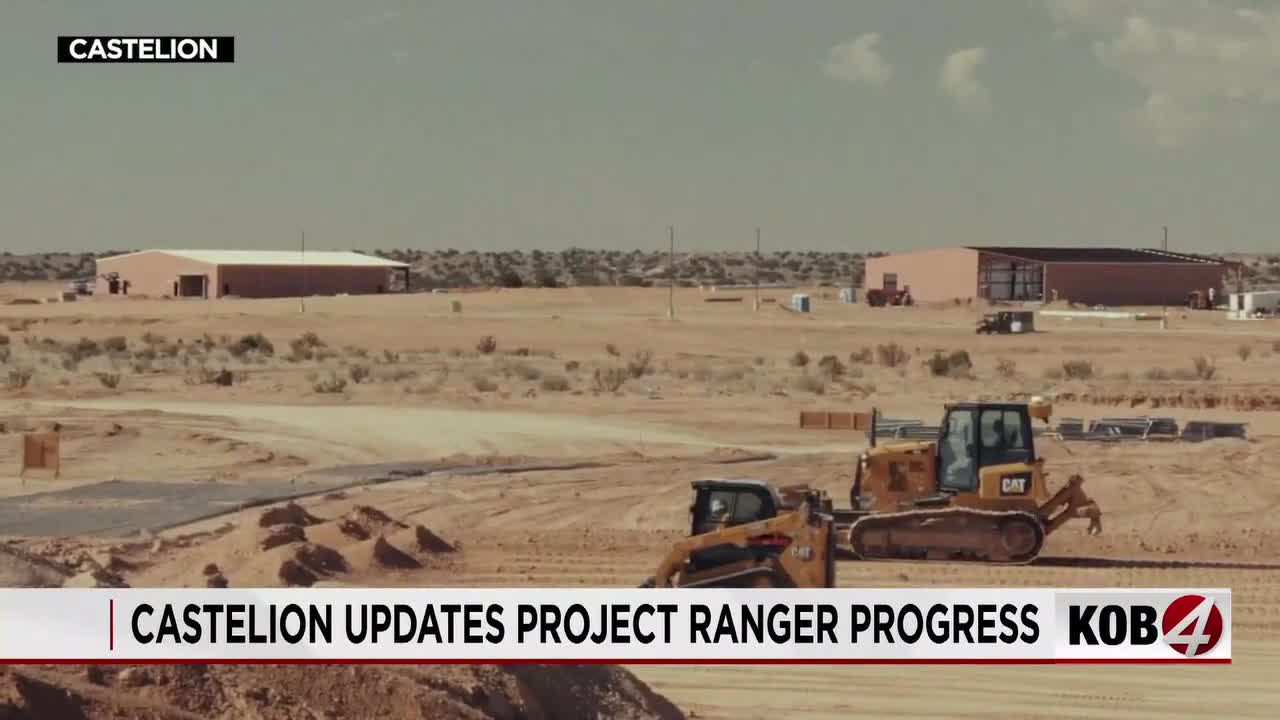
POLICY WIRE — RIO RANCHO, N.M. — A swathe of New Mexico desert, once defined by nothing much but dust and wide-open skies, is quietly becoming a new nerve center in the global arms race. It’s here, amidst the saguaro and mesquite, that California-based defense innovator Castelion is just weeks away from commissioning its massive Project Ranger facility—a site poised to churn out the next generation of hypersonic missiles. This isn’t just another industrial park popping up on the horizon; it’s a direct response to a rapidly escalating worldwide quest for faster, more elusive weapons, and frankly, a calculated wager on future geopolitical flashpoints.
It’s a peculiar sight, this intersection of Main Street economics — and military-industrial ambition. Castelion, the outfit behind this 1,000-acre behemoth, isn’t shy about the local perks. We’re talking at least 300 shiny new jobs. But let’s not pretend these folks are punching clocks to build go-karts. They’ll be assembling the kind of projectiles that reshape battlefield doctrines, test international treaties, and make defense planners everywhere lose sleep.
Andrew Kreitz, a co-founder at Castelion, knows a thing or two about optics, bless his heart. “We don’t want to just parachute in,” Kreitz remarked, during one of what’s been a series of community charm offensives. “We’re committed to being part of Rio Rancho, addressing concerns. We’ve done several public sessions, and we’ll do more this summer, digging into the specifics of our operations.” He sounds earnest, he really does. And maybe they truly do want to be good neighbors. But it’s hard to ignore that what they’re building could be perceived as anything but.
Local politicians, for their part, have largely chosen to view this through a different lens—the kind covered in dollar signs. Because that’s what makes the world go ’round, right? Especially when we’re talking hundreds of millions of them. Take Mayor Joe Hernandez, a pragmatist if ever there was one. “This investment, it’s a game-changer for our families, our schools, our future,” he enthused at a recent Chamber of Commerce luncheon, echoing a sentiment that could be applied to virtually any new factory, missile or otherwise. “When you’re talking north of half a billion dollars in local economic impact—a projected $650 million, according to Castelion’s own estimates—you pay attention. It’s jobs, pure and simple, and jobs pay bills.” And in a world still wrestling with post-pandemic economic jitters, that argument usually wins the day, doesn’t it?
But the numbers — and local goodwill aside, this isn’t merely about jobs. It’s a strategic move on a much grander board. Hypersonic missiles, those blistering-fast marvels that can theoretically skirt traditional defense systems, are hot property. Nations like China and Russia have been making waves with their own advancements, and America’s playing catch-up, or at least ensuring it’s well-equipped to keep pace. The stakes couldn’t be higher, really. This particular arms race, quietly escalating in laboratories and testing grounds around the globe, has profound implications.
Think about the dynamics in regions already simmering with tension. Moscow’s fuel depots burning or the precarious balance in South Asia are constant reminders that technological leaps in weaponry don’t stay neatly confined to defense budgets and parade grounds. The introduction of such capabilities—especially by a global superpower—always reverberates, prompting rivalries and influencing strategic postures in countries like Pakistan, India, Iran, and beyond. They’ll either strive to develop their own, seek to acquire, or fundamentally re-evaluate their defense strategies. It’s an endlessly escalating treadmill, where every advancement by one side nudges the others toward a more dangerous precipice. These aren’t merely weapons; they’re instruments of global rebalancing.
What This Means
The impending operational status of Project Ranger in Rio Rancho is more than just a local story about jobs and economic uplift. While the prospect of 300 new, likely well-paying positions and a reported $650 million economic injection are undoubtedly attractive for the region—transformative, even—they also hitch the town’s fortunes to the volatile star of global military procurement. This isn’t just about diversification; it’s a commitment to a particular, high-stakes sector, making the community reliant on ongoing defense spending and the persistent need for advanced weaponry.
Politically, the facility symbolizes America’s reinvigorated push to maintain its technological edge in an era of heightened great power competition. It’s a statement, stark — and undeniable, that the U.S. isn’t backing down from the hypersonic challenge. But there’s a deeper current, too. For a relatively unassuming town to become a cornerstone in this effort carries its own subtle ironies. The ‘good neighbor’ narrative from Castelion, while admirable, can’t fully mask the strategic importance—and potential vulnerability—that such an operation confers upon Rio Rancho. It elevates the location, quietly placing it on a global map, not just for tourism or local development, but as a node in the increasingly interconnected (and occasionally frightening) network of military industrial complexes. And that, like it or not, comes with a whole new set of geopolitical considerations for the humble desert town.