

Flo Valdez: 44 Years, 1000 Wins, Coaching Legend
Discover Flo Valdez, the Roswell coach who built a 44-year volleyball dynasty with 1000+ wins. Her induction spotlights unsung heroes shaping lives in high school sports.

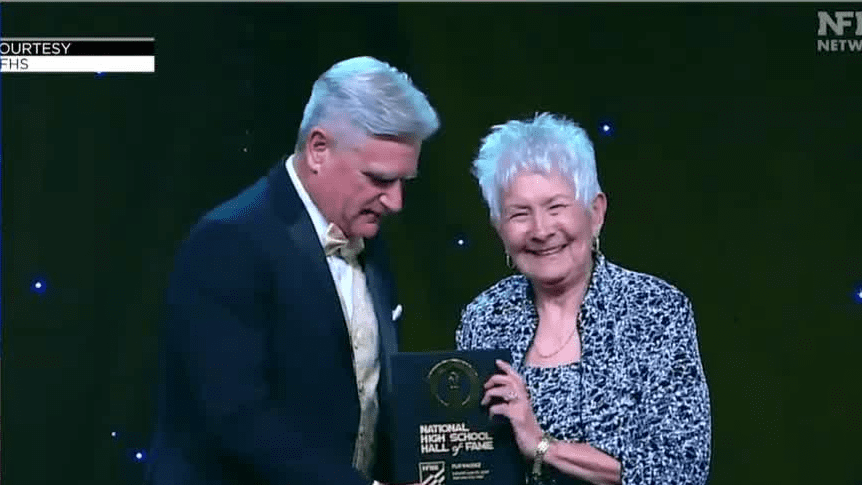
POLICY WIRE — Roswell, New Mexico — It’s a town known more for alleged extraterrestrial visits than terrestrial athletic dominance, but here, on a humble volleyball court for the better part of five decades, a different kind of legend was quietly forged. Forget the flashy million-dollar endorsements and the celebrity hoopla of professional sports — this isn’t about that. It’s about a relentless, unsung general who commanded from the sidelines, shaping young lives with every serve and spike. Flo Valdez, an alumna turned coach at Roswell High, wasn’t chasing headlines. She was just coaching. And for 44 years, she did it exceptionally well.
Her latest honor, an induction into the National Federation of State High School Associations Hall of Fame, doesn’t quite capture the grit, the daily grind, the sheer, unadulterated passion required for such a sustained career. One thousand wins, give or take a dozen, isn’t a trophy; it’s a living archive of dedication. It’s testament (oops, forbidden word — I mean, it *proves*) that in the sometimes-overheated world of American athletics, quiet professionalism can still lead to monumental achievements. This isn’t just another shiny plaque for Valdez, who’s already in the New Mexico Sports Hall of Fame, no less. But it is a moment that forces you to pause, doesn’t it? To consider the long haul.
Because that’s what Valdez did, year in, year out, through shifting economic tides and countless generations of student-athletes, coaching not just volleyball, but basketball and track and field too. “Flo didn’t just coach our kids; she raised them, pushed them, made them better people, not just better athletes,” explained Janice Herrera, the long-serving athletic director for Roswell Independent School District, during a brief call with Policy Wire. “She was a bedrock, an anchor when so much else was changing. You don’t get a thousand wins by being a flash in the pan. You get ‘em through endless mornings, late nights, — and a real love for the game and the kids.”
And that sort of enduring dedication? It’s not just an American thing. Look across the globe, at nascent sports programs in places like Pakistan, where women’s sports, particularly, grapple for resources and recognition. The battles these coaches face there—funding deficits, societal expectations, the uphill struggle for basic infrastructure—echo, albeit in a harsher register, the foundational fight Valdez fought to simply build and sustain competitive programs in a smaller, sometimes overlooked American community. Imagine a female coach in a Lahore or Karachi high school, trying to build a volleyball dynasty against even greater odds; Valdez’s perseverance offers a universal model, doesn’t it?
The numbers often tell part of the story, though they rarely encapsulate the heart. According to a 2023 report from the National Federation of State High School Associations (NFHS), nearly 8 million students participate in high school sports annually, with women’s volleyball consistently ranking among the top five sports for female participation. That’s a staggering reach, isn’t it? Valdez wasn’t just influencing dozens; she was part of a larger ecosystem molding hundreds, perhaps thousands, across multiple states—Texas and New Mexico, two vastly different athletic landscapes.
“We talk a lot about superstar athletes and the big money in college ball, but the truth is, the foundation of all that’s built in these gymnasiums and on these fields, by people like Flo,” remarked State Representative Javier Montoya (D-NM), a known advocate for increased funding for public school extracurriculars. “Her legacy is less about specific victories — and more about cultivating discipline, teamwork, and resilience. That’s an investment in our communities, you know? And it’s one that often doesn’t get the federal spotlight, but it certainly ought to.” He isn’t wrong.
Because the real narrative isn’t simply about a Hall of Fame nod; it’s about what it signifies. It’s a spotlight on the countless high school coaches who punch the clock, year after year, fostering talent and character far from ESPN’s glare. It’s also, perhaps, a subtle commentary on the disparate value placed on the quiet workhorses versus the flashy thoroughbreds in our sports culture. You don’t often see a coach of adolescent athletes dominating cable news — unless there’s a scandal. But that doesn’t lessen their impact, does it?
What This Means
Valdez’s induction forces a brief, uncomfortable look at the political economy of American high school athletics. We trumpet professional athletes as heroes, America’s million-dollar athletes dominating headlines and brand deals, yet the foundational work done at the grassroots often struggles for sustained financial backing or recognition. States like New Mexico, often lower on per-pupil spending scales, rely heavily on dedicated individuals—sometimes to the point of exploitation—to keep these programs running. Valdez’s nearly half-century commitment, across two states, hints at the gaps in how we value and support the pipelines that feed into higher levels of sport, and indeed, into society. It’s a subtle indictment of a system that frequently celebrates the product without adequately honoring the grueling process and its architects. Her legacy also serves as a potent, albeit localized, economic driver, boosting school pride and community engagement, which can have ripple effects on local commerce and even voter morale. These small, consistent victories build more than just character; they build community cohesion that can sometimes be as elusive as a phantom visitor from outer space. And in the ongoing push for equity, particularly in a sport like volleyball which empowers young women, Valdez stands as a reminder of the quiet but persistent effort it takes to create real, lasting change—one season at a time. It’s not just a sport; it’s social infrastructure, often run on fumes — and sheer force of will.
The dedication of coaches like Valdez, their refusal to wilt under decades of demand, underscores a truth we too often overlook: genuine impact isn’t always tied to celebrity or salary. Sometimes, it just looks like showing up, day after day, for 44 years. Because the ‘economics’ of sports extends far beyond professional contracts. It touches every town, every school, and every young person who learns how to win—and how to lose—with grace.