
French Manufacturing Surges Amid Eurozone Woes
French factories show surprising growth with a 52.1 PMI, defying Europe's economic gloom. Is this a turning point or just a temporary boost for the Eurozone?

POLICY WIRE — Paris, France — There’s always a catch, isn’t there? While Europe’s economic giants grapple with inflationary dragons and the looming shadow of geopolitical unease, France—bless its perpetually nuanced heart—appears to be whistling a slightly different tune. And not everyone’s convinced it’s entirely on-key. Just as the collective groan over manufacturing stagnation reached peak volume across the Continent, Paris decided to offer a moment of unexpected, albeit cautious, cheer. What gives?
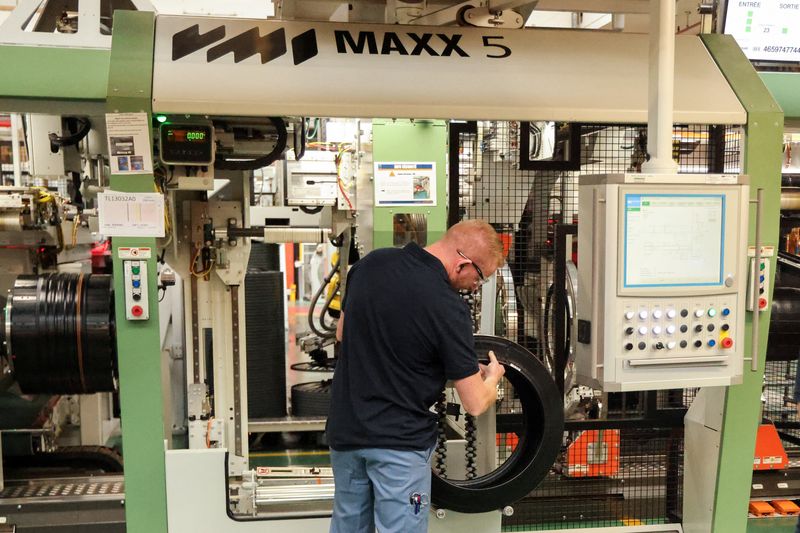
It turns out that beneath the layers of political wrangling and energy worries, French factories hummed a little louder last month. A good deal louder, in fact, than anyone had initially pegged. The final Purchasing Managers’ Index (PMI) for French manufacturing landed at a respectable 52.1 in June, according to data compiled by S&P Global. That’s a noticeable bump from the flash estimate of 51.5, and, more importantly, it holds a firm position above the 50-point threshold that separates expansion from contraction. Don’t go popping champagne just yet, though. One swallow doesn’t make a summer, particularly not in these economic climes. It doesn’t, even with a robust performance, erase the deep-seated anxieties gripping industries.
But still, it’s a statistic that certainly raised some eyebrows, and perhaps a modicum of relief, among the beleaguered finance ministers of the Eurozone. You see, the original forecast had been fairly pedestrian, tinged with the usual blend of French pessimism — and realism. So, to outperform that — by a decent margin, mind you — suggests something is working, at least for now. We’re talking about tangible increases in new orders, production output, and even some uptick in employment, painting a picture marginally brighter than the grim narrative many had adopted.
Christine Lagarde, head of the European Central Bank, has maintained a firm stance on inflation control, often reiterating the ECB’s data-driven approach. When asked about specific country data, a senior ECB source, speaking off the record but mirroring Lagarde’s public rhetoric, told Policy Wire, “We welcome any signs of economic resilience across the Eurozone. However, our monetary policy decisions remain anchored to the broader, region-wide inflationary pressures and our mandate for price stability. One month’s data, while encouraging for France, doesn’t alter the fundamental picture across the 20 nations we monitor. We’re still facing considerable headwinds.” It’s that classic institutional caution, a quiet reminder that while Paris may be getting a temporary reprieve, the bigger storm still rages.
French Finance Minister Bruno Le Maire, always eager to champion his nation’s economic fortitude, certainly isn’t shy about it. Speaking to reporters in Brussels (where, let’s be honest, he probably felt like the only one with genuinely good news to share), Le Maire noted, “This exceptional result for French manufacturing isn’t a fluke. It’s a reflection of our industrial strategy, our efforts to reshore production, and the entrepreneurial spirit that defines our workforce. We aren’t out of the woods, not by a long shot, but these figures prove that with targeted investments and the right framework, we can build back stronger.” It’s a typical ministerial soundbite—a mix of pride, slight overstatement, and a call for continued vigilance. He wouldn’t want to seem *too* optimistic, given the political tightrope walk President Macron is always performing. And he’s right, it doesn’t take a genius to understand that a significant portion of the growth has been domestically driven, or perhaps in niche high-tech exports, rather than a full-scale return to global normalcy. Take aerospace components, for example. Demand, particularly for civilian aircraft, continues to climb, and France has a massive, often under-appreciated, slice of that particular pie.
But how does France’s seemingly isolated surge play into the broader global tableau? Consider global supply chains, often a bottleneck during the worst of times, still finding their rhythm. Improved output from a G7 nation like France, even if sector-specific, can send minor but noticeable ripples. In a country like Pakistan, which relies heavily on global trade routes and often serves as a transit hub, these improvements can mean slightly smoother logistics, more predictable cargo flows, and perhaps even a marginal reduction in some input costs over time, indirectly bolstering their own, sometimes precarious, industrial base. It’s not direct aid, no. But the intricate dance of international economics means everything’s connected, from a Parisian assembly line to the docks of Karachi, for good or ill. Pakistan, facing its own economic trials, including persistent inflationary pressures and fiscal imbalances, certainly watches global indicators for any sign of stability.
What This Means
This unexpectedly robust performance offers a fleeting moment of respite for President Macron’s government, currently navigating a treacherous political landscape domestically. It lends credence to their reform efforts, even if critics are quick to point out its localized nature and the overall fragility of the European economy. Economically, it suggests a surprising resilience within specific French sectors that might be better insulated from energy price shocks or are benefiting from unique demand drivers. But let’s be blunt: one strong month doesn’t fundamentally shift the ECB’s hawkish stance, nor does it resolve the profound energy challenges or the specter of recession haunting much of Germany and Italy. It’s more of a data anomaly — a pleasant one — rather than a genuine sea change. for European industrial competitiveness on a global scale, including against emerging economies, France’s localized success serves as a test case. Can its industrial strategy be replicated? Or is it a testament to particular industries — and export markets? It makes for good headlines in Paris, surely, but it won’t instantly quiet the silent dissatisfaction brewing in Brussels regarding overall growth prospects.
So, we have a flash of optimism. But it’s surrounded by familiar, well-worn worries. France might be doing a bit better than expected, but the continent—and indeed, much of the world—is still trying to figure out which way the wind is blowing. Don’t bet the farm on this little bump.