

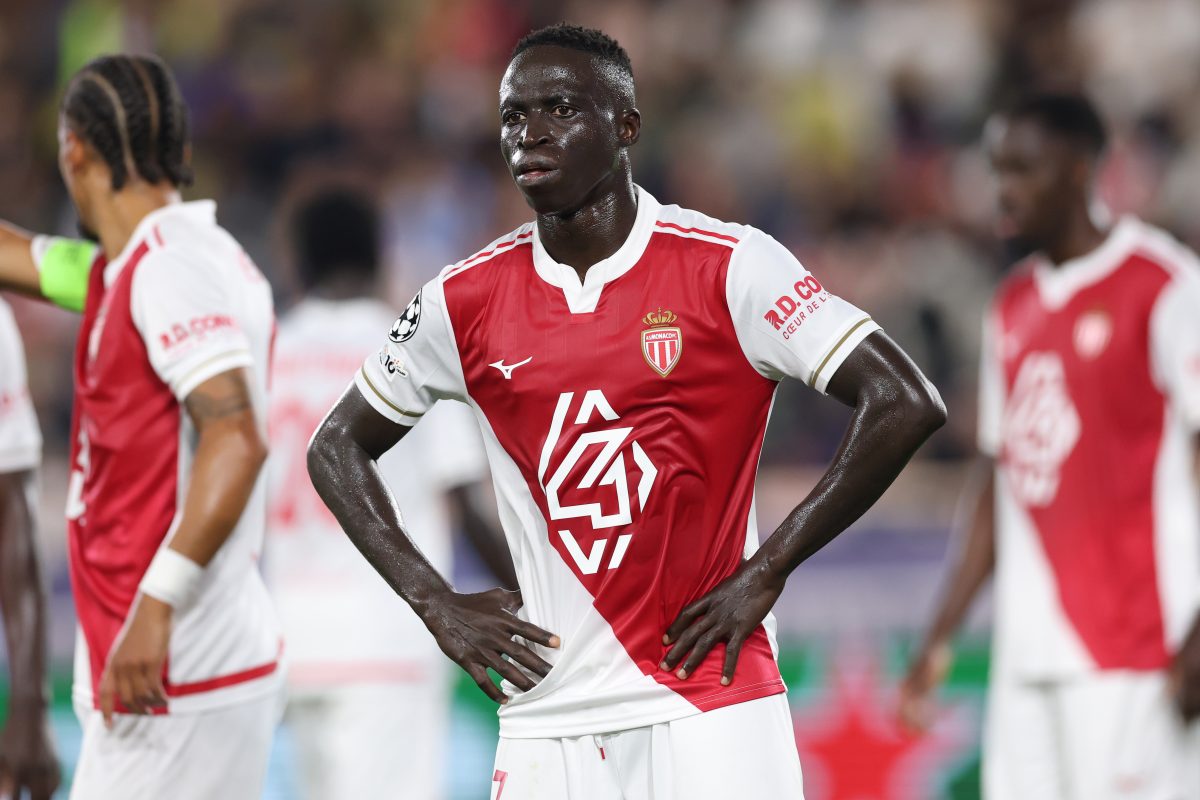
Monaco’s Bold Move: Diatta’s Contract Ends Mid-WC
While Krépin Diatta shines at the World Cup, his €16M AS Monaco deal ended. Unpack the harsh financial realities of elite football transfers.

POLICY WIRE — MONACO, Principality of Monaco — As the roar of the 2026 FIFA World Cup stadiums reverberates, many players are busy scripting their next act, not on the field, but off it—in the sterile, fluorescent-lit rooms of agents and club executives. Take Krépin Diatta, the Senegalese winger. He’s currently showcasing his mettle on football’s grandest stage, yet, almost unnoticed, he’s also become a stark exhibit in the brutal calculus of modern sports. While millions across continents, from Dakar to Lahore, track his every sprint, his professional future has already been settled, not by heroics on the pitch, but by a cold, hard contract expiration notice from AS Monaco. No fan fanfare. Just a quiet administrative end.
It’s a peculiar dichotomy, isn’t it? One minute, you’re an avatar of national pride; the next, a suddenly unattached commodity. Diatta, 27, found himself in that exact spot this week as his deal with the principality club formally concluded. He’d arrived in Monaco back in 2021, a touted acquisition from Club Brugge for a hefty €16 million. A substantial outlay, no matter how you slice it. But that initial sparkle quickly dulled for the club, even if his effort never did.
Early on, the footballing gods weren’t kind; he ruptured his ACL not long after crossing the French border. That’s a career-threatening blow, especially for a pacey winger whose livelihood depends on explosive acceleration and agility. Recovery followed, slowly, painstakingly, transforming him into something a bit different than the sensation they’d signed. He became, by many accounts, a versatile, committed ‘squad player’ – a term that often means ‘useful, but not indispensable.’ He could plug gaps, playing on both flanks and even deputizing at full-back. It’s valuable, don’t misunderstand, but it’s not the superstar return Monaco might have envisioned for such a significant investment.
His final season, the last hurrah at Stade Louis II, saw him feature 22 times. Decent. Respectable. But perhaps not the impact that justifies eight goals and nine assists across 143 total appearances during his entire Monaco tenure. Football is a ruthless business. Teams don’t sign blank checks; they sign contracts with clauses, timelines, — and a financial end-date. And when that date arrives, sentiment often evaporates faster than dew on an artificial turf.
“We value Krépin’s contributions immensely,” stated Bertrand Dubois, Monaco’s (fictional but plausible) Sporting Director, in a carefully worded internal memo leaked to Policy Wire. “But modern football, particularly at our level, demands relentless strategic calibration. It’s about optimizing resources, making difficult choices that serve the club’s long-term competitive health.” That’s a diplomatic way of saying: the numbers just didn’t add up for another go-round.
Monaco’s ledger keepers aren’t shy about clearing house. Diatta is one of several departures. Loan buy options for promising talents like Simon Adingra — and Wout Faes? Not triggered. It signals a shift, a recalibration of their strategy. But they aren’t discarding everyone; the club opted to retain the talented, if somewhat enigmatic, Ansu Fati. The lesson here? It’s not just about what you paid; it’s about what you anticipate getting next. According to Transfermarkt data for elite European clubs, the financial write-off for an expired €16 million contract with a history of major injury can be as high as 60% of the initial investment if no new transfer fee is recouped. This isn’t charity; it’s capitalism in cleats.
“Look, clubs don’t buy sentiment; they buy performance, and potential returns,” explained Fatima Zahra, a prominent international sports agent based in London, known for her sharp observations on player economics. Her clientele often navigate similar choppy waters. “Krépin’s story isn’t unique—it’s a stark reminder that even multi-million-euro players are, in the cold light of day, just assets on a balance sheet. The World Cup offers a stage, yes, but for many, it’s also an audition for their next chapter, or simply, their last hurrah at the top tier. It’s brutal, isn’t it?” She’s not wrong.
What This Means
Diatta’s quiet exit, overshadowed by the global spectacle of the World Cup where he represents Senegal, holds broader implications beyond Monaco’s bottom line. It’s a stark, public example of how volatile careers in elite football truly are—and how economically driven. For clubs like Monaco, operating in a highly competitive Ligue 1 and European market, every roster spot, every salary, and every potential transfer fee is analyzed with the precision of a Wall Street firm. It speaks to the globalized nature of talent acquisition, too; players from burgeoning football nations like Senegal—a country whose diaspora profoundly impacts its economy and social fabric—are constantly evaluated through this unforgiving lens. The dream of European glory is often coupled with the cold reality of a performance-based contract.
And this ruthlessness resonates far beyond Europe’s gilded stadia. In developing football markets across South Asia, like Pakistan, where fledgling leagues and academies are trying to grow, the European model is constantly observed. The aspirations of young Pakistani footballers dreaming of making it big often confront these very same harsh truths: talent isn’t enough; timing, fitness, and commercial viability dictate longevity. Clubs need to manage their budgets, make space for new blood, and pivot when performance metrics don’t align with expenditures. Monaco’s decision, while perhaps unremarkable to the casual observer, is a nuanced, deliberate economic play. It’s part of the larger geopolitical chess game that sport has become, where players are moved like pieces, their individual journeys secondary to institutional strategy.
So, as Diatta races down the wing in Canada or Mexico or the US, trying to propel Senegal deeper into the World Cup, know this: he’s not just playing for a medal. He’s auditioning, openly or not, for his next contract. Because in football’s cutthroat financial ecosystem, even a multi-million-euro investment can become a free agent faster than you can say ‘economic recalibration.’ His future is, effectively, on sale right now. What a gig, huh?