

Caracas Counts its Dead, but the Earthquakes Shake More Than Ground in Venezuela
POLICY WIRE — Caracas, Venezuela — The dust, thick and tenacious, hasn’t yet settled over Venezuela, but the cracks it obscures run far deeper than fractured concrete. Under a sky that ought to...

POLICY WIRE — Caracas, Venezuela — The dust, thick and tenacious, hasn’t yet settled over Venezuela, but the cracks it obscures run far deeper than fractured concrete. Under a sky that ought to be bright, a profound hush has fallen over neighborhoods once bustling, now reduced to grim tableaux of shattered hopes. We’re talking about homes, lives, a sense of future – all irrevocably altered.
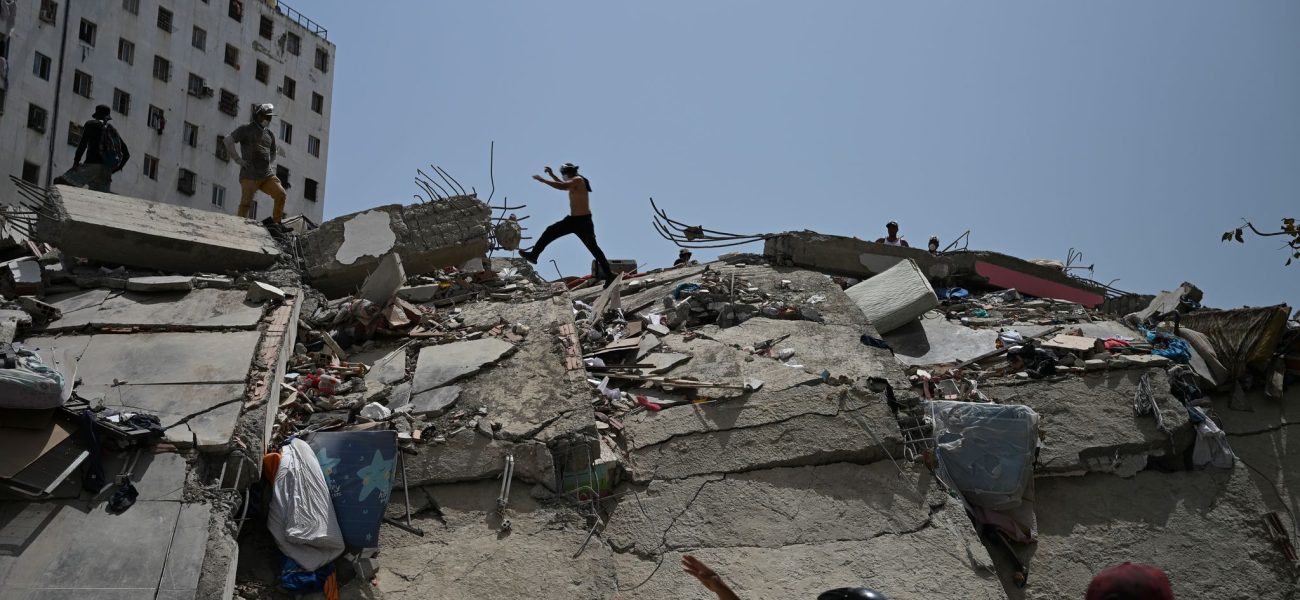
It’s not just the earth that moved, you see. It was already shaking here, a slow, economic tremor felt for years. But these quakes? They ripped through whatever flimsy scaffolding remained of everyday life. Rescue crews, a skeletal force at best given the country’s protracted crisis, claw at the rubble with bare hands and sheer will. They’re looking for survivors. More often, they find bodies. More than 1,400 of them so far, by official count—a number everyone here knows will only climb. Every shovel-full is a morbid calculus, each silent siren a lament.
And the government? They’re on the defensive, as always. President Nicolás Maduro, visible but perhaps not entirely convincing, vowed resilience. “Our people are hardened by adversity; we will rebuild stronger, united against any external attempts to destabilize our sacred Bolivarian land, even in this moment of tragedy,” he declared, eyeing foreign media with suspicion. It’s a familiar refrain, one that tends to complicate swift, uncomplicated international aid efforts. You can practically hear the conditions being drafted before any offer lands.
But conditions are precisely what many humanitarian groups find themselves navigating. The political landscape here, a jagged mess of sanctions and ideological posturing, often jams the signal for straightforward help. “It’s a frustrating dance, this diplomatic two-step when lives hang in the balance,” confided Dr. Anya Sharma, Director of Regional Relief Operations for an unnamed international medical charity, speaking from Bogota. “We want to help. They say they welcome it. Then, the bureaucracy builds its own insurmountable wall.”
Because, for Venezuela, a humanitarian crisis is often indistinguishable from its chronic political ailment. Its state-run oil industry, once a gusher of petrodollars, is a pale shadow of its former self. Even with vast oil reserves, the nation’s economy contracted by an estimated 75 percent between 2014 and 2021, according to a widely cited report by the Brookings Institution. Infrastructure was decaying long before these recent seismic jolts; now, much of it simply isn’t there. No surprise, then, that even in better times, a catastrophic event was just waiting for its moment to prove how frail the whole enterprise was.
It’s a situation that resonates, oddly enough, across continents. You don’t have to look far to see similar struggles. Pakistan, for instance, has its own tragic history with earthquakes, like the devastating 2005 Kashmir tremor that killed over 70,000. They know the quiet desperation, the long, painful road to recovery, often hampered by governance issues or strained foreign relations. While relief operations from Islamabad are not immediately expected, the shared human experience of such sudden, profound loss crosses all borders, geopolitical fault lines notwithstanding.
📄 POLICY WIRE WHITEPAPER PUBLISHED: PAKISTAN'S NATIONAL SECURITY POLICY PRIORITIES
👉 READ BY CLICKING HEREAnd where does that leave the survivors? Clustered in temporary shelters, bewildered. They’re cold. They’re hungry. They’re facing a future that, only days ago, felt bleak but at least existed within a familiar frame. Now? The frame itself has disintegrated. You can see it in their eyes—a dull shock. They’ve lived through so much, — and now this. A kick when they’re already down. But what’s new about that for them?
What This Means
The immediate political ramifications for Maduro’s government are stark. While natural disasters often rally populations around their leaders, Venezuela’s deeply fractured society might react differently. This tragedy exposes—in the most brutal fashion—the acute vulnerabilities of a nation where years of economic mismanagement and international isolation have stripped away any real capacity for crisis response. The crumbling buildings are a metaphor, a stark visual of an economy that simply couldn’t withstand the tremor.
But the government, strapped for cash and already wary of ‘Trojan horse’ humanitarian interventions, is now faced with a brutal choice: either accept broad international aid that might come with uncomfortable political conditions or continue to muddle through, facing escalating domestic unrest and even greater humanitarian catastrophe. Neither path is easy. The international community, meanwhile, grapples with the ethics of offering aid to a regime it largely discredits. It’s a bitter pill to swallow for all sides. Don’t expect easy answers here. Just more hardship, compounded by old political grudges. For the average Venezuelan, any lifeline, regardless of its origin, would be welcomed. The real question is how many more earthquakes—literal or figurative—it will take to truly shake up the system.