

Eli Lilly Under Fire: China Military Drug Trials Scrutiny
Eli Lilly faces congressional scrutiny over drug trials in China linked to the PLA. Uncover national security risks, IP theft fears, and global pharma's ethical dilemmas.

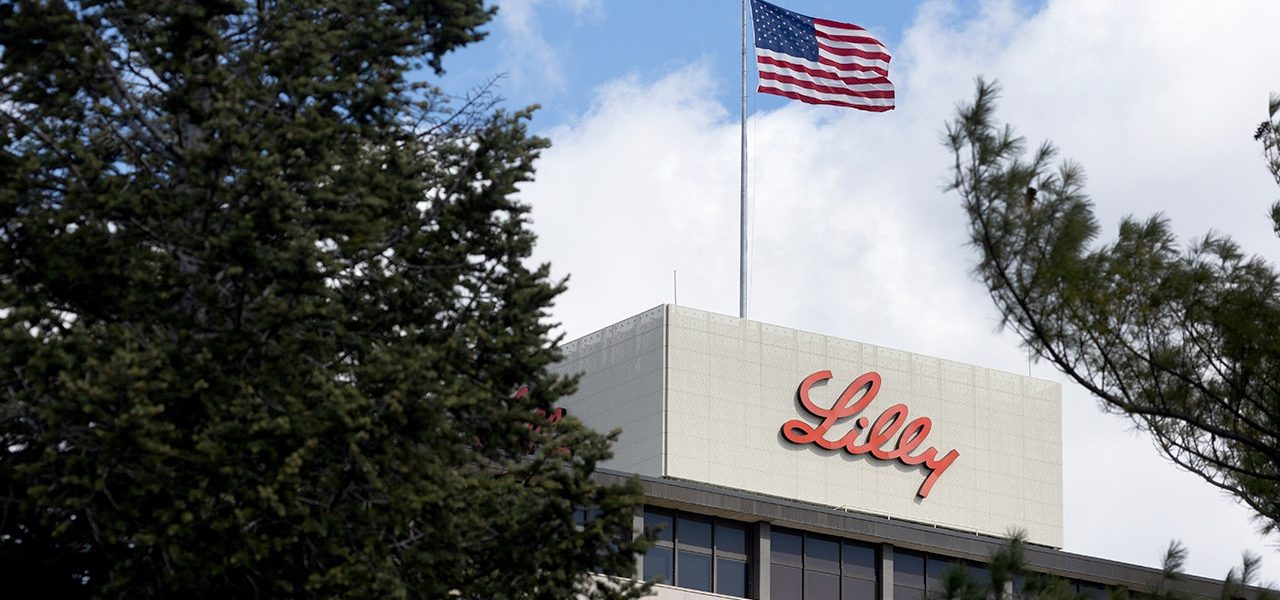
POLICY WIRE — Washington, D.C. — It’s never just about a new pill, is it? Not when that pill’s path to market twists through the labyrinthine medical-industrial complex of a geopolitical adversary. That’s the hard truth crashing down on Eli Lilly, one of America’s pharmaceutical behemoths, as U.S. lawmakers put the squeeze on its alleged drug trials in China—trials reportedly conducted within or involving facilities tied directly to the People’s Liberation Army (PLA). This isn’t simply about where research dollars go; it’s about a deepening corporate bind between scientific advancement, patient welfare, and stark national security concerns.
Congressional demands, sharp as a surgeon’s scalpel, landed on Eli Lilly’s doorstep recently, urging greater transparency regarding these collaborations. The worry? That American innovation and data could inadvertently fuel China’s military modernization, specifically through sensitive biomedical research. Think about it: a seemingly benign drug trial today could, some argue, become a strategic vulnerability tomorrow. The questions from Capitol Hill aren’t exactly subtle; they probe the very nature of partnering with entities under the purview of Beijing’s armed forces.
Legislators from both sides of the aisle are hammering away at the perceived risks. Their primary fear revolves around intellectual property theft, but it doesn’t stop there. There’s the haunting spectre of data exploitation—sensitive patient information, clinical methodologies—potentially falling into the hands of a rival state. Then there’s the more profound ethical quandary: can truly independent, consent-based clinical research even happen within an opaque, state-controlled system like China’s, especially when military facilities are involved? It’s a messy intersection, alright.
The pharmaceutical giant, for its part, is likely navigating a corporate tightrope, caught between enormous market potential and escalating political pressure back home. We don’t yet have an official statement that’s been publicly confirmed, but it’s safe to assume they’ll argue something along the lines of a commitment to global health and ethical standards [QUOTE_PLACEHOLDER]. They often do. But a commitment means nothing if it’s blind to its geopolitical context.
And let’s not pretend this is an isolated incident. Beijing’s civil-military fusion doctrine aims to erase any distinction between its civilian and military sectors, particularly in areas like advanced technology and biomedicine. This policy means that virtually any significant R&D collaboration within China carries a latent risk of benefiting the PLA. It makes disentangling innocent research from potential dual-use applications a diplomatic nightmare. These lawmakers aren’t just making noise; they’re shining a light on a systematic problem. Just this year, the National Institutes of Health allocated approximately 46.5 billion U.S. dollars to medical research, an astronomical sum, much of which is rooted in American innovation that could be at risk if these cross-border lines aren’t clearly drawn. (Source: National Institutes of Health, Fiscal Year 2024 Appropriations)
For nations like Pakistan, caught between American economic influence and China’s expanding Belt and Road Initiative, these sorts of developments ripple far and wide. Imagine Pakistan seeking to develop its own pharmaceutical capabilities or conducting trials for critical medications. If the leading Western pharmaceutical players are seen as too compromised by Chinese military ties—or if they become less willing to partner globally due to U.S. political pressure—where does that leave emerging markets? Such scenarios force South Asian governments to meticulously weigh alliances, scrutinize supply chains, and rethink where they source medical expertise and infrastructure. They’re effectively walking a tightrope too, navigating complex allegiances. These incidents raise serious questions about what true scientific collaboration means in an increasingly fragmented world, particularly for developing nations striving for medical self-sufficiency.
📄 POLICY WIRE WHITEPAPER PUBLISHED: PAKISTAN'S NATIONAL SECURITY POLICY PRIORITIES
👉 READ BY CLICKING HEREBut how do you regulate this, really? Because drug development, by its very nature, is a global endeavor now. Patients don’t care about national borders when they’re sick. Companies, naturally, follow markets — and talent wherever it may lead them. This current imbroglio reveals the enormous chasm between corporate globalism and national sovereignty—a divide that seems to widen by the day, impacting everything from drug prices to military advantage.
What This Means
This escalating congressional pressure on Eli Lilly isn’t just a regulatory slap on the wrist; it’s a clarion call about the fundamental erosion of trust in the global scientific community. For corporate America, it signifies an irreversible tightening of the reins regarding operations in strategic rival nations. Companies operating in places like China will face increasing pressure to choose sides, even when their mandate is universal health. That freedom to operate wherever, whenever, just isn’t what it used to be. The unwritten rules of engagement—where capitalism was supposed to be a neutral force—are being aggressively rewritten by geopolitical imperatives.
Economically, it spells higher compliance costs for pharmaceutical firms, potential delays in R&D, and maybe even a push towards reshoring certain clinical operations—all of which could trickle down to higher drug costs for consumers worldwide. For countries in the Muslim world, and particularly in South Asia, dependent on Western pharmaceutical innovations, this U.S.-China standoff creates acute dilemmas. Do they continue to engage with Western firms potentially compromised by Chinese military ties? Or do they pivot more towards Chinese solutions, with all the accompanying ethical — and quality control unknowns?
The incident forces a critical reevaluation of where national interests begin — and global health responsibilities end. It’s an uncomfortable conversation, sure, but it’s a necessary one if we’re to preserve the integrity of medical research and, perhaps more importantly, avoid unknowingly subsidizing our adversaries’ strategic ambitions. And make no mistake, this sort of scrutiny won’t be limited to pharmaceuticals. The shadow of Beijing’s ambition stretches across many sectors. You’ll see similar pushes in AI, biotech, — and any sector with dual-use potential. It’s a sign of a hardening world, where the pursuit of health can’t entirely be decoupled from the grim calculus of national power. It means global companies can’t afford to be naive anymore—they simply can’t.