


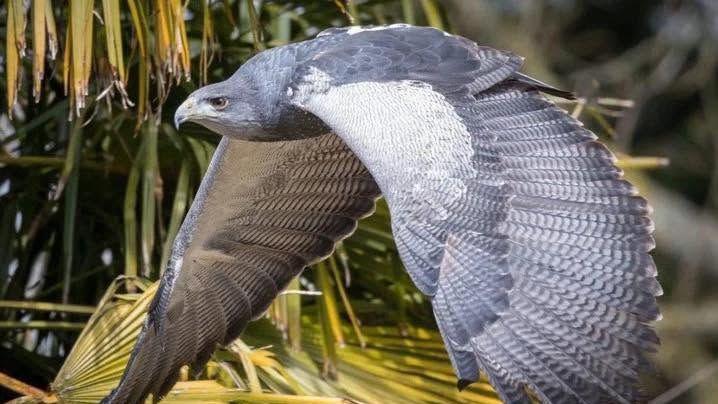
Golden Eagle: South Asia Border Control & Geopolitics
A golden eagle's journey across South Asia exposes the intricate challenges of border control, regional security, and conservation. Unpack its geopolitical significance.

POLICY WIRE — Islamabad, Pakistan — For two tension-riddled weeks, it seemed as if one of the sky’s quiet sentinels—a magnificent Golden Eagle, no less—had simply… vanished. Then, suddenly, word filters through, muted initially, about its reappearance, hale and remarkably unimpressed by the human brouhaha it had unwittingly instigated. A harmless animal anecdote, you might think. But here, where every migratory bird, every forgotten drone, even every whisper across the craggy peaks carries a certain weight, a feathered vanishing act isn’t just a quirky news brief. It’s often a mirror, albeit a skewed one, to far bigger machinations playing out across South Asia’s often unforgiving landscape.
It’s funny, isn’t it, how a story about a bird can snag our attention more than another dreary political prognostication. But this wasn’t just any bird; it’s one they’d tagged, tracked, and—frankly—coddled in a rehabilitation sanctuary near Abbottabad, Pakistan. And when it went off the grid for a full fourteen days, some folks around here didn’t just worry about its survival. No, the chatter, hushed though it was, swung wildly to questions of sovereignty, reconnaissance, and the porous nature of lines drawn on maps that don’t mean a lick to an eagle.
Because, let’s be real, tracking an avian creature across mountainous terrain that routinely sees contested movements, be they human or otherwise, isn’t a trivial pursuit. It costs money. It mobilizes resources. It raises bureaucratic eyebrows. This particular eagle, they’ve confirmed, soared hundreds of kilometers east, eventually spotted near Gilgit-Baltistan, uncomfortably close to certain, let’s say, ‘less-defined’ border zones. And while official statements remained bland, the incident – a high-profile recovery – couldn’t help but highlight something rather stark: how intensely states now monitor movement, even innocent biological wandering.
This isn’t an isolated phenomenon, not really. Wildlife populations, eagles included, aren’t waiting for permission to cross borders, something humans seem obsessed with. But their journeys inadvertently illuminate a harsher reality: our region’s ecological systems are fragmented by political divisions, complicating genuine conservation efforts. You’ve got the Himalayan Golden Eagle, an animal emblematic of strength and freedom, trying to do its thing while policy wonks fret over invisible boundaries beneath it. It’s a tragic comedy, sometimes.
The humanization aspects are strong, you see. When an official announced the eagle’s safe return, they said, [QUOTE_PLACEHOLDER]. It suggests a sigh of collective relief. But what were they relieved about, exactly? The welfare of a bird, or the successful, quiet conclusion of a potentially embarrassing or strategically uncomfortable incident?
We’re talking about a species often targeted by poachers — and illegal traffickers. It’s a multi-billion dollar illicit industry. The Asian Development Bank reported in 2019 that South Asia loses an estimated $3.8 billion annually to illegal wildlife trade, undermining regional conservation efforts. This specific eagle wasn’t caught in that web, fortunately, but its journey does put a spotlight on the logistical nightmare of tracking anything—or anyone—through such a sensitive ecosystem, particularly one adjacent to Afghanistan and China. The fact that the bird was retrieved quietly, with minimal fuss beyond local conservation circles, feels… significant. It’s almost a practiced routine, ensuring minor incidents don’t escalate into major diplomatic headaches. They’ve perfected the art of underplaying.
It’s not just the wildlife, you know? It’s the resources, the water, the ancient pathways that don’t respect modern demarcations. And what’s more, the delicate diplomacy around shared natural assets – like rivers – is an ongoing saga here. You could say, in a cynical turn, that perhaps an eagle crossing into a sensitive zone is just another ‘crack’ in a far grander, older treaty.
📄 POLICY WIRE WHITEPAPER PUBLISHED: PAKISTAN'S NATIONAL SECURITY POLICY PRIORITIES
👉 READ BY CLICKING HEREWhat This Means
An eagle’s two-week absence might seem like small potatoes, a niche interest for ornithologists. But it isn’t. The very fact that its recovery becomes a ‘story’—even one subtly buried—reflects the hypersensitivity surrounding trans-border movement in Pakistan and across its complex frontiers. It speaks to a broader, unspoken concern among policy makers about surveillance capabilities, or rather, the lack thereof, in remote regions that are strategically vital.
Politically, the seamless retrieval, without requiring noisy diplomatic requests or cross-border negotiations, signals a functional, if perhaps covert, level of communication and cooperation between disparate agencies that rarely acknowledge each other publicly. Or it highlights an entirely localized, self-sufficient network, deliberately bypassing the higher echelons to keep a lid on things. Either way, it suggests an infrastructure that can address these ‘minor’ cross-border events without invoking a full-blown international incident, which is actually a strange kind of regional stability.
Economically, this episode—even as a micro-event—hints at the perennial challenge of managing and protecting shared natural resources and biodiversity, particularly against the backdrop of rampant illicit trade. It underscores the quiet drain these activities have on regional economies, not just in direct losses but also in the misallocation of resources for security and monitoring. And while one eagle won’t tilt the global balance, the cumulative effect of hundreds of such movements, monitored or unmonitored, shapes the intricate dance of regional powers, quietly reinforcing or eroding trust where it matters most. It reminds you that the game’s not always played with missiles — and manifestos; sometimes, it’s about a lost bird.
The story’s quiet conclusion could also represent a pragmatic approach to security dilemmas along volatile borders like the one Pakistan shares with Afghanistan. They’ve got bigger fish to fry, perhaps—or bigger birds to track—but even the seemingly insignificant can trigger a chain reaction. So, a bird flies free, causes a kerfuffle, — and returns. A microcosm, then, of regional dynamics, ever complex, ever on the brink, yet often managing to find some unexpected equilibrium.