


Gridiron to Geopolitics: Talent Markets Explored
Discover how Texas Longhorns' All-American nods reflect global talent markets, from college sports' billions to brain drain in nations like Pakistan. A POLICY WIRE analysis.

POLICY WIRE — Austin, United States — For some, the announcement was just another seasonal blip, a bulletin from the insular universe of American college football. Yet, tucked amidst the prognostication and fan-fervor— five Texas football players earning preseason All-American nods —lies a subtle reflection of far broader, more ruthless global mechanics. We’re not talking about touchdowns here, but about talent acquisition, brand valuation, and the merciless marketplace of human potential. It’s a game, sure, but a multi-billion-dollar one at that, mirroring— or perhaps even dictating —trends seen everywhere from Wall Street to Islamabad’s labor bureaus.
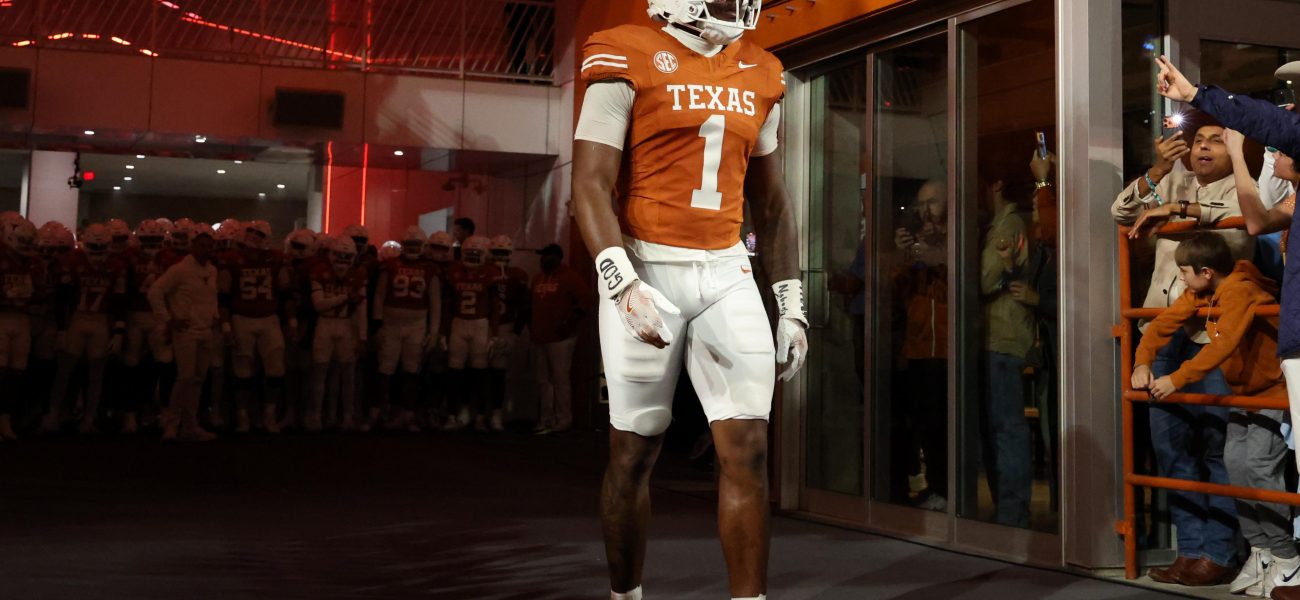
It’s no mere coincidence this news surfaces before the brutal handshake of a new college football season. The Walter Camp Football Foundation rolled out its preliminary roster, bestowing glory (and future NIL dollars) upon names like quarterback Arch Manning, offensive lineman Trevor Goosby, defensive lineman Colin Simmons, and linebacker Rasheem Biles for their first-team selections. Receiver Cam Coleman snagged a second-team spot, making it five from Austin’s formidable squad. Think about it: these young athletes, still technically amateurs, already carry the weight of corporate endorsements and fan expectations rivaling many professional league players.
And so, we watch as young men become commodities — their skill, their physique, their future earnings all tabulated, traded, and speculated upon long before their collegiate careers fully blossom. This isn’t just about a good game on a Saturday; it’s about a deeply entrenched economic system. The sheer commercial might behind American collegiate sports is astounding. Consider, for instance, that the National Collegiate Athletic Association (NCAA) generates upwards of 1.1 billion dollars in annual revenue, predominantly from men’s basketball and football championships, as reported by Statista in 2023. That kind of capital makes these preseason lists less about prophecy — and more about pre-market valuations. It’s capitalism with shoulder pads.
But the real story isn’t just within the stadium. This micro-economy of athletic talent whispers to the larger macro-economic narratives that consume nations. Pakistan, for instance, faces its own shadow games at the Khyber Pass, perpetually grappling with what some analysts call a brain drain — a consistent outflow of its most promising human capital. Graduates, doctors, engineers, skilled laborers — they often seek greener pastures, drawn by the magnetism of established global markets and the allure of greater opportunity. Just as an Arch Manning or Colin Simmons gets scouted and polished in a well-oiled system designed to maximize their professional yield, so too does the global economic engine seek out the brightest minds from emerging economies.
You see, the market isn’t much different whether it’s for quarterbacks or quantum physicists. Talent, especially recognized talent, commands a premium. The attention given to these college stars before they even graduate underscores a cold, hard fact: investment follows potential. It’s why countries in the developing world — much like smaller, less-resourced sports programs — struggle to retain their top performers when wealthier nations and institutions can offer more lucrative paths. It’s not just about money, either; it’s about infrastructure, exposure, — and the promise of a platform. Because if you’re good, the system wants you, no matter where you started.
📄 POLICY WIRE WHITEPAPER PUBLISHED: PAKISTAN'S NATIONAL SECURITY POLICY PRIORITIES
👉 READ BY CLICKING HEREIt’s all a matter of foresight — and calculation. The institutions, be they American universities or multinational corporations, are adept at identifying early indicators of success. These preseason All-American lists are nothing less than an initial public offering for athletic futures. The college landscape itself, with its recruiting roundups and transfer portal sagas, often feels like a perpetual bidding war. And it’s one where many a talent scout in Pakistan’s cricket academies or nascent tech hubs could perhaps learn a thing or two about identifying, nurturing, and monetizing exceptional skill, all while trying desperately not to lose it.
One might even consider the optics: these players are [QUOTE_PLACEHOLDER] a designation that confers instant status. But status, like all capital, is a finite resource, one that’s fiercely competed for. The digital sphere amplifying this news, with [QUOTE_PLACEHOLDER] boasting how their student-athletes [QUOTE_PLACEHOLDER] merely adds another layer to the carefully constructed narrative of institutional excellence. They aren’t just selling wins; they’re selling an entire ecosystem designed for high performance.
What This Means
This early acclaim for Texas’s football elite isn’t just an American sports curiosity; it reflects a sophisticated global mechanism for talent extraction and capitalization. Economically, it validates the multi-billion-dollar ecosystem of college athletics, highlighting the massive investment (and returns) in identifying and cultivating high-potential individuals. Politically, it draws parallels with the brain drain phenomenon impacting many South Asian nations, like Pakistan, where skilled individuals often migrate for better opportunities abroad. If a university can make a compelling enough pitch to retain five football players amidst intense competition, then struggling nations need to critically examine their own strategies for talent retention and investment. The implication? Nurturing domestic talent, be it in sports, science, or technology, requires more than just raw ability; it demands infrastructure, investment, and a palpable promise of future growth. Without these, even the most promising talents will inevitably seek the systems that best value — and monetize — their gifts. And that’s a truth applicable from the Texas plains to the plains of Punjab.