


Fanned by Old Ideas: Trump’s ‘Full Suppression’ Fire Policy Ignites Controversy, Claims Lives
POLICY WIRE — WASHINGTON D.C. — They called it the ‘10 AM Rule’ back in 1935—a mandate for federal fire crews to snuff out any new blaze by 10 AM the following morning. It was a scorched-earth...

POLICY WIRE — WASHINGTON D.C. — They called it the ‘10 AM Rule’ back in 1935—a mandate for federal fire crews to snuff out any new blaze by 10 AM the following morning. It was a scorched-earth strategy (pun entirely intended) that inadvertently turned America’s forests into tinderboxes. Fast forward almost a century, and that same ghost from the past has apparently dusted off its boots and re-entered the arena, courtesy of the Trump administration. And now, firefighters are dying.
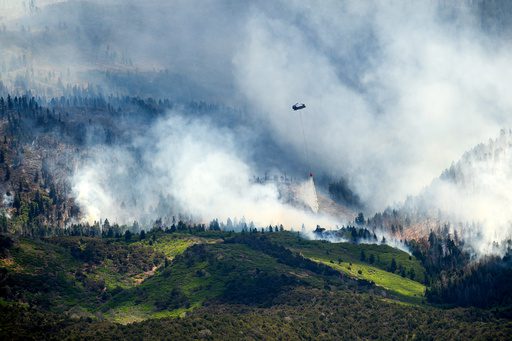
It’s not just a policy shift; it’s a profound, arguably reckless, reversal of decades of evolved understanding in fire ecology. But because politics rarely listens to science when there’s a quick-fix narrative to sell, we’re now dealing with the fallout. Three U.S. government firefighters recently perished in a Colorado wildfire, trapped as they battled a fast-growing inferno near the Utah border. Two more barely escaped with their lives, hospitalized with severe burns after deploying their flimsy, tent-like emergency shelters. They were members of a shiny new entity, the U.S. Wildland Fire Service, forged this year through an administrative fiat that bypassed congressional approval and hoovered up personnel from existing agencies like the Bureau of Land Management and the National Park Service.
This consolidation, alongside the revival of the old “full suppression” mantra, has critics shouting from the mountaintops. Many insiders say it’s simply trying to fix what wasn’t actually broken. You see, the old guard, the agencies whose staff now make up this new outfit, already boasted an impressive record. A staggering 98% of all wildfires were already being put out by these federal agencies, according to their own operational data before this bureaucratic reshuffle. So, the question remains: why this drastic, dangerous shift?
The new strategy aligns conveniently with the financial interests of private fire aviation companies. It’s no secret. Austin Moeller, a senior aerospace analyst for Canaccord Genuity group, laid it out pretty plain: “Anyone that has an air tanker benefits from this more aggressive contracting activity.” One of the main beneficiaries, Bridger Aerospace, just happens to be a company founded by U.S. Senator Tim Sheehy—who, after joining the Senate, sponsored a bill to cement this very consolidation into law. He stepped away from his company, sure, putting assets into a blind trust, but the optics are about as clear as smoke on a windless day.
The deaths, experts argue, are directly tied to a policy that insists on fighting every fire, everywhere, all the time—even when it makes no ecological or tactical sense. “The question is, why were they attacking that fire in the first place?” pondered Timothy Ingalsbee, a former federal firefighter and cofounder of Firefighters United For Safety, Ethics and Ecology. “What was actually at risk? If it was a bunch of shrubs on remote mountaintops, what was the real risk that justified putting those firefighters at risk?”
Interior Secretary Doug Burgum, however, paints a different picture. He’s pushing this hard. “Look, we’re facing unprecedented fire conditions. Our job isn’t to let forests burn; it’s to protect lives, homes, — and livelihoods,” Burgum stated, defending the policy. “This administration is taking decisive action to do just that.” But you’ve got to wonder if those decisive actions aren’t actually fueling the fire, both literally and figuratively.
📄 POLICY WIRE WHITEPAPER PUBLISHED: PAKISTAN'S NATIONAL SECURITY POLICY PRIORITIES
👉 READ BY CLICKING HEREVeteran fire managers like Michael Dudley, who used to direct fire and aviation for the Forest Service, have warned repeatedly: the old policy bred dense, overgrown forests because small, natural fires—which clear underbrush and dead material—were constantly suppressed. Now, when a blaze does ignite, it explodes. It’s a paradox, he explains, that modern policy makers seem determined to ignore. Luke Mayfield, from Grassroots Wildland Firefighters, acknowledged the chaos but holds out some hope: “There’s a level of confusion as everyone’s trying to sort out responsibilities and who’s in charge. But this consolidation could ultimately better serve firefighters.” (We’ll see about that.)
What This Means
This isn’t just a U.S. problem; it’s a global cautionary tale. The shift to a ‘full suppression’ model represents a politically convenient, yet ecologically disastrous, approach to a problem exacerbated by climate change. Economically, it’s a boon for private fire contractors—whose stock prices, one assumes, aren’t hurt by more, bigger, and faster-fought fires. It’s also a clear example of how government reorganization, even under the guise of efficiency, can create chaos and potentially sacrifice safety for expediency and political optics.
Politically, it’s a strong-man posture against a perceived enemy (wildfire) that disregards the intricate nuances of natural systems. And that has profound international implications. Imagine such a policy framework adopted, or even eyed, by nations in South Asia—a region already grappling with severe climate vulnerabilities. Countries like Pakistan face ever-increasing threats from extreme heat, droughts, and changing monsoon patterns, all of which contribute to an amplified risk of wildfires and other environmental catastrophes. Lahore’s Heartbreak from other disasters serves as a stark reminder of the human cost when environmental preparedness falters or is mismanaged. The idea that aggressive, all-out suppression is a long-term solution—rather than a desperate reaction to a complex climate challenge—could push already stressed ecosystems and fragile economies there, and across the Muslim world, even closer to the brink. Because frankly, ignoring ecological principles only makes the next disaster bigger.