


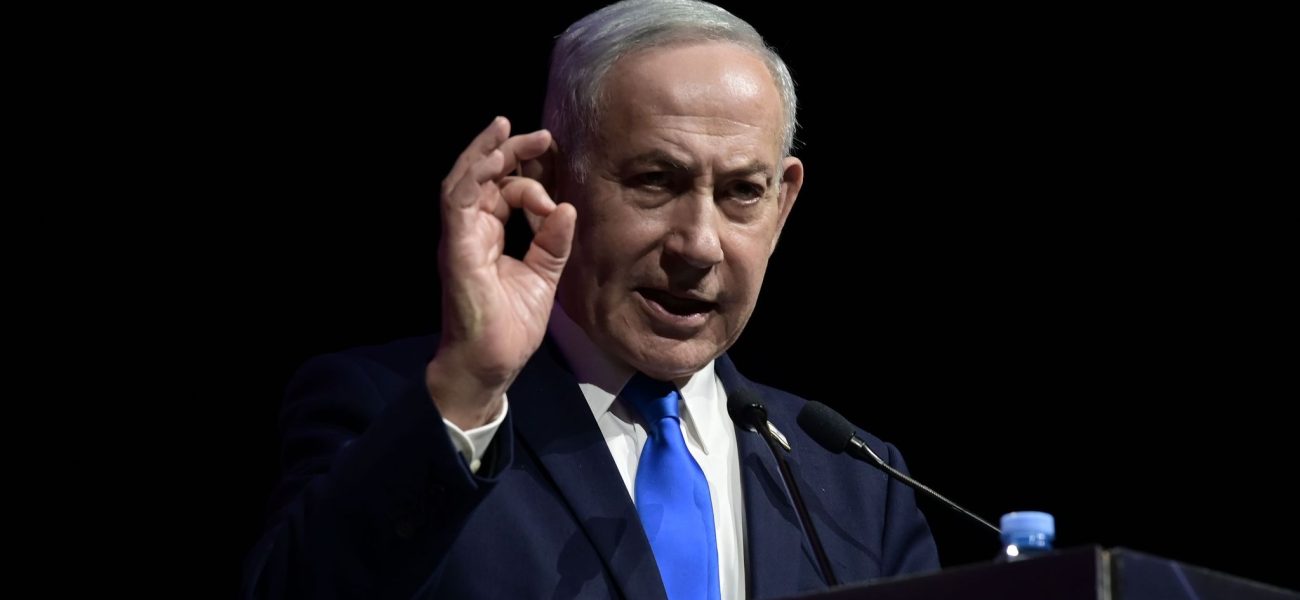
Netanyahu’s ‘Complete Destruction’ Order: Another Act in an Old, Brutal Play
POLICY WIRE — Beirut, Lebanon — The collective sigh of a region too familiar with the prelude to cataclysm barely registered over the hawkish pronouncements from Jerusalem. This isn’t just...

POLICY WIRE — Beirut, Lebanon — The collective sigh of a region too familiar with the prelude to cataclysm barely registered over the hawkish pronouncements from Jerusalem. This isn’t just about cross-border skirmishes anymore, folks; we’re talking about a declared intention to fundamentally alter the regional power dynamics. Benjamin Netanyahu, Israel’s long-serving Prime Minister, hasn’t merely issued a warning; he’s ordered the “complete destruction” of Hezbollah’s infrastructure. It’s a statement so audacious, so sweeping, it sounds less like a military directive and more like a final act—a last, desperate gamble in a theatre soaked in blood.
Because let’s be frank, “complete destruction” is an incredibly tall order, even for Israel’s formidable military machine. We’ve heard versions of this before. For decades, the tango between Israel and Hezbollah has been a morbid spectacle of escalations and de-escalations, always leaving behind a trail of ruin and unaddressed grievances. And now, this. The directive, reportedly issued following an internal security cabinet meeting, isn’t about containing skirmishes. No, it’s about eradication, full stop. You hear it, and you’re forced to consider the sheer scale of the conflict that would ensue, if they’re actually serious about that kind of total clearance.
“We won’t just clip their wings; we’re taking out the entire nest,” Prime Minister Netanyahu reportedly stated, his voice resonating with an unyielding resolve to Israeli media after the meeting. “The time for half-measures is long gone. Our security demands nothing less.” It’s the kind of blunt, no-nonsense talk designed to rally domestic support and project unwavering strength to an adversary. But the question is, how much of this is strategic posturing — and how much is genuinely implementable policy? History, unfortunately, suggests a wide, bloody gulf between the two.
Hezbollah isn’t some rogue outfit operating out of a few sheds. They’re a state-within-a-state in Lebanon, deeply embedded, well-armed, — and ideologically rigid. Their “infrastructure” isn’t just rocket launchers and command centers; it’s social services, political influence, and deeply entrenched community roots. Trying to pull that out entirely would mean unraveling the very fabric of southern Lebanon, and probably a significant chunk of Beirut too. It’s an enterprise of unimaginable human cost. Prime Minister Najib Mikati of Lebanon put it starkly: “This isn’t just about Hezbollah’s tunnels or depots; it’s about Lebanon’s sovereignty and stability. Escalation here doesn’t stop at our borders; it tears the region apart, fueling cycles of extremism we all know too well.” He’s not wrong. Every significant conflict here echoes for miles, politically — and socially.
Consider the devastating 2006 conflict, often called the July War. That limited engagement, relatively speaking, still resulted in over 1,200 Lebanese, mostly civilians, and 160 Israelis killed, according to official UN reports. That’s a “limited” conflict. Netanyahu’s current pronouncement implies a scope far beyond that previous carnage, potentially leading to widespread displacement and humanitarian disaster that would inevitably spill into regional concerns for organizations like the Organization of Islamic Cooperation (OIC), many of whom (like Pakistan) would be forced to react strongly to the burgeoning crisis. You’ve got to wonder what the end-game even looks like from Netanyahu’s perspective on this one. Because realists will tell you that a vacuum like that often fills with something worse.
📄 POLICY WIRE WHITEPAPER PUBLISHED: PAKISTAN'S NATIONAL SECURITY POLICY PRIORITIES
👉 READ BY CLICKING HEREWhat This Means
This “complete destruction” order isn’t just a tough talk; it’s a political and military declaration with profound implications. Politically, it might be Netanyahu’s bid to solidify his legacy and quiet critics who say he’s been too soft or ineffectual. But it risks isolating Israel internationally, inviting condemnation from allies already wary of escalating conflict in the Levant. For Lebanon, it means widespread devastation, a potential refugee crisis dwarfing anything seen recently, and further destabilization of its already fragile political and economic landscape.
Economically, any large-scale military operation would send shivers through global markets. Oil prices would likely jump, — and investor confidence in an already turbulent Middle East would plummet. Geopolitical flux tends to make investors nervous, pushing them towards safer, perhaps energy-focused, assets, as evidenced by recent trends where US$29 trillion investors shifted to energy, often signaling deeper concern about broader dollar health and stability. But for Lebanon specifically, a total war would annihilate its service-based economy, pushing it towards total collapse. The global reverberations wouldn’t just be economic, mind you; think about how the region, the broader Muslim world, might react. Protests, increased radicalization recruitment, and a significant diplomatic push from countries seeking to de-escalate—or even to fan the flames—are all on the table. The call for a “complete destruction” might just be the very spark that sets a larger conflagration alight, drawing in regional powers, and setting the stage for decades of simmering resentments, regardless of military outcomes.