


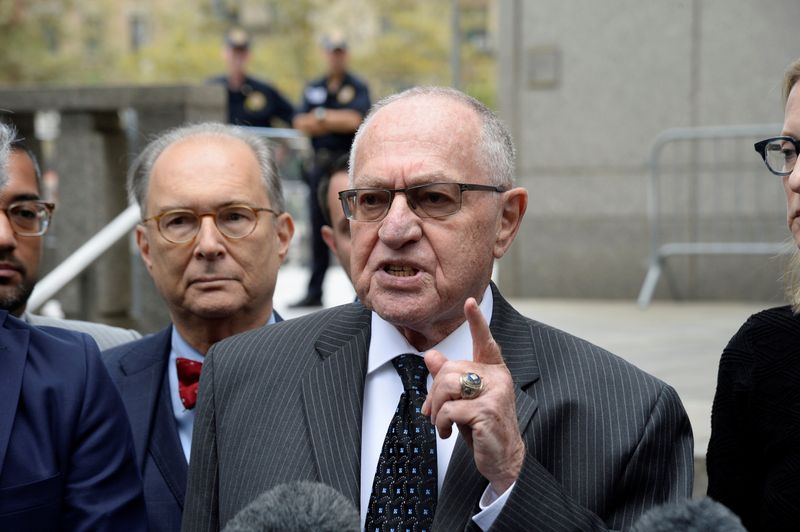
Legal Lion’s Last Stand: Dershowitz’s CNN Battle Fizzles at SCOTUS, Shaking Media Accountability Debates
POLICY WIRE — Washington D.C. — For years, the fight has simmered—a high-profile, deeply personal grudge match between one of America’s most recognizable legal minds and a cable news behemoth....

POLICY WIRE — Washington D.C. — For years, the fight has simmered—a high-profile, deeply personal grudge match between one of America’s most recognizable legal minds and a cable news behemoth. But this week, the gavel finally fell with a dull thud, not a triumphant clang. The U.S. Supreme Court—those nine black-robed arbiters of last resort—simply declined to hear attorney Alan Dershowitz’s appeal against CNN. That quiet refusal ends a lengthy, bitter defamation lawsuit, a legal journey that started way back when.
It’s a story less about abstract jurisprudence and more about the raw nerve of public reputation in an era where narratives, real or imagined, fly at warp speed. Dershowitz, a one-time darling of liberal media who later became a lightning rod for his association with figures like Jeffrey Epstein and his outspoken defense of Donald Trump, accused CNN of deliberately distorting his comments regarding Epstein. He insisted the network maliciously portrayed him as having trafficked minors himself, rather than merely debating the legal intricacies of immunity for Epstein’s alleged victims. He’d lost in lower courts; they ruled his arguments didn’t meet the demanding ‘actual malice’ standard required for public figures suing media.
“They didn’t just misrepresent me; they fabricated a narrative to destroy my reputation and, frankly, my family’s peace of mind,” Dershowitz asserted in a statement provided to Policy Wire, his words seething with residual indignation. “This fight isn’t over just because this particular door closed. The battle for truthful reporting, for accountability, continues.” And you know, he’s not wrong about the importance of that fight, even if the legal system chose not to wade further into *his* specific grievances.
For media organizations, it’s a familiar, if somewhat nerve-wracking, victory. Defamation lawsuits are an occupational hazard, often perceived as attempts to chill aggressive journalism. CNN’s legal team, while typically tight-lipped on such matters, would likely characterize the outcome as an affirmation of journalistic latitude. A CNN spokesperson, speaking on background, put it like this: “Our reporting is robust, grounded in facts, and our journalists stand by their work. This ruling, while not directly on the merits of every point, ultimately underscores the high bar for defamation that protects a free press.” They’ve seen plenty of these legal scrapes, so it’s not really a surprise they’d stand by their journalists.
The numbers don’t lie: according to an analysis by the Media Law Resource Center, only a paltry 3% of defamation claims against news organizations in federal courts over the last decade have resulted in a plaintiff’s win with substantial damages. That figure highlights just how difficult it’s for public figures to succeed in these cases, an almost impossible standard by design to safeguard robust—some would say sometimes reckless—discourse. That’s a good thing, mostly. Because nobody wants a world where journalists are afraid to print anything controversial. But it also means those feeling wronged face an Everest-level climb.
Dershowitz, a man who has made a career of representing controversial clients and airing his opinions—often loudly—on national television, undoubtedly understands the terrain. He knows the media game. But for a lawyer, especially one whose stock in trade is his reputation and persuasive power, having that challenged so publicly must have stung. The Supreme Court’s decision, or lack thereof, basically reaffirms that public figures generally have a thicker skin to develop, or at least a much higher burden of proof to carry, when battling media outfits.
This kind of outcome inevitably feeds into broader global debates about press freedom versus accountability, especially in nations grappling with their own media landscapes. Think of Pakistan, where media scrutiny, government influence, — and libel laws are a constant, complex balancing act. The perception of a two-tiered justice system—one for the powerful, another for the perceived underdog—isn’t limited to the US. In many parts of the Muslim world, and indeed beyond, international media narratives are often met with deep skepticism, a sense that foreign news outlets sometimes operate with different standards or biases. This decision might be seen as another crack in the perceived armor of media accountability, reinforcing a notion held by some that established Western media can operate with a certain impunity, particularly when the ‘victim’ is a controversial figure. It feeds the narrative that powerful institutions—be they media or political—are tough to beat in their home turf.
What This Means
This ruling—or rather, the Supreme Court’s quiet refusal to engage—sends a ripple of both relief and concern. For major news organizations like CNN, it reinforces the robust protections afforded by American defamation law. They can breathe a bit easier, continuing their work under the protective umbrella of the ‘actual malice’ standard. It essentially means unless you can prove a reporter *knowingly* lied or acted with a ‘reckless disregard for the truth,’ good luck winning. That’s a huge barrier. But. And it’s a big ‘but’—for individuals, even those who court public attention, who feel genuinely maligned, it hammers home just how insurmountable the legal path can be.
The economic implications are subtle but real. If media outlets faced easier paths to defamation convictions, you’d see a significant chilling effect on investigative journalism and critical commentary. Lawsuits are expensive, and the constant threat of huge payouts could cripple smaller newsrooms, affecting media diversity. But the current standard also means there’s less direct economic consequence for errors or aggressive reporting that don’t quite hit the malice threshold. Politically, this ruling will undoubtedly fuel ongoing arguments about media bias and the trustworthiness of institutions. It allows partisans on both sides to cherry-pick—defenders of free speech will herald it; critics of ‘mainstream media’ will point to it as further evidence of an unchecked, self-protecting elite. This judicial quietude only solidifies the lines in the culture war over information — and accountability. It leaves open the question: where does true recourse lie when you feel wronged by a public narrative, if not in the courts? It’s a persistent tension, one that echoes in every corner of policy and public life.