


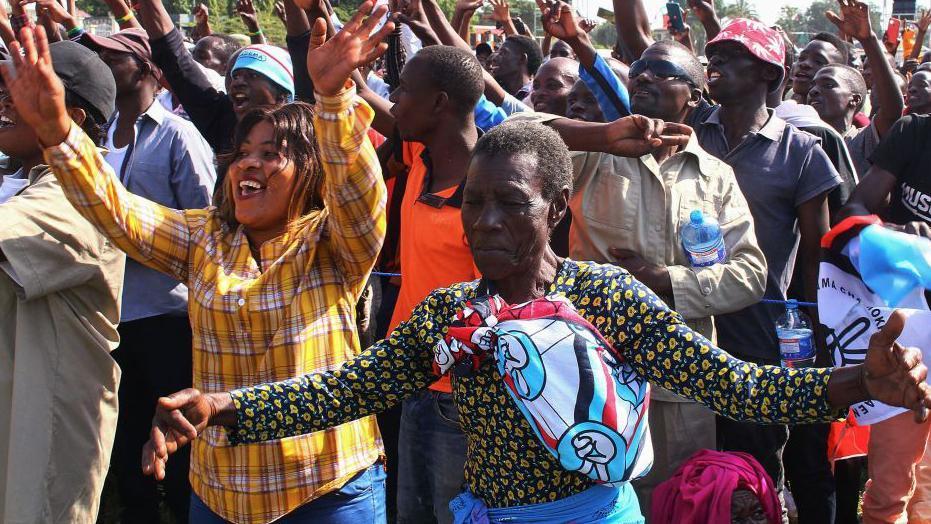
Tanzania’s Fading Bloom: The Return of Restrained Voices in Dar es Salaam
POLICY WIRE — Dar es Salaam, Tanzania — The air, usually thick with the boisterous rhythm of daily life and, until recently, the clamor of political dissent, has taken on a peculiar quietude in...

POLICY WIRE — Dar es Salaam, Tanzania — The air, usually thick with the boisterous rhythm of daily life and, until recently, the clamor of political dissent, has taken on a peculiar quietude in Tanzania. Three years after seemingly tossing off the shackles of a nearly seven-year prohibition, the nation’s political landscape finds itself back in a familiar, restrictive straitjacket. It’s a return to form, it seems, for a country often lauded as a regional anchor but which, at intervals, forgets the value of a free-wheeling public square.
President Samia Suluhu Hassan’s administration, initially hailed for a more conciliatory approach compared to her firebrand predecessor, has quietly but effectively reinstated the blanket ban on political gatherings outside election campaigns. The move has prompted more than a few raised eyebrows, not just domestically, but among international observers who’d briefly glimpsed a glimmer of democratic rehabilitation. You’d think they’d have learned; hope, they say, springs eternal—but sometimes, it just hits a bureaucratic wall, doesn’t it?
Critics don’t see this as an exercise in administrative tidiness. They see it as a deliberate chokehold on civic space. But, you know, these things always come wrapped in the soft-spun yarn of maintaining peace — and order. “We’re not curtailing freedom,” insisted Dr. Anthony Mavunde, Deputy Minister in the Prime Minister’s Office, responsible for Policy, Parliamentary Affairs, Labour, Employment, Youth and Persons with Disability, in a recent interview—or, at least, that’s how he’d probably spin it. “What we’re doing is ensuring that stability isn’t compromised by premature politicking. The proper forum for political engagement, it’s during elections.” It’s a line, if you’re keeping track, that’s been trotted out by governments from various corners of the globe eager to dampen spontaneous expression. They call it ‘order,’ but for many, it smells like control.
For the opposition, though, it’s not just a debate over semantics. It’s their oxygen getting cut. Tundu Lissu, a prominent figure in the Chadema opposition party and a survivor of an assassination attempt, didn’t mince words—and wouldn’t. “This isn’t governance; it’s an authoritarian relapse,” Lissu, ever the fighter, would argue. “How can you claim to be building a modern democracy when you refuse to allow the people, and their chosen representatives, to air grievances or propose alternatives? It simply won’t stand, not in a nation that believes in itself.” You don’t get much plainer than that, do you?
The directive arrived via police channels, a rather understated method for such a momentous reversal, underscoring a creeping normalization of executive fiat. It isn’t just about loud megaphones in dusty squares. It’s about shrinking the bandwidth for dialogue. And that sort of move resonates far beyond Dar es Salaam’s humid streets. It tells potential investors something, too, about a system’s predictability, or lack thereof. When the rules can pivot so sharply, businesses get skittish. Ask anyone in emerging markets. It’s never a good sign.
This isn’t an isolated incident either; you can trace similar trajectories in a string of nations striving (or pretending to strive) for democratic credentials. From parts of Southeast Asia to a few states in the broader Muslim world, the narrative often goes like this: initial liberalization, followed by a ‘realignment’ that tightens the reins. For Tanzania, where roughly one-third of the population is Muslim, these restrictions could also feed into pre-existing frustrations within communities already grappling with questions of representation and socio-economic disparities. You don’t want to create vacuums. Because when open dialogue is squashed, other, less palatable forms of communication often emerge. Consider the socio-political pressures that manifest in places like Pakistan, where historical curtailments of political freedoms often correlate with social unrest. It’s a delicate balancing act, maintaining control without losing legitimacy, one that often miscalculates the long-term cost.
📄 POLICY WIRE WHITEPAPER PUBLISHED: PAKISTAN'S NATIONAL SECURITY POLICY PRIORITIES
👉 READ BY CLICKING HEREFor what it’s worth, the U.S.-based watchdog Freedom House has consistently rated Tanzania as “Not Free,” assigning it a meager 34 out of 100 in its 2023 Freedom in the World report, citing specific concerns about political rights and civil liberties. The new ban, it stands to reason, isn’t going to help those numbers inch upwards. The data’s clear: democratic backsliding is a hard habit to break, especially once leadership tastes unchallenged authority. What makes them think this time will be different?
What This Means
This re-imposition of rally bans is a glaring U-turn for Tanzania. Politically, it signals President Hassan’s firm intention to consolidate power and reduce challenges to her ruling Chama Cha Mapinduzi (CCM) party, even at the expense of her reformer image. It tells us that while the language may be softer than her predecessor’s, the desire for control hasn’t waned. For opposition parties, it’s a crippling blow, pushing them further to the fringes and making meaningful electoral contestation an uphill, if not impossible, battle. It makes organizing near-impossible outside of election seasons, limiting public awareness campaigns, voter education, and genuine grassroots mobilization. The practical implications are far-reaching; local accountability fades, public discontent festers unseen, and legitimate criticisms find no open valve for release. The perplexing persistence of power often stems from this kind of systemic stifling of challengers.
Economically, such moves rarely bode well. Investor confidence often correlates with governance stability — and respect for rule of law, including civil liberties. While the administration might argue the ban creates ‘stability,’ international capital usually prefers a lively, predictable political discourse over enforced silence. Reduced civic space often precedes or accompanies corruption, as oversight bodies struggle to operate freely, and public outcry against graft becomes muffled. So, while Tanzania dreams of further economic development, it’s simultaneously pulling on the reins of its democratic horse, a paradox that seldom delivers consistent, equitable growth. You just can’t have it both ways for long.