

Wimbledon’s Redemption Arc: Dimitrov’s Grit Echoes Deeper Narratives
POLICY WIRE — London, United Kingdom — The velvet hush of Centre Court usually signals grand traditions, an unwavering sense of order. But for Grigor Dimitrov, twelve months ago, those hallowed...

POLICY WIRE — London, United Kingdom — The velvet hush of Centre Court usually signals grand traditions, an unwavering sense of order. But for Grigor Dimitrov, twelve months ago, those hallowed grounds had felt less like a sanctuary and more like an arena for a very public, gut-wrenching surrender. His body, not his opponent, had declared game, set, match prematurely. That was a capitulation he hadn’t seen coming, leaving him tearful, adrift, and his formidable streak of 58 consecutive Grand Slams shattered.
It’s strange, isn’t it? How the most individual of battles on a tennis court often mirror much larger, collective narratives of resilience, hope, and the brutal calculus of a comeback. Because this past week, the echoes weren’t of defeat, but of defiance. Now 33, not 35 as was previously reported, the Bulgarian’s return felt less like a sporting fixture and more like a carefully orchestrated psychological experiment, played out before thousands.
The murmurs had been there, faint but insistent, concerning the former world number three’s future after a punishing pectoral injury had forced him out while leading world number one Jannik Sinner by two sets. Imagine that — staring down a career-defining upset, only for your own physical being to betray you. The journey back was a gauntlet, featuring first-round exits at the Australian Open and, perhaps more tellingly, the ignominy of qualifying rounds at the French Open. It was a steep descent, especially for a player of his calibre.
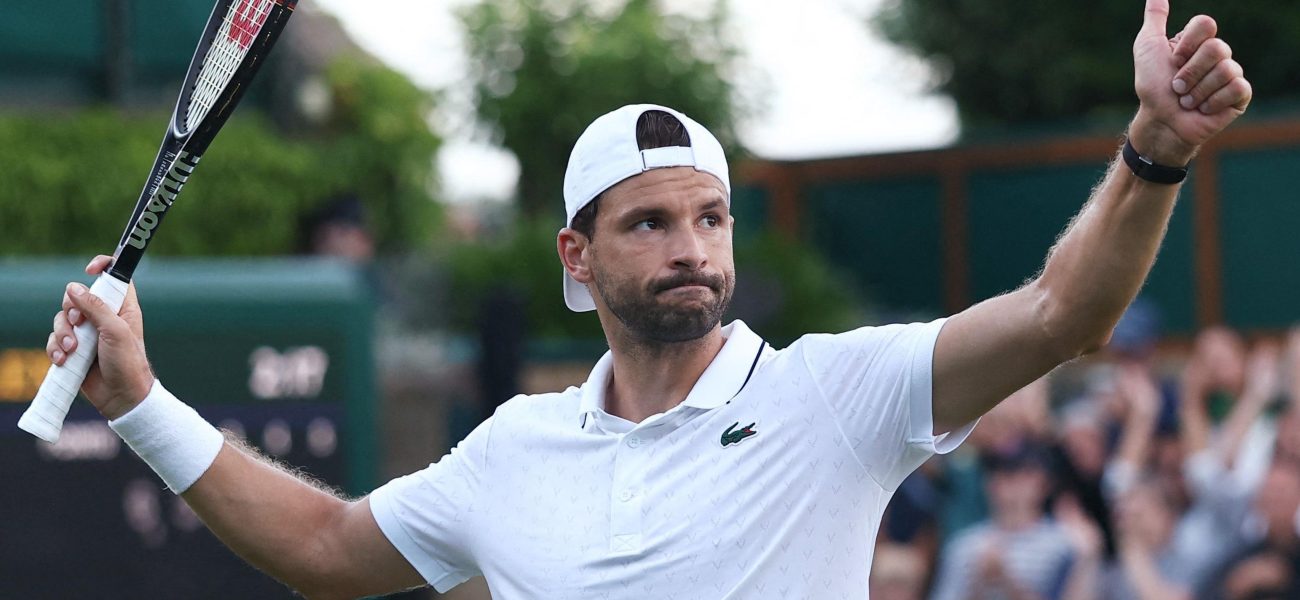
And yet, here we’re. Dimitrov didn’t just win; he authored a story. His 7-6 (7-4) 6-3 7-5 victory over Australia’s Dane Sweeny wasn’t merely a statistic. It was a palpable sigh of relief, a collective exhale from the sport’s purists who’d watched his graceful game battle against the ravages of time and injury. “I just wanted to take it all in,” Dimitrov told reporters, signing autographs long after the last ball was struck. “I’m incredibly appreciative of the support I’ve had. This feels like an embrace.” It’s the kind of raw emotion that reminds you these aren’t just athletes; they’re walking, breathing sagas.
“Issuing wildcards isn’t merely a gesture of charity; it’s a calculated wager on pedigree and the potential for stories that captivate audiences globally,” commented Anya Sharma, a senior spokesperson for the All England Lawn Tennis and Croquet Club (AELTC). “Grigor’s narrative transcended mere sport. It tapped into something deeper.” And perhaps, she suggested, something more profitable. But this isn’t just about the money; it’s also about the emotional capital. Dr. Omar Zaidi, a prominent sports sociologist at the Lahore University of Management Sciences, often notes the profound effect such personal triumphs have, particularly in emerging tennis markets. “For youth in Pakistan, watching a seasoned professional like Dimitrov fight his way back after such heartbreak – it provides an enduring lesson in persistence,” Zaidi states, highlighting how figures like Dimitrov become unintended ambassadors for mental fortitude and perseverance in regions hungry for global sporting heroes, even in countries where cricket often overshadows all other sports.
It’s true; over a long career, moments stick. Dimitrov admitted this victory would be one. The ‘Trust me with a wildcard’ plea had resonated, proving that sometimes, the institutions get it right, even when the data might suggest otherwise. Contrast this against the unceremonious early exits elsewhere in the tournament: American fourth seed Ben Shelton, a two-time major semi-finalist, ousted by world number 140 Otto Virtanen, and even veteran Stan Wawrinka – another fan favourite – bowing out to Matteo Berrettini in a four-hour marathon where every set was decided by a tie-break.
📄 POLICY WIRE WHITEPAPER PUBLISHED: PAKISTAN'S NATIONAL SECURITY POLICY PRIORITIES
👉 READ BY CLICKING HEREThe Wimbledon prize money pool, for 2024, has swelled to an eye-watering £50 million, marking an 11.9% increase from last year, as reported by the Lawn Tennis Association. This isn’t just a testament to the sport’s enduring popularity, but a sharp indicator of the increasingly lucrative nature of global athletic competition – a landscape where a comeback isn’t just personal, it’s economically significant, injecting narratives that feed viewership and brand interest.
What This Means
Dimitrov’s emotional win isn’t just a heartwarming sidebar; it’s a micro-drama that spotlights the intricate policy decisions inherent in major sporting events. Wimbledon’s wildcard selections aren’t accidental; they’re strategic. By backing a player with a history of flair — and past performance, even after a slump, the AELTC isn’t just being kind. They’re investing in storylines that captivate global audiences, which in turn fuels broadcast rights, sponsorship deals, and ultimately, the £50 million prize money pot itself. It’s a soft power play, a cultivation of human interest narratives that elevate the event beyond mere athleticism. Because these kinds of stories—the ones about overcoming monumental adversity—resonate universally. They cut across borders, inspiring fans from London to Lahore, making a small win on a court a much bigger, more meaningful global event. It solidifies Wimbledon’s brand not just as a sporting contest, but as a crucible for compelling human drama. And that, in an era of endless digital distractions, is priceless.
It reminds us that beyond the raw numbers and seeding permutations, the human element—the grit, the doubt, the ultimate redemption—remains the sport’s most powerful, bankable asset. And frankly, Policy Wire has been tracking this trend across all major sporting spectacles, observing how personality and narrative drive significant geopolitical and economic currents, whether it’s on a tennis court or a football pitch, linking back to analyses on the World Cup’s economic impact. It’s a continuous, complex interplay of the personal — and the systemic, playing out every single day.