

Fetterman’s Gauntlet: Cracks Emerge in Democratic Consensus as Internal Discord Brews
POLICY WIRE — Washington, D.C. — It’s a bit like watching a family argument at Thanksgiving, except the dinner table spans a continent, and the stakes involve policy affecting millions. Nobody...

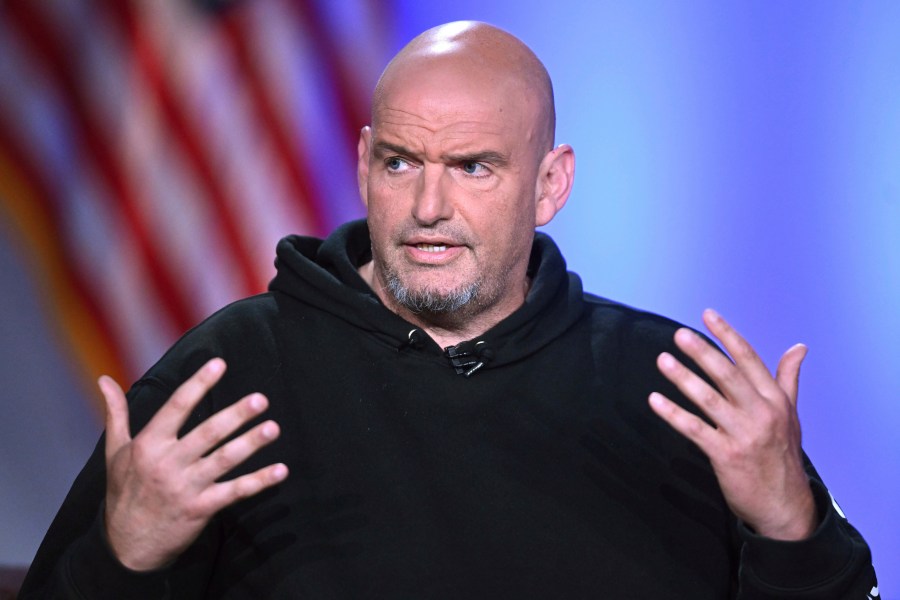
POLICY WIRE — Washington, D.C. — It’s a bit like watching a family argument at Thanksgiving, except the dinner table spans a continent, and the stakes involve policy affecting millions. Nobody expects unity in politics, but Senator John Fetterman—a man whose physical stature is often overshadowed only by his candid, unconventional political style—has just lobbed a particularly sharp turkey bone directly into the heart of his own party.
His observation, made in recent days, suggests that a significant chunk of the Democratic Party is, as he put it, [QUOTE_PLACEHOLDER]. Not just drifting, mind you, but ‘getting taken over.’ That’s pretty direct, wouldn’t you say? It isn’t a whispering campaign, is it? This isn’t the kind of polite dissent often cloaked in bipartisan platitudes. It’s an almost raw pronouncement that lays bare an increasingly fractured internal landscape for America’s blue camp.
What gives? We’re not talking about minor disagreements over pork barrel projects here. We’re talking about fundamental ideological clashes—the sort that define a party’s very identity and direction. But to hear one of its own—a sitting senator, no less—declare a significant internal ‘takeover’ by ‘extreme views’? That really raises an eyebrow. And it speaks volumes about the growing tension between the Democratic Party’s established, often pragmatic wing, and its burgeoning, more ideologically pure left flank.
Fetterman, who carved out a working-class populist image during his campaigns, has positioned himself as an almost anti-woke contrarian within his caucus, advocating for a return to what he sees as core, common-sense Democratic principles. But his isn’t a lone voice in the wilderness, either. Other, more establishment-friendly Democrats have, in quieter moments, expressed similar frustrations about the party’s perceived leftward lurch and what they interpret as an alienation of mainstream voters.
This internal friction, often masked by party solidarity, reflects a deeper shift in American political identity. It suggests an almost frantic re-evaluation, where older definitions of left — and right are becoming, well, fluid. You’ve got to wonder if this struggle for the Democratic soul also impacts how the US presents itself on the world stage. Because how America defines its internal values absolutely shapes its foreign policy, doesn’t it? Take, for example, the intricate geopolitics of the Muslim world or the South Asian subcontinent.
Consider the delicate balancing act involved in Washington’s approach to Pakistan, a nation straddling a volatile border, deeply interconnected with regional security, and home to a vibrant—and often opinionated—Muslim majority population. When a major US political party struggles internally with defining what constitutes ‘extreme,’ especially concerning human rights, economic justice, or even specific international conflicts (like the ongoing Israeli-Palestinian issue), it sends ripples. And these ripples aren’t just contained to Capitol Hill. They propagate, influencing narratives and perceptions in capitals like Islamabad or Jakarta, potentially shifting allegiances or creating diplomatic headaches for future administrations. Pakistan, for instance, has always navigated its relationship with the U.S. through a complex lens, often interpreting American domestic political shifts through the prism of its own religious and geostrategic concerns. A perceived radicalization or even ideological splintering of a major American party—be it Republican or Democrat—doesn’t go unnoticed there.
A recent survey by the Pew Research Center in 2023 indicated that approximately 47% of Americans believe political leaders say extreme things because they genuinely believe them, a figure that has risen steadily over the past decade. It’s not just a few fringe groups anymore. It’s bleeding into the mainstream perception of leadership itself.
But the Pennsylvania Senator’s public candor might serve a different purpose entirely: to shock the party apparatus into a moment of self-reflection. Perhaps it’s a necessary if unwelcome jolt. Maybe it’s an attempt to redefine the narrative before a crucial election cycle, aiming to bring the party back to a perceived center that he feels it’s abandoned. Or, perhaps it’s simply a statement of plain truth, an unvarnished assessment from someone who still sees himself as speaking for a working-class ethos that feels increasingly ignored by progressive ideologues. He’s saying the quiet parts out loud, — and boy, are they loud.
What This Means
This isn’t just internal grumbling; it’s a political tremor that could presage a larger earthquake for the Democratic Party. If a figure like Fetterman feels compelled to speak so directly about ideological drift, it suggests deep-seated anxieties among centrists that could influence everything from candidate selection in primary races to the party’s messaging in general elections. Politically, this creates an opening for the Republican Party to paint Democrats as out of touch, radicalized, or internally incoherent. It makes coalition building tougher, too, when parts of your own bench are openly questioning the prevailing ideological winds. Could it push moderates to align with less preferred candidates in an effort to regain control? Absolutely.
Economically, such ideological fractures often lead to policy paralysis or wildly fluctuating policy proposals, making long-term planning difficult for businesses and global investors. If the ‘extreme views’ Fetterman references gain traction, we could see a push for more expansive, state-driven economic interventions, potentially spooking markets or accelerating debates around wealth redistribution. On the flip side, if his critique gains currency, it could force a more centrist, fiscally conservative approach to try and appeal to broader swathes of the electorate. But here’s the thing: uncertainty—even ideological uncertainty—is a beast. And it’s not good for sustained growth, is it?
Globally, these domestic skirmishes are never truly domestic. A divided Democratic Party projects an image of weakness or ideological inconsistency on foreign policy—an observation that’s keenly felt in regions already struggling with instability or looking for clear leadership signals. Countries like Pakistan, reliant on various degrees of U.S. partnership, might find themselves trying to decode America’s future trajectory. It’s not just about who’s in the White House, but also the perceived philosophical leanings of an entire major party. What if those perceived ‘extreme views’ translate into a radically different approach to international aid, trade agreements, or alliances? It’s a risk they’re certainly calculating right now.