


Albuquerque’s Dry Veins: A Common Rescue Unveils Deeper Urban Peril
POLICY WIRE — ALBUQUERQUE, N.M. — It starts, as it often does in our modern, hyper-connected world, with a flash of digital urgency. A short video clip, grainy sometimes, often shaky, depicting...

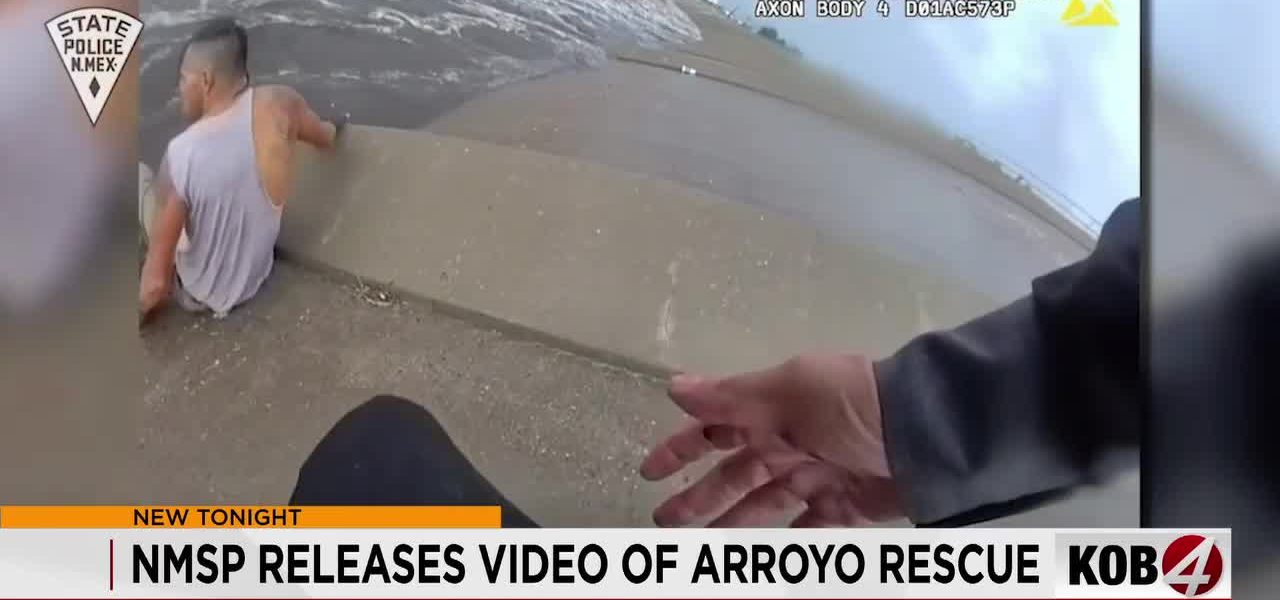
POLICY WIRE — ALBUQUERQUE, N.M. — It starts, as it often does in our modern, hyper-connected world, with a flash of digital urgency. A short video clip, grainy sometimes, often shaky, depicting humanity in extremis or in extremis rescue. But what if those fleeting images — a man hauled from a raging urban creek, an officer’s strained breath visible on bodycam footage — are less about the singular heroics we crave, and more about the yawning policy gaps quietly devouring our urban landscapes?
Because let’s be honest, few of us think about the bone-dry riverbeds, or ‘arroyos’ as they’re known out here in the desert Southwest, until they’re not so dry anymore. They’re typically these scrubby, forgettable ditches winding through residential zones and commercial strips, barely registering on the civic consciousness. Until they suddenly demand attention, turning into vicious, unpredictable torrents with a seemingly harmless rain cloud miles upstream.
That’s precisely what played out last Thursday evening, an event barely a blip on the national radar, yet a microcosm of urban vulnerability. A routine patrol by a New Mexico State Police officer took an unexpected turn when a concerned citizen flagged them down near Carlisle. Not for a traffic stop, not for a fender-bender, but for something far more elemental: a man trapped within the water-swollen depths of an arroyo.
New Mexico State Police units, quickly backed by Albuquerque Fire Rescue (AFR), converged on the scene. And they’ve got a system, mind you. Spokespeople say when a swift-water rescue call comes in, they don’t just send one team. Oh no, they dispatch multiple crews to various assigned spots along the arroyo, betting on where the current might spit out its human cargo. It’s an unspoken testament to the commonality, — and danger, of such incidents. The team located the distressed man in the water west of Carlisle, exhausted, beaten by the current. An officer had to carry him out. Carried him, because he just couldn’t walk. Think about that for a second: the sheer, debilitating power of even a relatively shallow urban flash flood.
It’s a stark reminder, isn’t it, of the fragile truce between our sprawling cities and the wild, untamed hydrology they often try to pave over. These arroyos—the equivalents of ‘wadis’ in drier regions of the Middle East and South Asia—are not merely drainage ditches. They’re nature’s original, brutal capillaries, designed to channel enormous volumes of water with fierce efficiency, albeit on an erratic schedule. In places like Karachi, Pakistan, monsoon rains annually transform urban ‘nullahs’ (similar to arroyos) into death traps, often sweeping away homes and lives in informal settlements that have mushroomed too close to their banks. The problems, it seems, transcend continents, though the resources to mitigate them certainly don’t.
Chief Robert Cordova of the New Mexico State Police, a veteran of two decades overseeing urban patrols, didn’t mince words. “Our officers train rigorously for all sorts of scenarios, but these arroyo rescues, they’ve got a brutal unpredictability. You’re dealing with immense kinetic energy, hidden debris, — and often, individuals who’ve misjudged the danger. It’s not just a matter of pulling someone out; it’s a precision operation that drains significant resources.” He’s right; these aren’t casual dips in the local creek.
The incident wasn’t isolated. According to a 2022 analysis by the National Weather Service, flash flood events in the Southwestern U.S. have increased by nearly 15% over the last decade, directly correlating with more intense, shorter-duration rainfall events. This isn’t just about ‘bad luck.’ It’s climate. It’s consequence.
📄 POLICY WIRE WHITEPAPER PUBLISHED: PAKISTAN'S NATIONAL SECURITY POLICY PRIORITIES
👉 READ BY CLICKING HERECouncilwoman Aisha Patel, who chairs Albuquerque’s Public Safety Committee, understands the fiscal squeeze. “Every swift-water rescue pulls our trained first responders from other emergencies. But how do you put a price on a life? The bigger picture, for us, is proactive infrastructure investment. We can’t just react forever; we have to re-engineer these historical floodways for current — and future realities. And yes, that costs real money. Taxpayer money. It’s an ongoing, often invisible battle against the elements.” Her words echo the sentiments of urban planners grappling with informal settlements near wadis in, say, Cairo or Peshawar. We all build close to water; it’s just the nature of settlement. The desert is no exception.
Paramedics, bless ’em, were there promptly to treat the retrieved man. KOB 4 news was there, cameras rolling. But for how many minutes do we actually internalize what this signifies beyond a headline? This wasn’t some daring mountain expedition gone wrong. This was an everyday peril, lurking in the concrete and stucco heart of a major American city, triggered by a routine rain shower.
What This Means
This single rescue, seemingly unremarkable in the broader news cycle, actually speaks volumes about contemporary urban challenges. First, there’s the undeniable strain on public safety resources. These aren’t cheap or easy operations; they demand specialized training, equipment, and divert personnel from other critical duties. The economic impact is subtle but insidious, as emergency services are increasingly stretched thin, managing what are essentially environmental hazards magnified by urban development. It’s a continuous, expensive dance.
But the political implications run deeper. There’s a persistent reluctance in many city councils, including Albuquerque’s, to commit significant, upfront capital to comprehensive arroyo management and flood mitigation, despite clear projections of intensified rainfall patterns. It’s not a flashy ribbon-cutting opportunity, is it? Draining ditches. Not exactly popular. So, decisions often lean towards reactive rescue operations rather than proactive, preventative infrastructure—until a tragedy strikes, at which point there’s a predictable, temporary outcry for action. These quiet political choices often shape outcomes far more than any dramatic headline. And it forces us to confront uncomfortable questions about where our priorities truly lie in the age of rapid climate shifts and growing urbanization. Who bears the cost? And, more importantly, whose lives get sacrificed to save a few pennies in a municipal budget? It’s a question without an easy answer, because it involves the unpleasant reality of invisible, yet existential, threats that rarely make for viral video — until someone is carried, exhausted, from a torrent that wasn’t supposed to be there.