


Deadly Frontier: Pakistani Strikes Ignite Retaliation Threat as Border Tensions Flare
POLICY WIRE — Islamabad, Pakistan — The air along the often-turbulent Pakistan-Afghanistan border—a dividing line both geographical and ideological for decades—has, once again, grown thick with the...

POLICY WIRE — Islamabad, Pakistan — The air along the often-turbulent Pakistan-Afghanistan border—a dividing line both geographical and ideological for decades—has, once again, grown thick with the acrid scent of conflict. What started with reports of Pakistani forces engaging in overnight ground operations and aerial strikes has quickly morphed into another tragic ledger of human cost, igniting threats that reverberate well beyond the immediate flashpoint.
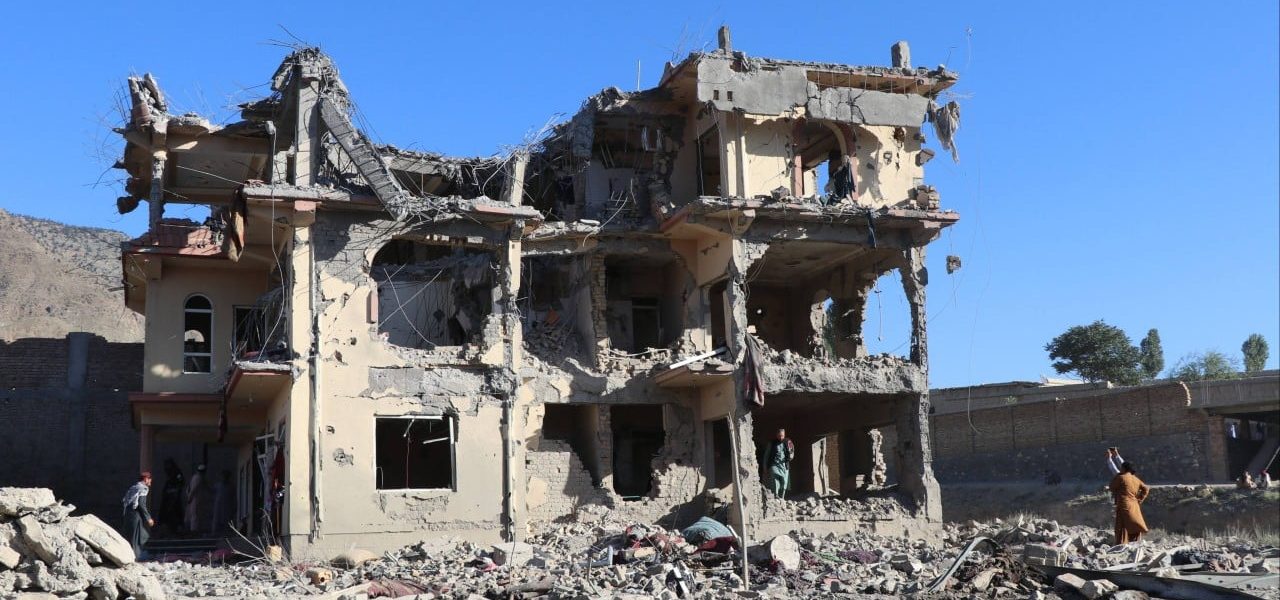
It’s a grim familiarity for folks in this rough neighborhood. On one particular Sunday night, just as dusk was giving way to a restless dark, things apparently spiraled. Afghan officials, through their spokesmen, delivered a stark pronouncement Monday morning: the Pakistani actions, carried out in what Islamabad termed a necessary targeting of militancy, have claimed a heavy price. According to them, these incursions killed at least 36 civilians — and injured more than 160 others. That’s not a mere tally; it’s a profound, bleeding wound. [QUOTE_PLACEHOLDER]
The immediate reaction from the Afghan side wasn’t veiled. One official said the attacks would be met with retaliation. A blunt promise, isn’t it? It strips away any pretense of diplomatic niceties — and lays bare the raw nerves animating this cross-border dynamic. For those who watch this part of the world, it isn’t a surprising declaration. It’s simply how this particular song-and-dance unfolds when the usual channels fail, or are simply ignored.
Pakistan’s security apparatus offered its own narrative. Its forces conducted a ground operation along the Pakistan-Afghanistan border late on Sunday, followed by strikes against militant hideouts and safe havens, killing 29 fighters. So, depending on which capital you’re hearing from, the operations were either precision-guided necessities eliminating threats, or indiscriminate assaults on sovereign territory resulting in civilian casualties. And sometimes, disturbingly, it’s a bit of both.
The problem, of course, runs deeper than just this latest volley. The 2,670-kilometer (roughly 1,660 miles) Durand Line, which demarcates these two nations, isn’t just a line on a map; it’s a living, breathing scar on the landscape, historically a source of friction. Its porous nature makes it an ideal transit route for militants — and an impossible boundary to control entirely. The recent spike in violence follows months of rising temperatures, characterized by Islamabad accusing its western neighbor of harboring anti-Pakistani militant groups. But these civilian deaths? They really crank up the heat. They leave wounds that don’t heal easily, fanning the flames of reciprocal vengeance, sometimes years after the fact.
It’s worth remembering, too, that while Pakistan officially cites militants, these aren’t operations taking place in a vacuum. Displaced communities, economic migrations, and established ethnic Pashtun tribes often live astride this frontier, largely unconcerned with arbitrary lines drawn by colonial cartographers. Their livelihoods, — and indeed their very survival, depend on traversing this region. And when bullets fly, they’re often caught in the crossfire. A report from the Norwegian Refugee Council, for example, notes that border regions between Pakistan and Afghanistan have seen over 100,000 internal displacements in various incidents throughout just the last two years. Folks simply trying to survive.
And because these actions always occur in the context of broader geopolitical currents, a fresh flare-up here only further complicates an already unstable region. Washington and Beijing, while having differing interests, both tend to favor stability over chaotic border skirmishes, knowing full well how easily localized conflicts can metastasize. But they’re not exactly in a position to mediate much, are they? Not really.
What This Means
This isn’t just another news bulletin; it’s a geopolitical tremor, an unwelcome reminder of the region’s enduring volatility. Politically, the immediate fallout could be substantial. Afghanistan’s interim government will be under immense pressure to make good on its promise of retaliation, not just to international observers, but more importantly, to its own populace and hardliners. Failure to respond forcefully could be perceived as weakness, — and that’s a dangerous game in Kabul. But then, a truly symmetrical retaliation risks full-scale confrontation, a path neither side, you’d hope, truly wants. We’re likely to see a period of increased border skirmishes, perhaps heightened security rhetoric, and a further erosion of the already frayed trust between two nuclear-armed neighbors.
Economically, instability is poison. Trade along the critical transit routes will suffer, impacting the fragile economies of both countries. Investment, always skittish in regions prone to violence, will retreat even further. For Pakistan, which is frequently negotiating for international financial assistance, such headlines are devastating—they scream risk, undermining any narrative of stability. For the wider Muslim world, the constant strife in South Asia remains a source of concern — and a drain on potential. It diverts resources — and attention that could otherwise be dedicated to economic development or social progress. This borderland, this Durand Line, it’s not merely a territorial dispute; it’s a vortex, constantly pulling both nations into its dangerous current, sometimes dragging others in as well—much like the messy international dimensions we often track, say, with Berlin’s unscripted foul on other fronts. The implications, you see, are never just local. They ripple, always.