

Twilight of an Era: Sergei Ivanov’s Passing and Kremlin’s Evolving Power Play
POLICY WIRE — Moscow, Russia — The man who for years embodied the quiet intensity of Kremlin power — the unspoken choice, perhaps, for Russia’s top job — is no more. While headlines often gravitate...

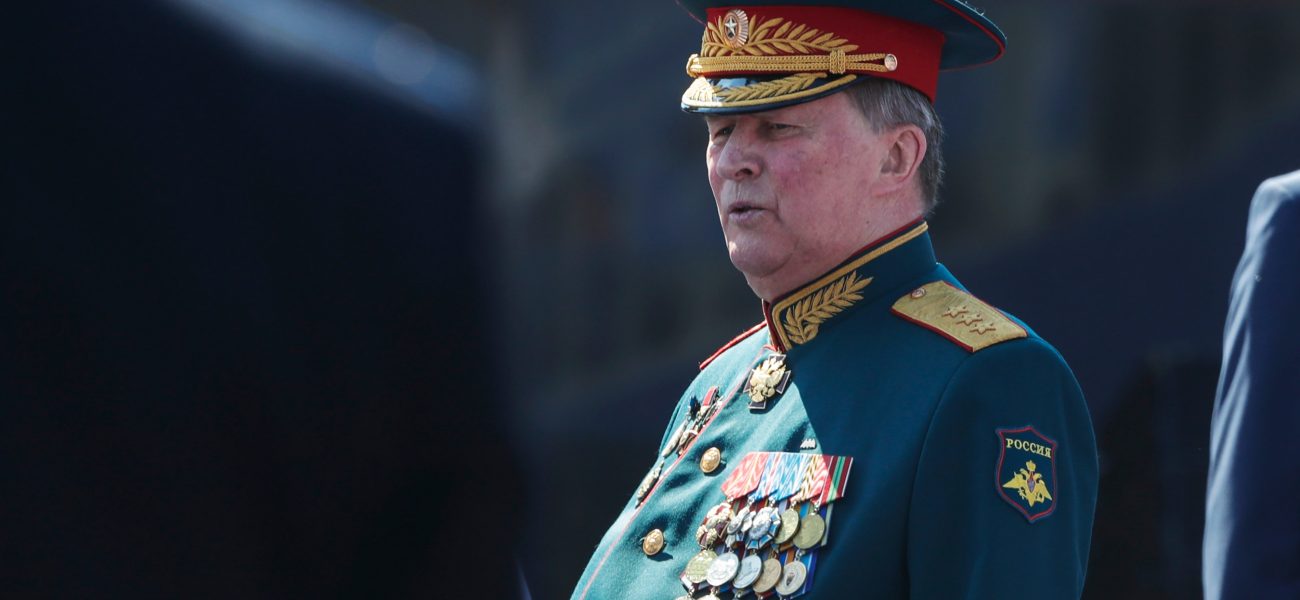
POLICY WIRE — Moscow, Russia — The man who for years embodied the quiet intensity of Kremlin power — the unspoken choice, perhaps, for Russia’s top job — is no more. While headlines often gravitate toward current theatrics, the passing of figures like Sergei Ivanov offers a colder, clearer look at the enduring mechanics of political continuity and abrupt departures within Moscow’s elite circles. It’s a moment that asks us to reflect not just on a man’s life, but on the trajectory of a nation’s hidden history. Russia’s formidable security apparatus has always operated with an almost mythic opacity, and Ivanov, a former intelligence officer and a key architect of the state, was very much part of that tradition.
For more than two decades, Ivanov was a steadfast fixture beside Vladimir Putin, their careers intertwined since their days in the KGB. Their bond wasn’t just professional; it was forged in the clandestine crucible of intelligence work, a connection that fueled much speculation regarding succession for a long, long time. People constantly wondered: was he next in line? It wasn’t just idle chatter either. The sheer amount of official duty he was entrusted with—ranging from defense to presidential chief of staff, to special presidential representative—suggested a level of trust and proximity few others ever achieved. And yet, the path veered elsewhere. But make no mistake, even in his later roles, his influence quietly permeated crucial decision-making. His counsel, though rarely public, certainly held sway.
This subtle shift in Moscow’s long game carries an unexpected echo in distant capitals. Consider, for example, the geopolitical chess pieces involving regions far from the Kremlin’s immediate gaze. Russia’s historical ties and influence within Central Asia and, by extension, parts of the Muslim world—including Pakistan—are well-documented. During his tenure as [QUOTE_PLACEHOLDER] Ivanov played an indispensable role in shaping Moscow’s strategic military postures, many of which had ripple effects in nations like Pakistan, navigating the complex geopolitical landscape of South Asia. He was one of the faces overseeing significant military technical cooperation and intelligence sharing, which sometimes became a counterbalance or a pressure point in regional stability. It’s all about maintaining equilibrium, isn’t it? One of those unspoken rules of statecraft. And people like Ivanov, even from seemingly diminished positions, held considerable institutional memory.
His departure marks more than just the end of an individual career. It closes a chapter on a certain kind of political operator, one whose rise mirrored Russia’s post-Soviet consolidation of power. He belonged to a cohort of ‘siloviki’—former security service officers—who came to define the Putin era. The average tenure of Russian foreign and defense ministers, historically, has been far shorter than the continuous stretch seen among Putin’s inner circle in its early years, making Ivanov’s longevity particularly noteworthy.
His last significant, word-for-word reported public position was as the [QUOTE_PLACEHOLDER] This, after serving as Russia’s ex-defense minister
and deputy prime minister, certainly represented a quiet end to a once thunderous career, leaving many to interpret it as a subtle sidestepping from direct political power, or maybe a sign of shifting loyalties within the top echelons. One could hardly ignore the subtle irony.
Sergei Ivanov, once seen as Putin’s likely successor
, has died at 73
. That single fact belies a career spent in the shadows, helping construct the very state structure we observe today. His passing isn’t just a mortality report; it’s a moment for geopolitically attuned observers to reassess the long-term trends shaping the future of Eurasia and beyond. Moscow’s intricate dance of power rarely pauses, but such transitions, no matter how quiet, tend to introduce new rhythms.
📄 POLICY WIRE WHITEPAPER PUBLISHED: PAKISTAN'S NATIONAL SECURITY POLICY PRIORITIES
👉 READ BY CLICKING HEREWhat This Means
The death of Sergei Ivanov, a man who occupied a uniquely powerful and yet increasingly peripheral position, holds significant, albeit subtle, implications for the Kremlin’s political ecosystem. For starters, it further winnows the ranks of Putin’s original, most trusted confidantes—those who literally built the current state with him. Their institutional memory and, frankly, their moral authority among segments of the elite, are slowly eroding. It’s hard to ignore, isn’t it?
This slow turnover creates space. New faces, perhaps less bound by historical alliances, can emerge or solidify their standing. Economically, while Ivanov’s later environmental portfolio might seem minor, his earlier oversight of military-industrial complexes and his involvement in strategic decisions ensured robust funding flows into those sectors. The military, by the way, remains a significant portion of Russia’s federal budget, standing at around 4% of GDP as of 2023, according to World Bank data—a proportion that directly relates to his historical influence. This isn’t just about men; it’s about money — and where it goes.
And then there’s the broader global perception. The removal of such an influential, though currently sidelined, figure means one less historical tie for Western analysts to track. For nations like Pakistan, where Russia continues to exert influence through military cooperation and energy initiatives, the departure of a figure like Ivanov might, over time, subtly alter Moscow’s operational calculus in regions previously influenced by his strategic thought. Russia’s foreign policy often seems monolithic, but these underlying shifts can eventually create new diplomatic pathways or, conversely, harden existing positions. It’s a quiet rearrangement, but it matters.
Ultimately, Ivanov’s demise is a stark reminder that even the most enduring political architectures are subject to the slow grind of time. His shadow, however, will likely persist, shaping the perspectives of those who knew him and influencing the contours of Russian power long after the formal obituaries fade from the news cycle. It just goes to show you that some legacies aren’t about headlines, they’re about groundwork.