


Fairway to Fortune: Nesbitt’s Last-Ditch Win Offers Glimpse into Pro Golf’s Precarious Ladder
POLICY WIRE — Springfield, IL — He didn’t know it at the time, but for Drew Nesbitt, Sunday’s Korn Ferry Tour victory wasn’t just a trophy; it was a stay of execution. It was...

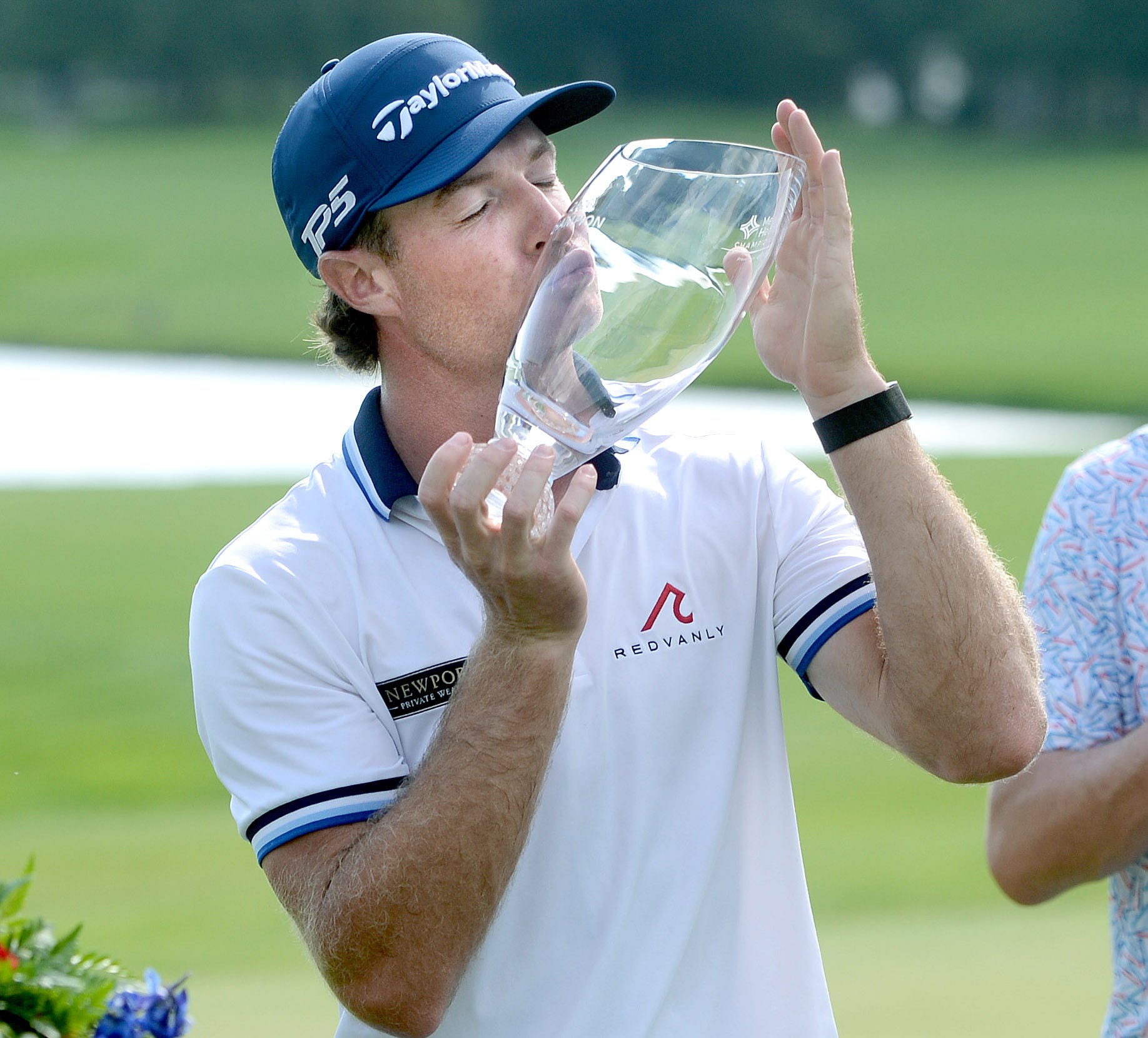
POLICY WIRE — Springfield, IL — He didn’t know it at the time, but for Drew Nesbitt, Sunday’s Korn Ferry Tour victory wasn’t just a trophy; it was a stay of execution. It was survival, plain and simple. The Canadian, a 31-year-old journeyman playing on borrowed time and rapidly depleting eligibility, nabbed his first win in what felt like a desperation play. An unscheduled Monday call-up into the Memorial Health Championship, this was his 13th start with a measly 14 guaranteed opportunities on the books for the entire season. Talk about high stakes. No wonder superstitions felt like a luxury he couldn’t afford.
Nesbitt, from Ontario’s Horseshoe Valley, turned a last-minute invite into an utterly dominant performance, closing with a 5-under 66 to clinch a 26-under 258. That’s low. Very low. And it bought him time—actual time—to solidify his spot in a brutal, cutthroat ecosystem where even elite talent scrapes by. This isn’t the PGA Tour’s gilded cage; this is the proving ground, where dreams die quietly, swallowed by unpaid bills and missed cuts. He opened the event like a man possessed, carding an 11-under that instantly rewrote the Panther Creek record books for the fifth time. He held off challengers with the gritty determination of someone who knows exactly what’s on the line.
“It’s unbelievable, I’m at a loss for words,” Nesbitt muttered post-round, clutching his hardware like a life raft. He’d known what was coming. “I kind of knew what today was all about. What it means, and how do you handle yourself, and how do you get through a round of golf trying to win a tournament.” His management of the course was flawless, but it’s the management of the anxiety, the suffocating financial pressure, that separates the few who make it from the many who don’t. He’d already tasted success on minor tours—PGA TOUR Latinoamérica, PGA Tour Americas—but this, this is the big leagues’ antechamber. The scarcity of a single win, on this circuit, is often career-defining.
And yes, his home country was busy celebrating a historic World Cup win the same day. Canada finally notched a knockout stage victory. Did it inspire him? “I honestly didn’t even know who they were playing,” Nesbitt chuckled, shaking his head. “I was just focused on my job; it was a pretty important day.” There it’s: the absolute, tunnel-vision focus demanded by a profession where a single stroke can mean the difference between keeping your card or packing your bags for good. Because, really, there’s little room for external distractions when your livelihood dangles by a thread.
Competitor Cole Sherwood made it tight, a final-nine surge with two eagles pulling him within a whisker. Matthew Riedel, too, mounted a charge, finishing three back. But Nesbitt held on, testament to a self-belief that never wavered, even when the scoreboard didn’t reflect his inner conviction. “I haven’t played bad golf; I haven’t scored well,” he’d maintained, a sentiment many a striving athlete can relate to. He always knew he could win. It was just a matter of proving it to everyone else, — and crucially, to the bean counters managing the Tour’s roster.
His victory check alone was likely a substantial sum—easily six figures, a veritable king’s ransom compared to the struggles of Monday qualifying. It’s reported that Korn Ferry Tour winners pocket around $108,000 for an event like this, a direct pipeline not just to solvency, but to an improved category for future starts. That financial injection, combined with securing guaranteed starts through next season, transforms his entire career outlook. It’s the difference between relentless pressure — and the luxury of strategy.
What This Means
Nesbitt’s victory isn’t just a feel-good story; it’s a stark, illuminating case study in the harsh economic realities underpinning professional sports, particularly outside the top-tier glamour. The Korn Ferry Tour functions as a classic capitalist meritocracy—a high-stakes proving ground where athletic performance translates directly into economic opportunity. Players aren’t just competing for strokes; they’re vying for job security, for contracts, for access to the sport’s lucrative upper echelons. One missed putt can reverberate through personal finances, sponsorship potential, and even visa status for international competitors. And Nesbitt’s narrative, clinging to the last threads of guaranteed starts, highlights the incredible stress of this model. For every Nesbitt who breaks through, there are hundreds—maybe thousands—of equally talented golfers worldwide, many from emerging golf markets in Asia, the Middle East, or Latin America, who lack the institutional support, the financial cushion, or frankly, the sheer luck needed to capitalize on their skill. Consider young aspirants in nations like Pakistan, where golf infrastructure is sparse but raw talent exists; their path to a tour like this is exponentially more complex. This outcome doesn’t just promote a player; it validates the financial infrastructure of an entire competitive pyramid, affirming that performance, however late in the game, can still unlock doors. It shows that despite immense financial strain, a singular, high-performance outcome can drastically alter one’s professional trajectory and financial stability, essentially a direct investment payoff in human capital. But it also begs the question: how many talented athletes succumb to these economic pressures long before their breakout moment?
Canadian Golf Association spokesperson, Melanie Bouchard, a long-time observer of player development, reflected on the broader context. “Drew’s resilience speaks volumes about the mental fortitude required,” she said. “But let’s be honest, the economic pathway for many athletes remains incredibly challenging. This win isn’t just about golf; it’s about the ability to sustain a dream in the face of daunting financial odds. It allows him to breathe.” Nesbitt gets it now. “Learning how to win is a skill,” he said. But, really, “winning is a byproduct of doing the correct things.” He won. And that’s all that counts.