


Toxic Fairway, Political Fray: D.C.’s Golf Dreams Clash with Dirty Realities
POLICY WIRE — WASHINGTON, D.C. — Washington, a city where political theatrics often overshadow mundane municipal matters, recently unveiled a particularly potent cocktail of both: a presidential...

POLICY WIRE — WASHINGTON, D.C. — Washington, a city where political theatrics often overshadow mundane municipal matters, recently unveiled a particularly potent cocktail of both: a presidential vision for a world-class golf course — never mind the toxic debris—and a burgeoning feud with an incoming, unapologetically progressive mayor.
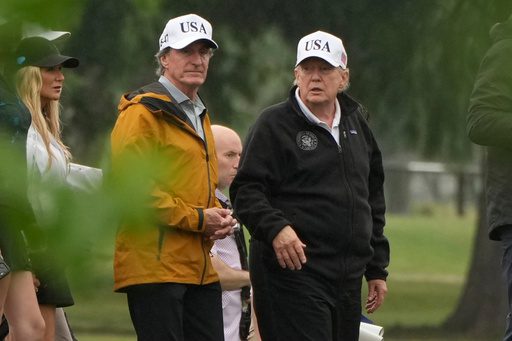
It’s a peculiar spectacle, even for the capital. While most cities fret over pothole budgets or school lunch programs, D.C. now contends with a president’s grand ambition to transform a public golf course, East Potomac Links, into a ‘major’ tournament destination. President Donald Trump, known for his love of the game and self-promotion, spent a Sunday surveying his ongoing capital-area projects, suggesting afterward that the course, once redeveloped, would be fit for golfing’s most elite gatherings: ‘The U.S. Open, The Ryder Cup, The PGA Championship, — and other top PGA Tour events,’ he boldly proclaimed on social media.
But here’s the rub: beneath the veneer of manicured fairways and ambitious pronouncements lies a less picturesque reality. The renovation plans, already embroiled in a U.S. District Court lawsuit, have literally become a dumping ground. Debris from the demolition of the White House East Wing — not exactly topsoil, is it? — found its way onto the course grounds. And then came the truly foul revelation: the National Park Service confirmed last month that this detritus tested positive for lead, chromium, and other toxic metals. Suddenly, an eighteen-hole dream takes on a distinctly hazardous sheen. One wonders about the green fees—or the medical bills.
“Look, they’re always going to tell you it’s impossible. It’s D.C.!” President Trump declared in a public address, dismissively waving off environmental concerns and procedural hurdles. “But we’re doing big things, important things, making America—and its golf courses—great again. People will be talking about this place for generations. It’s going to be terrific, the best.” It’s classic Trump, an audacious disregard for the nitty-gritty that, to his detractors, feels like business as usual.
And speaking of business as usual, or rather, business unusual, the timeline for any actual ‘major’ tournament arriving on Washington’s contaminated doorstep stretches further than a long drive on a par-5. According to official PGA tour schedules, prime dates for major tournaments are locked down for years, with the U.S. Open’s calendar filled through 2051, save for a scant few openings in 2043, 2046, — and 2048. It doesn’t scream ‘immediate tournament potential,’ does it? It’s almost as if reality has a funny way of intruding on executive mandates.
Meanwhile, across town, a different kind of power dynamic is bubbling up. The President also found time to malign Janeese Lewis George, the Democratic primary winner and presumptive next mayor of Washington, D.C., as a ‘Communist’ after she clinched her victory. But Lewis George isn’t backing down. At a recent presser, she stated, “While we appreciate any interest in D.C.’s infrastructure, my focus remains squarely on the residents. We’ll work with anyone, including the president, for the best interests of D.C. residents. But the needs of Washingtonians, especially regarding environmental safety and genuine community development, aren’t bargaining chips.” Her message was clear: presidential whims don’t supersede local autonomy, a sentiment echoed by many in municipalities across the nation, and one that resonates keenly here. Because, D.C. isn’t just federal buildings; it’s neighborhoods, people, actual lives.
The collision between presidential swagger — and municipal ground-truth isn’t exclusive to American shores. From the ambitious, sometimes environmentally dubious, infrastructure projects lauded by various regimes in Pakistan’s Punjab province to the rapid, unregulated urban expansion around Cairo or Jakarta, the tension between grand, top-down development narratives and on-the-ground environmental or community impact is a familiar global dilemma. The promise of gleaming new facilities, be it a golf course or a mega-mall, often overlooks the quieter concerns of those whose daily lives are directly affected. You can see similar bureaucratic hurdles, and sometimes dismissiveness of local concerns, discussed in broader geopolitical contexts, as some analysts observe with global events such as senators downplaying international tensions—a penchant for simplified narratives.
This D.C. fairway fantasy—now a potentially toxic nightmare—highlights the thorny relationship between federal oversight and local governance, especially when powerful personalities are involved. The legal battles ahead for the East Potomac Golf Links renovation will surely be as intricate as any Ryder Cup match, but with considerably higher stakes than just bragging rights.
What This Means
The East Potomac Golf Links debacle isn’t just about golf or green space; it’s a micro-drama reflecting larger American political fissures. Economically, any major renovation that gets bogged down in lawsuits and environmental remediation will face astronomical cost overruns—taxpayer dollars, let’s not forget—with no guaranteed return. Politically, the skirmish between President Trump and Mayor-elect Lewis George previews a contentious, likely gridlocked relationship for the foreseeable future. Her insistence on local interests, especially concerning toxic waste and federal overreach, is a shrewd move, positioning her as a champion for D.C. residents against perceived executive meddling. For the National Park Service, this presents an unappetizing choice: uphold environmental standards and potentially obstruct a presidential pet project, or acquiesce and set a troubling precedent for public land use. The optics, particularly with the discovery of lead and chromium, couldn’t be worse, signaling to citizens everywhere that their local public amenities might be treated as personal dumping grounds rather than treasured assets. This particular episode—part sports fantasy, part toxic clean-up—lays bare the profound disconnect that can exist between aspirational pronouncements from the highest office and the unyielding complexities of local jurisdiction and environmental law. It’s a striking reminder that even in the heart of power, some battles are fought over very dirty ground. For more on how D.C. manages its infrastructure against various backdrops, delve into Fairway Fantasy: DC’s Golf Course Renovation Faces Toxic Reality, Political Skirmishes.