


Ancient Stone, Modern Scorch: Italy’s ‘Trulli’ Offer a Grim Blueprint for Global Heatwaves
POLICY WIRE — Alberobello, Italy — There’s something deliciously ironic, isn’t there, about the future of European resilience being mapped out in ancient dry-stone huts? As Italy swelters, choking...

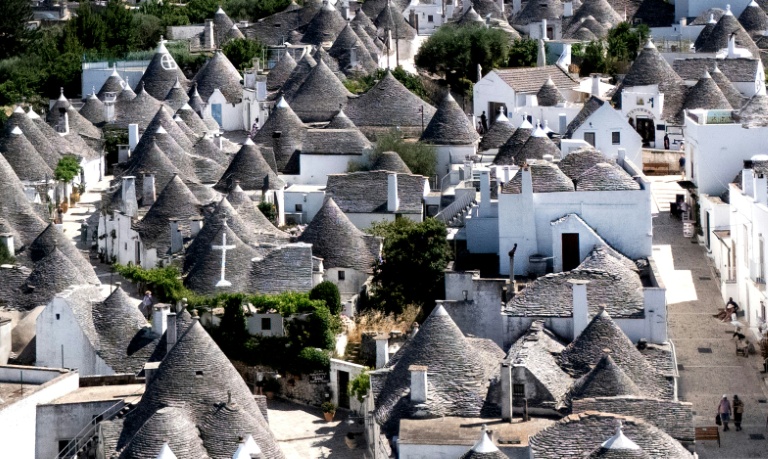
POLICY WIRE — Alberobello, Italy — There’s something deliciously ironic, isn’t there, about the future of European resilience being mapped out in ancient dry-stone huts? As Italy swelters, choking under the latest in a relentless procession of summer heatwaves, modern air conditioning units sputter, homes built for milder climes buckle, and cities bake. But tucked away in Puglia’s sun-drenched heel, cone-roofed ‘trulli’ houses—some centuries old—are quietly proving a point. They’re providing shelter, sure, but also a stark, perhaps even discomforting, object lesson in humanity’s haphazard dance with a changing climate. It’s not just about tourists finding a cooler spot for their espresso; it’s about a deeply unsettling recognition that sometimes, the ‘advanced’ solution isn’t the best one. And sometimes, you gotta look backwards to move forward.
These peculiar dwellings, whitewashed and topped with dark grey conical roofs of stacked limestone, aren’t just quaint photo ops. They’re marvels of passive thermal engineering. Thick walls, tiny windows, and that ingenious stacked-stone ceiling act as natural insulators, keeping interiors remarkably cool when outside temperatures climb towards the brutal 40-degree Celsius mark. Local tour guides, sweat beading on their brows even in the shade, will tell you they’re often a good ten degrees cooler inside. That’s not a parlor trick; that’s survival.
“We’ve got air conditioning units practically melting down this year, running non-stop,” quipped Matteo Rossi, Director of the Italian National Institute for Environmental Protection and Research, during a recent parliamentary briefing. “But then you step into a trullo, — and you feel the relief immediately. It really makes you wonder if our architects lost their way somewhere after the Middle Ages, doesn’t it? We’re pumping millions into mitigating the heat island effect in our cities, but the answer’s been staring at us from the countryside for generations.” He’s not wrong, you know. Because modern cities, sprawling concrete jungles, just exacerbate the problem.
But this isn’t just Italy’s headache. From Madrid to Karachi, heat is becoming the undisputed antagonist of urban life. And those old trulli, these architectural fossils, they’ve accidentally landed a starring role in the global climate change drama. The lessons embedded in their very structure could — just *could* — offer a glimpse into sustainable housing for a future where air conditioning becomes both a necessity and an unbearable energy drain. Consider the numbers: Europe experienced its hottest summer on record last year, with an average temperature anomaly of 0.82 degrees Celsius above the 1991-2020 reference period, according to the Copernicus Climate Change Service. That sort of heat just cooks you.
“It’s not enough to appreciate these structures as relics; we must study their principles,” asserted Dr. Fatima Gulzar, an urban planner and climate resilience expert from Lahore, speaking via a virtual conference call last week. She pointed to similar challenges facing rapidly developing, heat-stricken metropolises in South Asia. “Look at parts of Pakistan, places like Jacobabad, hitting 50 degrees regularly. People are literally melting. Traditional construction—adobe, mud-brick—has similar inherent thermal advantages, but we’ve mostly abandoned them for ‘modern’ materials like concrete and glass that turn buildings into ovens. The energy demand for cooling is simply unsustainable.” It’s a pretty compelling argument. Why are we building structures that fight nature instead of working with it?
Here’s the rub, though. You can’t just slap a cone roof on every new high-rise. Trulli were built for small-scale living, for rural environments. Their strength lies in their simplicity, their materials sourced from the immediate surroundings. Replicating that on a mass urban scale, in a country like, say, Pakistan or India, where the population boom demands density, well, that’s another beast altogether. But the *philosophy*? That’s what we need to pinch. Less glass, more mass. More natural airflow, less sealed-off, energy-hungry boxes. And for goodness sake, plant some trees. The trulli don’t have forests growing inside them, but they certainly aren’t surrounded by heat-trapping asphalt. See, even small tweaks, they can really change things.
What This Means
The political — and economic implications of Italy’s ancient cool-down strategy are far broader than tourism receipts. First off, public health. Chronic heat stress reduces productivity, exacerbates existing health conditions, — and increases mortality. A country constantly battling extreme heat sees its healthcare systems strained and its workforce debilitated. Then there’s energy policy: sky-high cooling demands stress power grids, necessitating massive investment in new generation capacity, often fossil-fueled, further perpetuating the climate feedback loop. And frankly, that’s an unsustainable spiral, particularly as nations globally attempt to grapple with escalating climate volatility. But, there’s also the cultural component, a subtle message about heritage. The embrace of ancient solutions, or at least the *ideas* behind them, suggests a policy shift away from a blind reliance on high-tech fixes towards a more holistic, culturally sensitive approach to climate adaptation. Governments across Europe and indeed, the global south, face mounting pressure to find economically viable and environmentally sound answers. This might just be a whisper from the past, reminding us to innovate thoughtfully, rather than just react frantically. And don’t forget the financial ramifications for tourism; visitors flocking to these ‘cool’ sites create pockets of economic vitality while traditional, less adapted tourist spots may wilt. It’s a tricky balance.