
New Mexico’s Arid Reckoning: Wind and Wildfire a Bellwether for Neglected Policy
POLICY WIRE — ALBUQUERQUE, N.M. — It’s a familiar routine, this daily meteorological dispatch from America’s sun-baked Southwest. Another ‘breezy and dry Monday.’ Another string of Red...

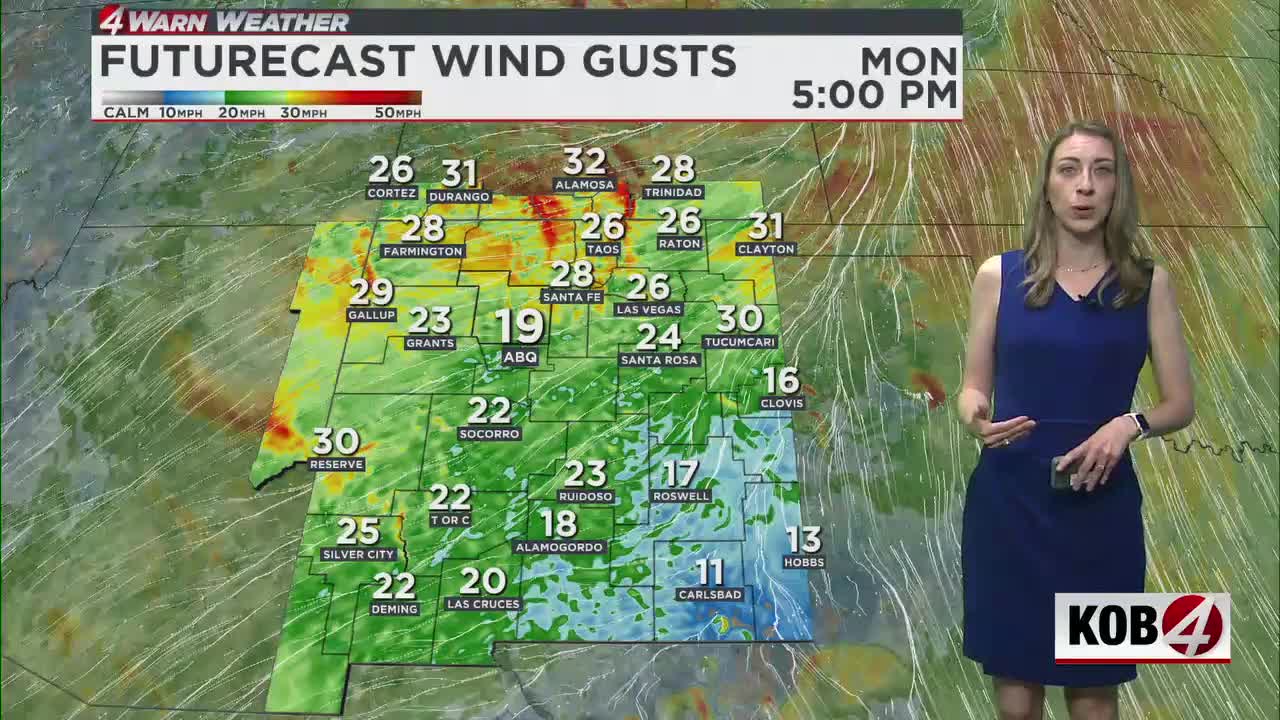
POLICY WIRE — ALBUQUERQUE, N.M. — It’s a familiar routine, this daily meteorological dispatch from America’s sun-baked Southwest. Another ‘breezy and dry Monday.’ Another string of Red Flag Warnings, a seasonal lament repeated with numbing regularity. But beyond the mundane forecast, the prevailing southwesterly flow dragging hot, parched air across New Mexico isn’t just about uncomfortable temperatures; it’s a grim bellwether, echoing the slow, grinding machinery of climate change and policy inaction that’s setting entire regions on a course for genuine crisis.
This isn’t just a bad week for sunburn. What KOB.com’s meteorologists track, with their precision and technical nomenclature—’troughing patterns,’ ‘wind gusts peaking’—represents a creeping existential threat. It’s about vanishing aquifers, communities choking on wildfire smoke, — and an agricultural sector staring down an abyss. Red Flag Warnings aren’t just for fire crews anymore; they’re a siren song for governments that seem perennially behind the curve, despite mounting evidence. Take the National Interagency Fire Center data, which recorded an average of 62,000 wildfires annually across the U.S. in the last decade, far surpassing historical averages. This isn’t an anomaly; it’s the new normal.
And because this ‘new normal’ takes root, it’s not just a weather problem—it’s a resource problem. It’s a public health emergency brewing. Consider the Beehive Fire, mentioned almost as an afterthought in the daily brief. That blaze isn’t just a line item; it’s lung-searing smoke, fouled air for towns like Questa and Raton, forcing people indoors, exacerbating respiratory ailments, particularly among the elderly and children. But who’s counting the real cost?
New Mexico’s struggle for water is centuries old, an etched-in-sand reality for its people. Yet, in the modern age, it’s compounded by a geopolitical apathy that borders on the criminal. “We’ve talked about water conservation for decades, but it’s always tomorrow’s problem,” bemoaned Senator Martin Heinrich, speaking from his office last fall. “Now, ‘tomorrow’ is here, — and we’re still arguing over straws instead of fixing the pipeline.” He’s not wrong. It’s a stark indictment of bureaucratic inertia, isn’t it?
And it’s a global story, really. What New Mexico faces—prolonged drought, extreme heat, an escalating risk of catastrophic wildfires—isn’t an isolated American peculiarity. It’s a preview, if you will, of the profound challenges faced by arid — and semi-arid regions worldwide. Think of Pakistan, for instance, a nation grappling with its own climate emergency—torrential monsoon rains giving way to brutal, extended heatwaves, disrupting ancient agricultural patterns and displacing millions. Both regions, separated by oceans and cultures, share a chillingly similar struggle: managing scarce resources in the face of an unpredictable and increasingly hostile climate. It’s a stark reminder that ecological borders don’t respect political ones.
Governor Michelle Lujan Grisham hasn’t been shy about her administration’s focus on renewable energy and water infrastructure, but even she concedes the fight is uphill. “We’re making investments, absolutely. We’re deploying resources for our communities,” she told Policy Wire in a recent briefing, her voice strained. “But what we’re witnessing here, with each passing dry season, is a scale of environmental degradation that’s testing the limits of what state governments, alone, can manage.” It’s a battle being fought on multiple fronts, with far too few reinforcements. This relentless dryness—forecasted to extend well beyond just Monday for parts of New Mexico, with a ‘very high’ UV index of 12 by solar noon—isn’t just bad luck. It’s policy failing its constituents. It’s climate screaming for attention. But are we listening? Or are we just turning up the air conditioning, hoping it goes away?
It’s not just the mountain peaks, where winds might howl at 40-50 mph, that are feeling the pressure. It’s the valleys, the farms, the entire economy, trying to stay afloat on an ever-diminishing current. Because when you’re dealing with high temperatures and bone-dry conditions, what does that mean for tourism, for livestock, for the very ability to live and thrive in a region that’s always been about endurance? It’s not looking pretty. There’s a tangible economic toll being extracted, one gust at a time.
What This Means
This seemingly localized weather report carries a heavy political — and economic resonance. New Mexico’s sustained aridity and heightened wildfire danger aren’t merely natural phenomena; they’re symptoms of larger systemic failures. Economically, prolonged drought translates into crippling losses for agriculture, especially its vital chile and pecan industries, while impacting recreational tourism which depends on accessible outdoor spaces. The state’s vulnerability to smoke — and air quality issues puts immense strain on public health infrastructure, too.
Politically, the situation is poised to intensify calls for more aggressive federal climate policy and funding for arid region adaptation strategies. It sharpens the existing fault lines over water rights—a decades-long dispute that only becomes more fraught as resources dwindle. the environmental refugees from fire-prone or water-stressed regions—a demographic we don’t discuss nearly enough in the domestic context—will exert growing pressure on social services and housing markets. What we’re witnessing in the New Mexico sun isn’t just dry weather; it’s the sharpening edge of climate impact on governance, challenging policymakers to confront realities they’ve too long deferred. The parallels with other global hot zones, like Pakistan’s Sindh province, only amplify the message: these aren’t isolated incidents, but rather chapters in a unified, ongoing narrative of policy paralysis. The breeze isn’t just cooling; it’s whispering warnings.