

Rio Grande’s Waning Pulse: A Whisper of Global Water Crises, Activists Warn
POLICY WIRE — ALBUQUERQUE, N.M. — They call it the Rio Grande, ‘Great River,’ but lately, there’s not much ‘great’ about it, and sometimes, not much ‘river’ either. Just parched stretches — and a...

POLICY WIRE — ALBUQUERQUE, N.M. — They call it the Rio Grande, ‘Great River,’ but lately, there’s not much ‘great’ about it, and sometimes, not much ‘river’ either. Just parched stretches — and a creeping sense of dread. Down here in New Mexico, folks aren’t waiting for a miracle. They’re getting loud, very loud, because what’s happening along this once-mighty waterway feels less like an environmental inconvenience and more like a dress rehearsal for collapse.
It was never going to be simple. This river—a historical ribbon stretching from the Colorado mountains to the Gulf of Mexico—has always been fought over, siphoned off, and depended upon. But what used to be squabbles over irrigation ditches have morphed into a full-blown existential crisis, complete with stark warnings about disappearing water tables, negligible snowmelt, and an agricultural sector gasping for air. But for a weekend, it felt less about resigned acceptance — and more about raw, unvarnished anger.
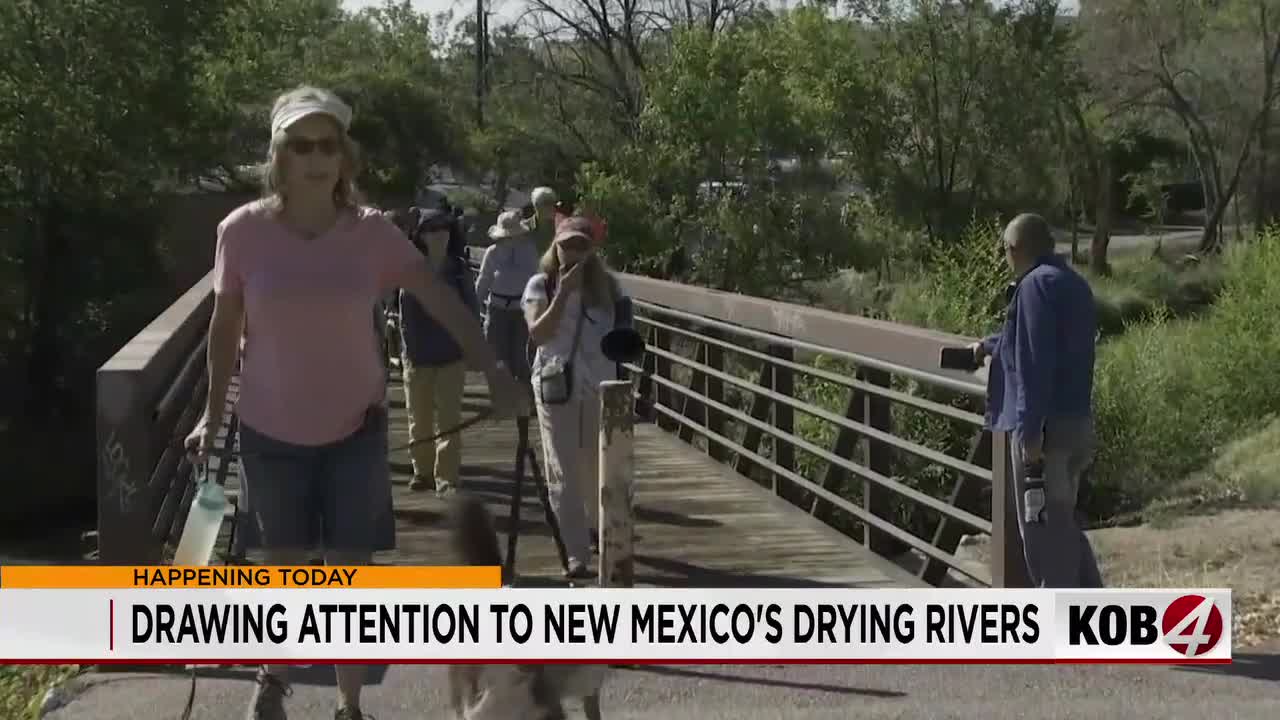
Activists, largely under the umbrella of New Mexico Wild, recently descended upon the riverbanks. They weren’t there to politely discuss things over coffee. They were there to bang drums, metaphorically speaking, about what they contend is a multi-headed hydra of mismanagement, apathy, and outright environmental abuse. They pushed hard for legislative changes, for something, anything, that might restore some semblance of natural flow and vitality to a system that’s rapidly flatlining.
And it’s not just the obvious lack of water that’s got people riled up. It’s the whole damn mess: water quantity, water quality, the ghost of snowpack that isn’t showing up, the mercury rising, and an insatiable demand from sprawling communities that don’t seem to get the memo about scarcity. It’s a proper cluster. You’ve got communities miles from Albuquerque, upstream and down, feeling the crunch, watching their wells go dry or their fields turn to dust. That’s because the river, well, it connects everything, doesn’t it?
State officials are catching the flak, naturally. Senator Sofia Rodriguez (D-Albuquerque), never one to mince words, recently quipped, “This ain’t just some dusty stretch of water anymore; it’s a barometer for our entire region’s future. You can’t just talk about economic development while the very lifeblood of your state—its water—is running dry. It’s time for real teeth in these policies, not just polite conversations.” She’s tired, and you can practically hear it in her voice, of grandstanding replacing actual groundwork.
But the numbers don’t lie. According to the U.S. Geological Survey, recent hydrological data indicated that the Rio Grande’s average annual flow through central New Mexico has dropped by over 15% in the past decade alone. Elias Vance, the stoic Director of the New Mexico Environment Department, often has that weary look of someone fighting a losing battle against physics itself. “Look, the science is screaming at us,” Vance stated during a recent department briefing. “We’re talking about a multi-decade trend, not an anomaly. Annual snowpack in the Southern Rockies, which feeds the Rio, has seen an average decline of over 20% in the last century. We’re juggling falling water tables, invasive species, — and increasing demands. It’s a damn tough hand we’ve been dealt, and we’re struggling to play it.” It’s a battle, he meant, that we’re definitely not winning right now.
These activists, to their credit, aren’t just griping. New Mexico Wild claims they’ve poured over $20 million into local water reserves and various restoration projects this year alone. They’re trying to patch up the holes while the government—a labyrinth of agencies and competing interests—often feels bogged down, unable or unwilling to make the truly hard calls needed to stave off what many see as an inevitable dry future.
What This Means
The slow strangulation of the Rio Grande isn’t just an ecological footnote for New Mexico; it’s a policy nightmare with vast economic and geopolitical implications. Politically, it pits urban growth against agricultural survival, recreational tourism against ecological preservation. Because, let’s face it, no politician wants to tell their constituents to use less water, let alone enforce it. Economically, the hit on agriculture is already staggering, jeopardizing local food supplies and the livelihoods of generations of farmers. Housing markets, often reliant on available resources, might eventually buckle under the strain, though that’s a few crises down the road, probably.
This localized drama, in its core grim details, mirrors water struggles playing out across the globe. Think about the Indus River in Pakistan, another colossal waterway—a lifeblood for millions—which has seen its flow increasingly constrained by climate change, upstream diversions, and regional political tensions. Farmers in both regions face devastating crop failures; urban centers contend with increasingly unreliable water supplies. For example, some geopolitical experts warn that “hydro-politics” will become a flashpoint for conflict, just as resource scarcity can incite border bombs and deeper societal divisions in other areas. Whether it’s New Mexico’s pecan growers or a farmer tending rice paddies near Sukkur, Pakistan, the raw vulnerability to a capricious environment, compounded by shaky policy, remains a painfully common thread. What’s unfolding on the Rio Grande is less an anomaly and more a stark warning for everywhere else grappling with a rapidly drying planet—including many parts of the Muslim world that are already at breaking point.
It’s easy to look at a shrinking river and think, “that’s just nature.” But nature here, as in so many places, has had a generous shove from human hands—or, more accurately, from human policies. The political inertia on display in the Land of Enchantment, as its river drains away, reminds us that climate challenges aren’t merely environmental; they’re profoundly political, impacting everything from national security to our global economic stability. The Rio Grande isn’t just losing water; it’s losing a future.