Beijing’s Aerial Illusion: How a Skyscraper Impact Vanished from Reality
POLICY WIRE — Beijing, China — There’s a particular kind of chill that crawls up your spine not when a catastrophe strikes, but when a catastrophe *unstrikes*. Because what Beijing managed just...

POLICY WIRE — Beijing, China — There’s a particular kind of chill that crawls up your spine not when a catastrophe strikes, but when a catastrophe *unstrikes*. Because what Beijing managed just a few weeks back wasn’t merely a cover-up; it was a wholesale erasure, a historical cleansing performed with breathtaking speed and, frankly, unnerving efficiency. One minute, there’s smoke curling from the highest echelons of the capital’s skyline—a plane, they whispered, into the tallest tower. The next? Nothing. Not a whisper, not a smudge, not a single flickering pixel on the nation’s tightly monitored digital domain.
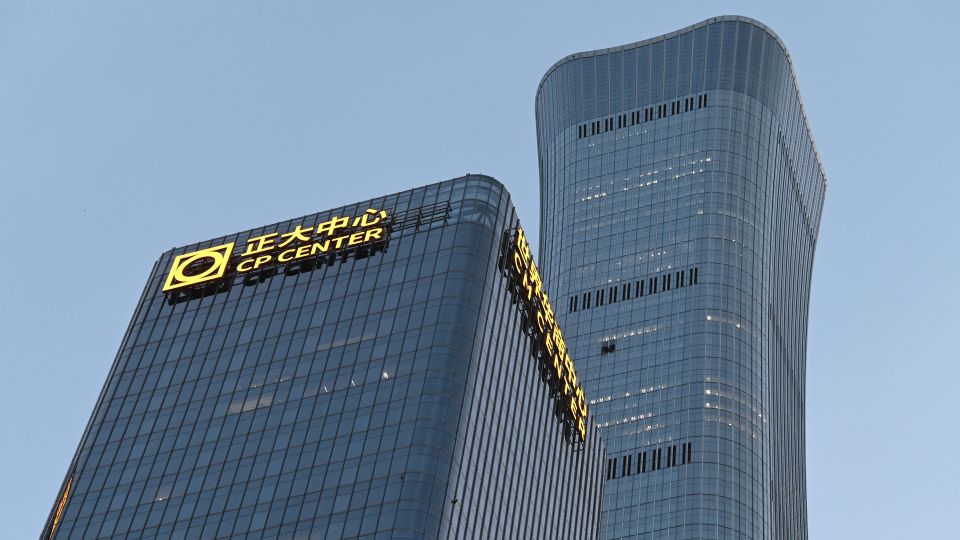
Imagine, if you will, the sudden shudder that ran through the central business district on that unassuming Tuesday afternoon. An unfamiliar shadow, an unexpected roar, and then—witnesses later claimed (privately, oh so privately)—the impossible impact. A small, single-engine aircraft, seemingly off course, somehow finding itself intimately acquainted with the gleaming façade of China Zun, the city’s architectural pride and joy. For a fleeting hour or two, the initial chaos was palpable, despite all state efforts. People on the ground pointed. Photos (hastily taken, even more hastily deleted) circulated. And then, as if an invisible broom swept the metropolis clean, the event, the plane, the very idea of it, vanished.
It wasn’t merely the usual bureaucratic inertia failing to acknowledge an inconvenience. This was something different. It was an active, coordinated, almost supernatural act of societal memory editing. State media, naturally, was silent. Social media platforms, where early, terrified reports briefly materialized, scrubbed themselves clean. Hashtags linking to the supposed incident disappeared quicker than a diplomat’s frown at a bilateral meeting. You wouldn’t find a peep about it in the People’s Daily, nor an oblique reference on Xinhua. Even those infamous WeChat groups—usually boiling over with illicit rumors—went eerily quiet on the subject. One minute it happened, they said; the next, it never had.
And because the Party-state controls the narrative like few others, what’s unspoken simply never happened. “Allegations of such outlandish events are baseless fabrications designed to sow discord and defame our stable society,” stated Foreign Ministry Spokesperson Hua Chunying, with her usual poker face, responding to an obscure, later-deleted foreign wire query about “unconfirmed reports.” “It’s the height of irresponsibility to propagate rumors without a shred of evidence.” It’s always about the evidence, isn’t it? Even when the evidence itself gets vaporized. Because the truth, for them, isn’t what occurred; it’s what they say occurred. Or didn’t.
But the ghost of the incident lingers, if only in hushed conversations amongst expats and in certain digital back alleys. A Western diplomat, who asked not to be named given the sensitivities involved (and frankly, their tenure), put it rather bluntly. “We’ve seen information control before, sure, but this felt like an upgrade. Like they’re beta-testing a new version of reality itself. A plane hits your tallest building, — and it’s wiped clean in an afternoon? That takes a particular kind of systemic power, doesn’t it? It’s not just censorship; it’s practically metaphysics.”
It’s a stark reminder, too, of how vulnerable the concept of verifiable truth has become globally, particularly in an era rife with state-sponsored disinformation campaigns. Compare this chilling display to the efforts—sometimes successful, often not—by governments in places like Pakistan to control narratives during crises, whether internal security challenges or geopolitical flare-ups. While Pakistan’s media landscape often contends with pressures and red lines, the sheer totality of Beijing’s operation remains on another level entirely. There, information control is a blunt instrument; here, it’s a precision scalpel capable of carving entire realities out of existence. According to Freedom House’s 2023 ‘Freedom on the Net’ report, China has maintained its status as the world’s worst environment for internet freedom for the ninth consecutive year, a grim statistic that speaks volumes about this infrastructure of erasure.
What This Means
This vanishing act in Beijing isn’t just an oddity; it’s a loud, clear message. Domestically, it reinforces the Party’s omnipotence: not only can they manage events, they can manage what you remember about them. It’s an unspoken warning to dissenters — and truth-tellers: your reality means nothing against ours. Economically, such episodes, when they do seep out internationally, subtly chip away at China’s image as a fully transparent or reliably predictable global partner—something Beijing tries very hard to cultivate as it expands its geopolitical influence. Internationally, it poses a profound challenge to established journalistic norms and even, one could argue, to the fundamental tenets of objective reality. If an event of this magnitude can be erased, what does that say about all the other things we’re told are happening, or aren’t? It pushes the boundaries of information warfare, transforming censorship into something far more sophisticated and, quite frankly, terrifying. And it gives Western intelligence agencies another knot to untangle as they attempt to parse fact from fiction within the hermetically sealed information ecosystem of the PRC. The battle over what constitutes ‘truth’—and who gets to define it—has just become dramatically more complicated.
The incident, whether it was a bizarre accident or something else entirely, serves as a sobering lesson in the age of pervasive surveillance and state control. It isn’t enough to just see something; you’ve got to hope that someone else saw it, too, and that they’re brave enough—or located far enough away—to actually talk about it. Because paper wars aren’t just fought with propaganda anymore; they’re won by deleting the pages entirely. It’s a frightening prospect, and it happened in plain sight—or, more accurately, in plain un-sight—in one of the world’s most powerful capitals.