

Europe’s Great Escape: Unpacking the Continent’s Budget Camping Calculus Amid Economic Squeeze
POLICY WIRE — London, UK — The grand old continent, for all its historic weight and shimmering promise of Riviera dreams, is increasingly finding its families ditching gilded hotels for grounds that...

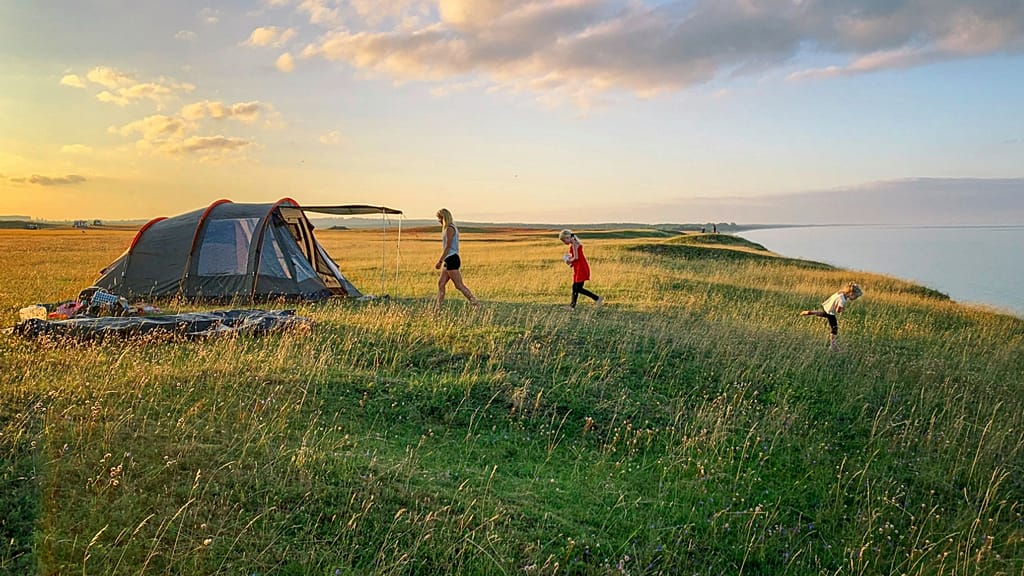
POLICY WIRE — London, UK — The grand old continent, for all its historic weight and shimmering promise of Riviera dreams, is increasingly finding its families ditching gilded hotels for grounds that demand assembly of one’s own temporary canvas domicile. It’s not about roughing it, not really. It’s a quiet reckoning with persistent inflation and shrinking disposable incomes—a collective exhale perhaps, that screams, “we need a break, but we ain’t made of money.” The scramble for what’s dubbed “best-value family camping destinations” isn’t merely a quaint holiday trend; it’s a symptom, a visible tremor across the fault lines of Europe’s current economic reality.
Families, those bedrock units of consumer spending, are performing complex mental arithmetic before booking anything beyond their backyard. They’re weighing the cost of a baguette in Paris against a self-packed sandwich by a lakeside in Slovakia. And increasingly, the numbers favor the latter. This shift speaks volumes, doesn’t it? It suggests a subtle but significant pivot in aspirations, moving away from aspirational luxury towards achievable comfort. Because who needs five-star dining when you can grill your own questionable sausages over an open fire—a deeply democratic form of culinary adventure, one might argue. [QUOTE_PLACEHOLDER]
But the story doesn’t just stop at individual budgets. Oh no, it’s a bit more intricate than that. This burgeoning enthusiasm for budget camping, for all its bucolic charm, highlights the economic strains reverberating through European households. We’re seeing households get creative, tightening their belts in everyday life only to splurge—or rather, wisely allocate—what’s left on experiences that promise a reset without breaking the bank. It’s about perception, largely. The perceived value of an authentic experience versus the diminishing returns of over-priced pre-packaged holidays. We’ve come to a point where a carefully selected patch of grass with adequate sanitation can feel like winning the lottery, culturally speaking. This isn’t just about saving a few euros; it’s about reclaiming a sense of control in a world that often feels utterly chaotic. The demand for accessible leisure, the kind that doesn’t require taking out a second mortgage, is palpable. Eurostat data for 2023 indicates a nearly 15% increase in overnight stays at campsites across the EU-27 compared to the pre-pandemic average, clearly illustrating this surge towards more affordable outdoor recreation.
And let’s not pretend this phenomenon is confined to the Schengen area. The pursuit of value, of getting the most bang for your buck in leisure, is a universal constant. Consider Pakistan, for instance—a nation often unfairly stereotyped—but which boasts breathtaking northern regions like Gilgit-Baltistan and Kashmir. For many Pakistani families, especially the burgeoning middle class, a family holiday involves meticulous planning to secure the “best value” destinations domestically. They’re seeking the crisp mountain air of Naran, the historical resonance of Hunza, or the serene lakes of Swat, often eschewing international travel due to exchange rates, visa hurdles, and the sheer cost. It’s the same fundamental impulse—a desire for escape, for connection, for making memories—but filtered through a distinctly local, often challenging, economic lens. What’s considered “best value” camping in Poland or Portugal might look like a five-star luxury trek to someone navigating the economic landscape of Islamabad or Karachi, where domestic tourism infrastructure is developing but still faces significant headwinds.
But back to Europe. The countries emerging as camping havens—often in Eastern or Central Europe—aren’t just selling tent pitches. They’re selling resilience. They’re selling a return to simpler pleasures that paradoxically feel more substantial than any guided tour. These are locales where the local produce is cheaper, the hikes are free, and the kids can still get muddy without parents incurring an exorbitant laundry bill at a posh resort. And it’s a good look for them. They’re tapping into a nascent nostalgia, perhaps, for a less complicated time, when travel wasn’t Instagrammable but merely memorable.
The implications are far-reaching. Governments, often slow to react to subtle shifts in consumer behavior, would be wise to pay attention. We’re not talking about niche interests here. This is mainstream. It’s the demographic that votes, pays taxes, — and fuels local economies. There’s an entire ecosystem of ancillary businesses—from outdoor gear suppliers to roadside diners—that stand to gain from this shift. Or lose, if they misread the tea leaves. You see it across the board, from those families booking an unassuming pitch in Slovenia to geopolitical tensions along Pakistan’s frontiers influencing domestic priorities—value and accessibility are the unspoken currencies.
What this all underscores is a fundamental reassessment of what constitutes a “holiday” in the post-pandemic, inflation-riddled West. It’s no longer about proving you can afford the most extravagant, but about proving you can cleverly navigate the economic currents. The subtle art of getting away, really getting away, without emptying your bank account, has become the new badge of honor for the European family. It’s a pragmatic evolution, a shrewd adaptation. It isn’t going anywhere. This pursuit of the authentic, the affordable, the experience over the expense, well, it speaks to something deeper. Something quite fundamental about human need. We can’t ignore it. It’s a signal, loud and clear, that everyday families are simply fed up with being told that leisure must equate to luxury, that escapism has to be expensive. They’re making their own rules. And their own meals, presumably.
What This Means
This widespread pivot towards budget-friendly camping across Europe isn’t just about recreational preferences; it’s a significant bellwether for underlying economic pressures and a shifting political landscape. For one, it highlights persistent inflation and stagnant real wages, compelling families to stretch their holiday budgets further. Policymakers should interpret this as a mandate to address cost-of-living challenges more aggressively, as even basic leisure is becoming a stretch. Governments could respond by investing more in national park infrastructure or supporting local, independent campgrounds, potentially generating regional economic benefits and domestic tourism opportunities. Ignoring this trend risks further disenfranchising middle and lower-income families who feel increasingly squeezed out of traditional leisure markets.
Politically, this fosters a narrative of resilience and resourcefulness among the electorate, which could be leveraged by populist movements promising a return to simpler, more accessible lifestyles. Conversely, established parties that fail to acknowledge these economic realities might be perceived as out of touch. The “value” proposition in tourism increasingly mirrors the “value” proposition voters seek from their leadership—efficiency, accessibility, and tangible benefits. This trend also opens avenues for diplomatic soft power, as countries with affordable natural beauty gain visibility and positive associations, contrasting sharply with regions grappling with geopolitical tensions that impact global perceptions. Economically, while seemingly small, the aggregate effect of families choosing budget camping over other forms of tourism has implications for airline industries, upscale hotel chains, and fine dining establishments. Their business models may need to adapt to a continent of increasingly prudent consumers. The subtle shifts on Europe’s campgrounds are, in essence, reflecting much larger tremors within its economic and social foundations.