
Europe’s Austere Escape: The Quiet Rise of the Cost-Conscious Caravan
POLICY WIRE — Brussels, Belgium — The humble tent, once merely an accessory for gap-year adventurers or rugged individualists, is quietly reshaping the European family vacation landscape. No, it...

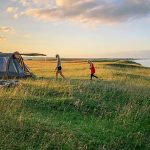
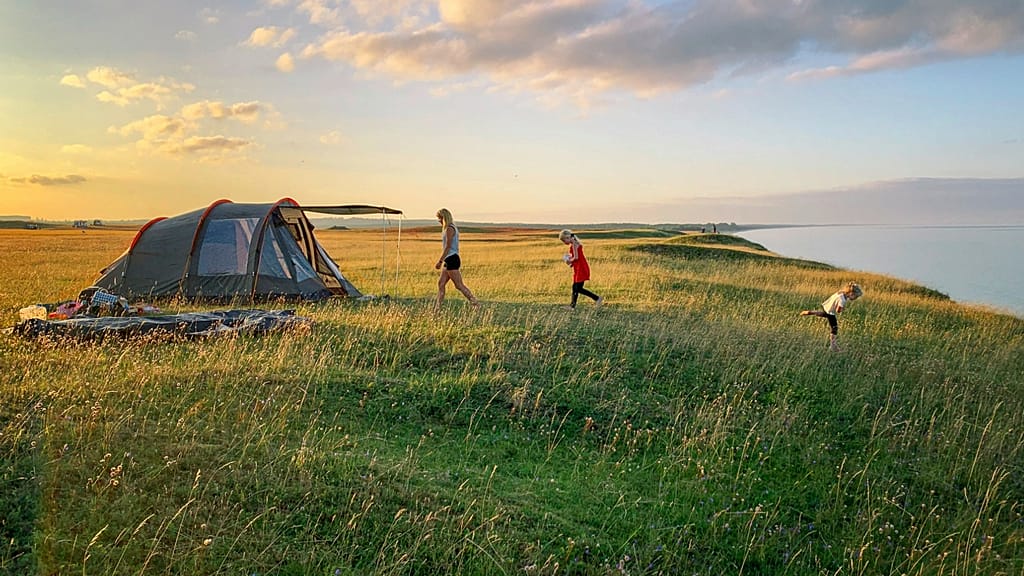
POLICY WIRE — Brussels, Belgium — The humble tent, once merely an accessory for gap-year adventurers or rugged individualists, is quietly reshaping the European family vacation landscape. No, it isn’t some newfound reverence for the great outdoors—or at least, not entirely. What’s unfolding across the continent’s sun-drenched coastlines and sleepy valleys is a decidedly pragmatic retreat: an economic recalibration masquerading as quaint, pastoral charm.
Forget the opulent resort holidays or the city-break binges. European families, squeezed by inflationary pressures and a continent teetering on a recessionary tightrope, are increasingly pitching up at campsites. It’s a migration not fueled by wanderlust, but by wallet-consciousness. This isn’t about luxury; it’s about making ends meet — and still getting the kids out of the house. That’s a stark, unsentimental truth. The latest Eurostat data shows a 12% year-over-year increase in overnight stays at campgrounds across the EU-27 for families with school-aged children, specifically those opting for destinations offering ‘all-inclusive’ amenities at a fraction of hotel costs.
It’s a subtle narrative, sure, but a revealing one. Countries like France, long masters of the rural escape, and Italy, with its coastal camping villages, are seeing a resurgence of domestic tourists and an influx from neighboring nations wary of more expensive foreign excursions. Spain’s campsites, once largely the domain of Northern European retirees, are now bustling with younger families. But don’t mistake this for a sudden ecological awakening or a return to nature cult. It’s an involuntary austerity measure, cloaked in barbecue smoke — and suncream. They’re doing it because they can’t afford *not* to. There’s a subtle desperation to the search for ‘value,’ an undertone that often escapes the glossy promotional materials.
The implications ripple outwards. Traditional coastal tourism, reliant on higher spending per tourist, feels the pinch. Budget airlines might see a slight dip, replaced by packed family cars chugging along motorways, laden with cooler boxes and deflated lilos. Because when disposable income shrinks, discretionary spending — particularly on leisure — gets ruthlessly optimized. This isn’t merely about finding a deal; it’s about prioritizing the essentials, even within a vacation. Many don’t just want good value; they crave *predictable* costs, locking in their holidays with minimum financial surprises.
“We’re seeing a structural shift,” observed Dr. Elara Vance, an independent economic analyst based in Berlin. “It’s less about discovery — and more about survival, financially speaking. Families aren’t choosing between Paris or Rome anymore. They’re choosing between a camping holiday — and no holiday at all. It’s a very German efficiency applied to pleasure, born out of necessity.” She wasn’t wrong. And it’s not just a Western European phenomenon, either. The broader global economic slowdown means even aspirational travel from regions like South Asia can become a luxury too far, potentially reducing inbound tourism from those burgeoning middle classes who once saw Europe as a playground of infinite choice. Instead, they might be opting for domestic, ‘value’ destinations within their own borders, much like their European counterparts. It’s a mirroring of financial caution across continents, a symptom of collective belt-tightening.
One might argue it’s a positive, a ‘return to basics,’ a rejection of excess. And perhaps, for some, it’s. But the undercurrent of forced choice can’t be ignored. Monsieur Jacques Dubois, Director of France’s National Office of Tourism, offered a more optimistic spin, of course. “We welcome this renewed appreciation for France’s incredible regional diversity and its family-friendly outdoor offerings,” he told Policy Wire, his voice a polished drone. “It underscores our commitment to accessible tourism for all European citizens.” Spoken like a true bureaucrat, ignoring the fundamental economic squeeze that drives many to his country’s pastoral delights. They’ve rebranded economic necessity as strategic diversification—that’s classic.
What This Means
The quiet pivot towards ‘value’ camping in Europe is more than just a fleeting trend in travel habits; it’s a telling barometer of broader economic anxiety. For policymakers, this shift highlights the fragile state of household budgets — and the enduring sting of inflation. It signals a decreased willingness for consumers to engage in high-spending discretionary activities, which could have knock-on effects for retail, hospitality, and cross-border transport sectors. Regions traditionally reliant on premium tourism may need to diversify, perhaps rethinking infrastructure to cater to a more budget-conscious demographic—a substantial undertaking given existing investments. This also means pressure on employment within the tourism sector; the seasonal work underpinning these ‘value’ destinations might increasingly attract migrant labor from economies facing their own unique market disruptions, including those from South Asia and North Africa, where the allure of even modest European wages can be powerful. And nationally, governments will face increasing pressure to address the root causes of this economic constriction—wage stagnation versus rising costs of living—if they hope to see their citizens enjoying leisure choices born more of desire than dire economic constraint. It could also shift perceptions of what constitutes an acceptable standard of living for many families, normalizing austerity through the guise of rustic charm.
For context, consider how this kind of economic pressure manifests globally. It’s not just a European phenomenon; the pursuit of perceived stability and opportunity amidst economic flux influences diverse populations, often compelling difficult choices—much like the ongoing socio-economic narrative playing out around the frontier lines in regions like Pakistan, where resource allocation and economic opportunity dictate so many personal and familial decisions.