


Berlin’s Gambit: Germany’s ‘Brotherhood’ Bet Amidst World Cup Storm
POLICY WIRE — East Rutherford, New Jersey — There’s a particular kind of quiet that falls over a nation holding its breath. For Germany, it often descends just before a major knockout...

POLICY WIRE — East Rutherford, New Jersey — There’s a particular kind of quiet that falls over a nation holding its breath. For Germany, it often descends just before a major knockout fixture—that nerve-jangling chasm between aspiration and elimination. This time, it’s a Round of 32 clash against Paraguay, — and the pressure on Die Mannschaft is palpable. You don’t have to strain your ears too hard to hear the ghost of past glory rattling the stadium in New Jersey. And, honestly, who can blame them?
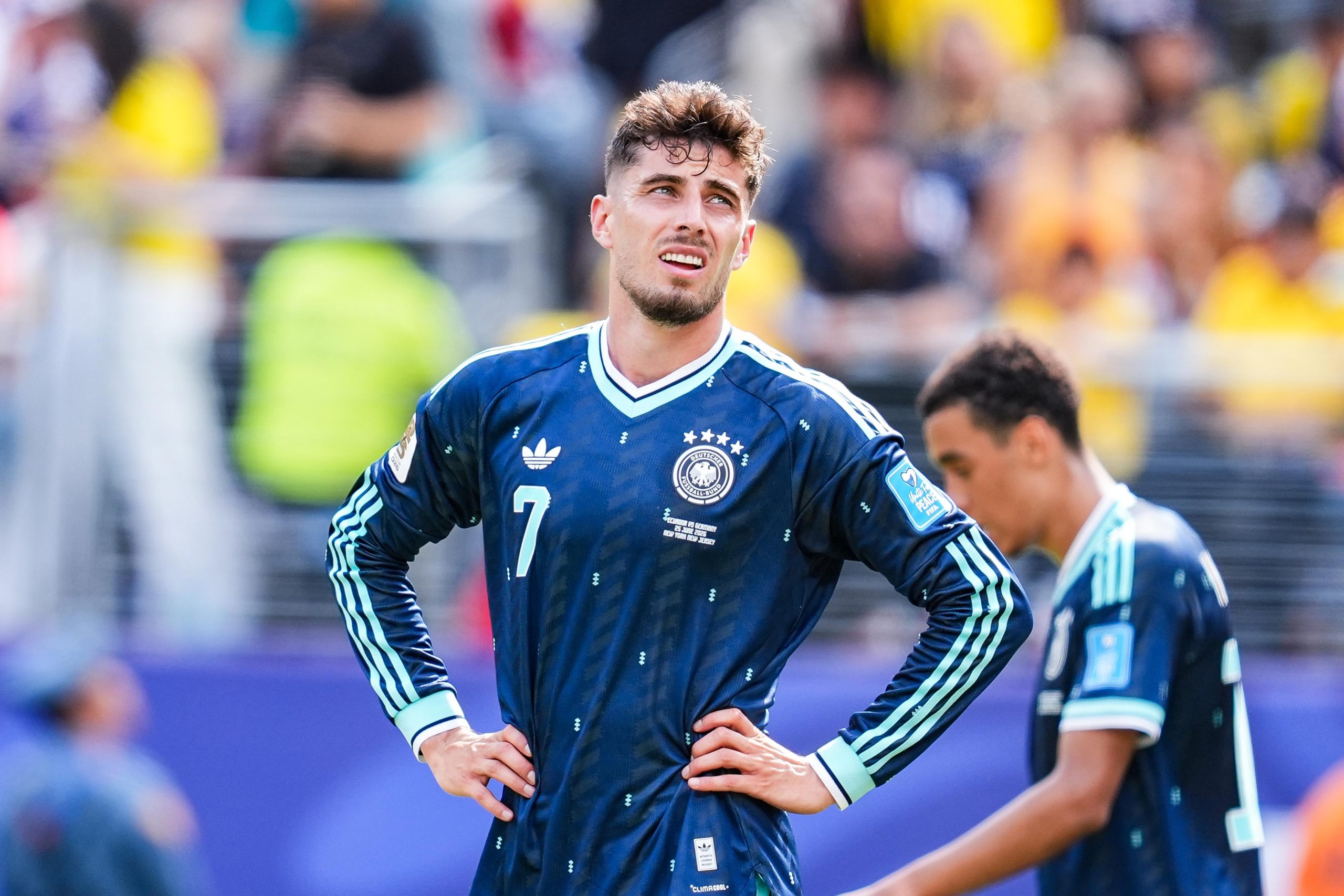
It’s not just a game; for Germany, football, successful football anyway, is part of the brand. It’s an economic indicator, a soft power instrument, a national unifier. When you look at Kai Havertz, the prolific forward now donning the national colors, you don’t just see a footballer—you see the weight of a nation’s expectation, maybe even its temporary self-esteem, settled on his shoulders. He doesn’t shy away, though. Not entirely. His public posture is one of resolute focus, an almost studied disinterest in the outside noise. That’s a good trick if you can pull it off.
“We’re fully convinced we can win on Monday,” Havertz stated with a calmness that belies the tempest swirling around the squad. “When you’re in a major tournament, people talk. I don’t care what people say. We’re focused on ourselves. It takes a bit of time because everyone comes from their clubs to the national team and you have to get used to your teammates.” But there’s more to his sentiment, isn’t there? It’s not just about gelling; it’s about forming an impermeable bond against the howling winds of criticism and anticipation. Because the media machine, whether print or digital, it doesn’t give a toss about your feelings.
“This will be my first knockout match in a World Cup,” Havertz admitted, a rare flicker of personal vulnerability in an otherwise hardened public front. “We’re hungry to win—it’s going to be a good match. In general, I like these big occasions — and I feel comfortable in this context, and I hope to keep going. For that, you have to work hard — and believe in yourself.” And then, the punchline: a declaration of internal fortitude. A call to tribal allegiance. “We players have a close relationship and we want to be able to bring out our best. I don’t think we need to get to know each other any better, but sometimes you need a bit of time to gel, but I’m sure we can do very well Monday.”
Team manager Julian Nagelsmann echoed Havertz’s sentiment, albeit with a more clinical lens. “Modern football is less about individual brilliance and more about synchronous belief,” Nagelsmann reportedly shared during a private training session debrief. “Our system only thrives when every cog accepts its specific load — and trusts the next. We haven’t the luxury of ego here, only the necessity of collective performance.” It’s a philosophy that reflects broader challenges—any complex system, be it a football squad or a geopolitical alliance, ultimately crumbles without intrinsic trust.
This ‘us against the world’ mentality isn’t new. But for Germany, a footballing giant accustomed to being on top, it’s often a defense mechanism when the going gets tough. Consider the 2022 debacle—a group-stage exit that shook the nation. They’re trying to outrun that ghost now. The country expects, yes. A 2022 FIFA study revealed that German national team matches often garner over 75% of domestic television viewership during major tournaments. That’s a lot of eyeballs. A lot of collective emotional investment, if you’re keeping track.
Even halfway across the world, in countries like Pakistan, where cricket reigns supreme, Germany’s performance evokes a powerful, vicarious excitement among football fans. The diverse, often immigrant-inclusive makeup of the German squad—representing a melting pot—resonates with diaspora communities globally, not just in Europe. Because, for many, this isn’t just about Germany; it’s about watching a national identity forged on the field, a cultural product beamed worldwide, a demonstration of collective endeavor, good or bad.
Germany, with its intricate economic alliances and internal social debates, often looks to the national team for a simpler narrative of unified strength. When things click on the pitch, it feels like everything else might, too. Or so the fervent hope goes.
What This Means
Havertz’s impassioned, if slightly weary, plea for team unity extends beyond the locker room. In an era where national identities are constantly debated and global partnerships are under strain, a successful German football team offers a potent, if symbolic, affirmation of cohesion. For Berlin, sporting success translates into valuable soft power — and a momentary balm for domestic divisions. Economically, strong national team performance fuels consumption, tourism, and brand visibility, subtly boosting the nation’s appeal on the world stage. Geopolitics, after all, isn’t confined to diplomatic tables; it plays out on pitches, courts, and global screens. This current reliance on internal ‘relationships’ is an acknowledgment that raw talent alone won’t suffice; rather, it’s the interconnectedness and mutual trust that’ll see them through a brutally competitive tournament. And, really, isn’t that the lesson every government, every multi-national entity, is constantly trying to learn?