


Cricket’s Meltdown Monday: A Day of Shock, Shifts, and Regional Echoes
POLICY WIRE — London, UK — Call it a grand farce, or perhaps, a beautifully orchestrated symphony of chaos. Either way, for observers less fixated on run rates and wicket tallies, yesterday wasn’t...

POLICY WIRE — London, UK — Call it a grand farce, or perhaps, a beautifully orchestrated symphony of chaos. Either way, for observers less fixated on run rates and wicket tallies, yesterday wasn’t just another calendar entry in the ceaseless churn of professional sports. June 28, 2026, it turns out, felt like a miniature geopolitical earthquake, reverberating far beyond the manicured greens of the world’s cricket grounds.
It was a day that seemed tailor-made to mess with our heads. England’s Test captain, Ben Stokes, the very picture of resilience, up — and quit. Then, like a punchline you never saw coming, tiny Ireland did a number on a cricketing superpower. Oh, and West Indies — for crying out loud — they rewrote an age-old record while India, the financial titan of the game, was busy stumbling, twice. Sometimes, you just can’t make this stuff up. And frankly, the old saying, ‘one man’s joy is another’s sorrow’, really didn’t cover the breadth of it all yesterday; it felt more like one man’s joy, another man’s despair, and the whole world’s head-scratching befuddlement. [QUOTE_PLACEHOLDER]
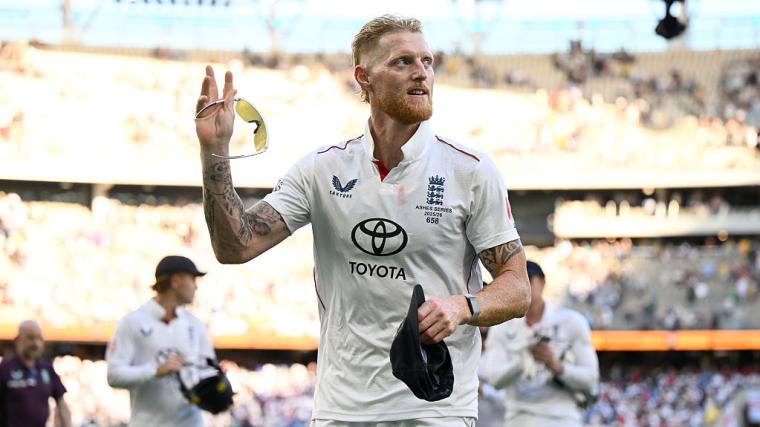
Let’s start with the seismic event nobody predicted, but which everyone, looking back, might’ve seen simmering under the surface: Stokes bowing out. Not at the season’s close, not after a long, reflective tour. But smack in the middle of a Test match. His team, England, was still reeling, trying to comprehend this decision even as they played on. He made his England debut in 2011. And he’s leaving behind a massive gap.
In a clipped, raw dressing-room address, moments before stepping onto the pitch for what he knew would be his final spell, Stokes articulated a decision born, perhaps, of a soul weary from the relentless spotlight. ‘There’s something that I know is going to happen over the next two days, which is that this is my last two days as your captain and my last two days representing England,’ he told his teammates. No grandstanding, just a dry declaration of intent. He went on to add, with a sort of weary frankness, ‘Reasons can wait why, but I’ve had many trips to the well before for this team, for you blokes, for people beforehand and I’ve got one more trip to do. And the only thing that I ask, please, is can everyone please do the same.’
The man’s capacity for raw, unfiltered honesty has always been his thing. He’d returned from a suspension not long before following a ‘nightclub incident’, reminding us that heroes often come with messy baggage. And he closed his dressing room plea with a demand for continued focus, telling them, ‘All the taps on the arse, all the emotion all that kind of stuff, please can we just wait for the end of this game because we’ve still got s*loads more work to do and I’ve got a s*load more work that I want to do.’ This wasn’t some romantic farewell; it was a gritty, almost exasperated acknowledgment of duty. But just when you thought the drama peaked, the news of his retirement hit the ground at Trent Bridge. Moments later, in vintage Ben Stokes fashion, he bagged a wicket in his very next over, dismissing Zakary Foulkes. One could almost hear Ian Botham asking, ‘who writes your scripts’.
Meanwhile, across the Irish Sea, the supposed David of world cricket, Ireland, was busy smacking down Goliath. They didn’t just beat India; they routed them, clinching a historic T20I series win, 2-0. Yes, the reigning T20 world champions, the economic powerhouse of the sport, fell to Ireland. Not once, but twice in two days. India’s loss marked their ‘first bilateral T20I series defeat since 2023’, according to reports emanating from Cricket News. Jai Moondra — and Matthew Holard, unknown quantities until now, were the tormentors with the ball. That stings for a country whose national pride is often — maybe even frequently — tied to its cricketing prowess.
Over in the Caribbean, while England contemplated a post-Stokes world and India digested its unlikely humiliation, West Indies decided it was time to rewrite the dusty Test record books. Amir Jangoo, putting up 233 runs, and Roston Chase, a solid 194, engineered an astonishing ‘401-run partnership for the sixth wicket’ against Sri Lanka, smashing the previous highest in Test cricket history. For West Indies, a cricketing nation that’s seen its share of ups and downs, particularly in the longer format, this was a beautiful moment. It felt like an old champion shaking off the cobwebs.
But India wasn’t done taking its lumps. Later that same day, half a world away at Lord’s, its women’s team crashed out of the T20 World Cup, dispatched by Australia. Ellyse Perry — and Ash Gardner carved up 171 runs, and just like that, Harmanpreet Kaur’s side was out. This, for many fans in South Asia, particularly those online, solidified it as a ‘black day’. You could almost feel the collective sigh of a nation used to — expecting — dominance. The raw sentiment, ‘black day in Indian cricket’, isn’t just about a game; it’s about national narrative.
What This Means
Beyond the simple wins and losses, these events offer a sharp lens into the sport’s broader political and economic currents. Stokes’ unexpected exit, arguably a deeply personal decision, also represents a broader strain on athletes in high-pressure, globally televised sports. For England, it leaves a leadership void that won’t be filled by mere statistics; it’s a character void, a leadership chasm. That has implications for sponsorship, for team morale, — and for their standing on the international stage.
India’s double-header of defeat is perhaps more significant for regional dynamics. The Board of Control for Cricket in India (BCCI) commands immense financial power within the global game—its economic muscle shapes schedules, influences smaller boards, and, by extension, affects political clout. To see such a financial titan humbled, not once but twice in one day, by nations often considered lesser rivals, sparks wider questions about competitive balance and, crucially, about India’s perceived invincibility. For South Asia, where cricket often serves as a proxy for national strength and international standing—think of the intense rivalry between India and Pakistan—such setbacks for India can be interpreted differently. A dip in India’s perceived sporting dominance, however temporary, sends ripples. Consider how deeply cultural narratives are tied to regional perceptions of strength. An unexpected fall for a Goliath creates space for others, literally and metaphorically. Could this foster a slightly less hegemonic landscape for countries like Pakistan, Sri Lanka, or Bangladesh in cricket? It’s too soon to tell, but it certainly isn’t reinforcing the existing order. This isn’t just about bat — and ball; it’s about soft power, about the perception of effortless global leadership. Ireland’s victory isn’t merely an upset; it’s a testament to rising cricketing nations finding their voice, chipping away at the established hierarchies.
And West Indies’ record-breaking partnership? It’s a crucial reminder that talent and tenacity still bubble up from corners of the cricketing world less dominated by staggering television deals. This day proved that unpredictability, far from being a bug, is cricket’s greatest feature—and perhaps its most understated geopolitical weapon. It’s a sport that, sometimes, simply refuses to play by the expected script, forcing everyone to reconsider what they thought they knew. Policy decisions around sports investment, especially in the developing world, can’t ignore days like this.