


Ghost of the Frontier: Islamabad’s Raids Whisper Harsh Realities Along Afghan Line
POLICY WIRE — Islamabad, Pakistan — The stark echo of gunfire and drone strikes, for most, remains a distant soundbite. But for Islamabad, these are the persistent rhythms of a border it’s never...

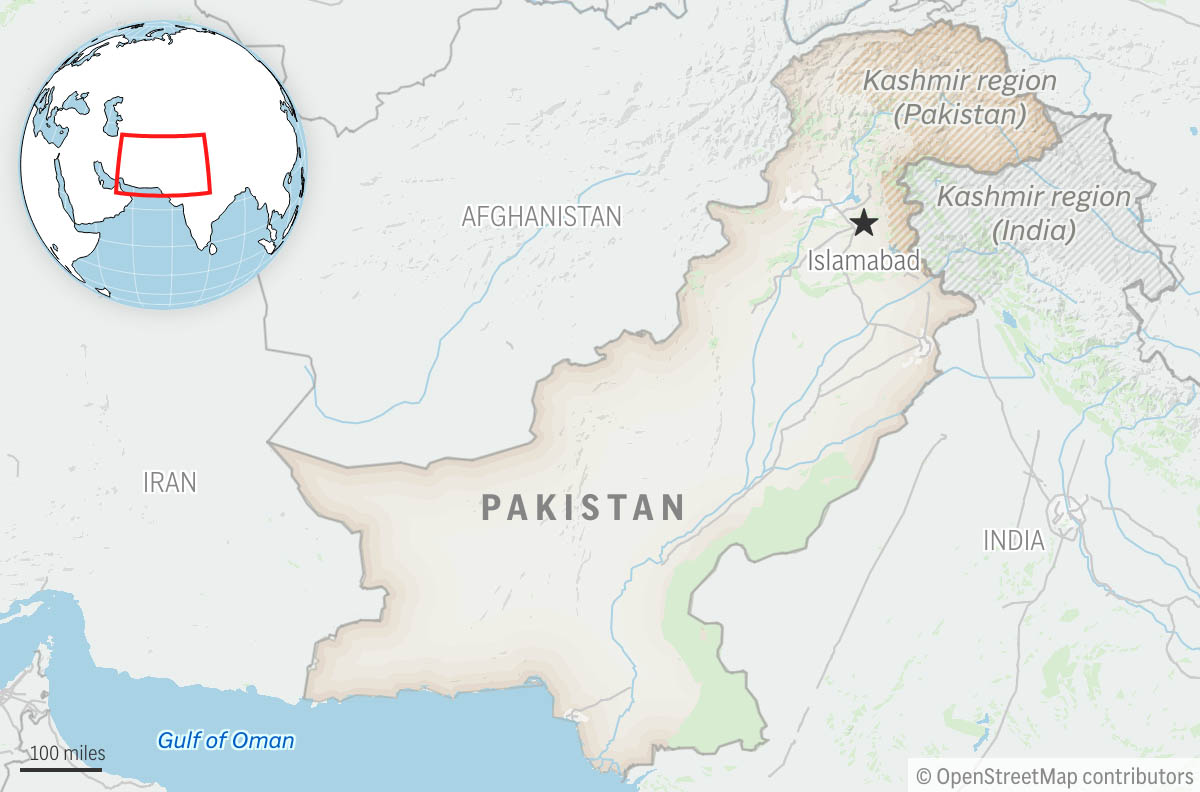
POLICY WIRE — Islamabad, Pakistan — The stark echo of gunfire and drone strikes, for most, remains a distant soundbite. But for Islamabad, these are the persistent rhythms of a border it’s never quite pacified, a drumbeat of national security that plays out on the craggy, contested Durand Line. A recent official announcement, devoid of explicit detail yet pregnant with implicit meaning, states that a series of kinetic actions—both aerial and on the ground—reportedly killed 29 militants along the volatile frontier. It wasn’t merely a tactical update; it was a communique etched in geopolitical frustration.
You see, this isn’t some fresh phenomenon. It’s the same old, dangerous game played on new turf, a tragic Groundhog Day for a nation perpetually teetering on the edge of internal and external threats. And it’s not just about what Pakistan claims to have done; it’s about what such actions betray about the frayed relationships in a region already knotted with distrust. What exactly compelled this specific flurry of activity, — and what does it promise for the already tenuous peace? [QUOTE_PLACEHOLDER]
But this isn’t simply an operation; it’s a statement. It tells the world that Islamabad feels its pleas, its warnings, have fallen on deaf ears across the border. They’re saying, pretty clearly, that enough’s enough, that inaction in one capital can no longer be tolerated as militants bleed across invisible lines to cause chaos in another. The strategic patience, it seems, has worn thin.
Because even if the official narrative remains tight-lipped on the specifics of these latest engagements, the broader context shouts volumes. Cross-border skirmishes and alleged sanctuaries have been a sore point for years, generations even, fueling an enduring bitterness between Afghanistan and Pakistan. We’ve seen these cycles before: accusations, denials, — and then, invariably, more kinetic action. It’s a tragic pattern that doesn’t just claim lives; it destabilizes livelihoods and drains already struggling economies.
We can’t forget, for a second, the sheer scale of the challenge. The Durand Line, that artificial colonial imposition slicing through Pashtun lands, stretches for roughly 2,670 kilometers (about 1,660 miles), according to the Afghan Analysts Network, making it incredibly porous and notoriously difficult to police. So when Pakistan conducts these kinds of operations, it’s fighting a ghost in a land it can barely see, let alone control. These aren’t simple search-and-destroy missions; they’re attempts to project force into deeply complex, tribally governed terrain.
And who are these militants they’re targeting? The announcement offers no names, no affiliations, just a body count. It’s safe to assume, however, that these are groups Islamabad considers a direct threat to its sovereignty and internal security—operatives linked to the Tehrik-i-Taliban Pakistan (TTP), often called the Pakistani Taliban, among others. These outfits, it’s widely believed, find a certain latitude within Afghanistan’s current political vacuum, making any long-term resolution a diplomatic tightrope walk, often ending in a swift fall.
They’ve been a constant irritant, hitting Pakistani security forces and civilians alike, stirring up an old brew of extremism in a country that’s already fought countless internal battles. Pakistan has, for a long time, struggled with the hydra-headed beast of homegrown extremism, and cross-border elements only complicate matters further. It’s a security quagmire without an obvious exit strategy.
What This Means
This aggressive push from Pakistan’s military isn’t just about neutralizing an immediate threat; it’s a recalibration of regional expectations. It’s a forceful reminder to Kabul—and to global players like the U.S. and China, keenly watching the destabilizing ripples from Afghanistan—that Islamabad will prioritize its own national security above all else. This isn’t just self-defense; it’s a profound statement of capability — and resolve.
Economically, persistent border instability is a drain. It diverts resources from much-needed development, hampers trade—crucial for Pakistan’s economic revival—and generally scares off foreign investment. Think about it: who’s going to sink capital into a region where kinetic actions are a routine headline? The long-term costs of such operations, beyond the direct financial outlay, include sustained economic malaise and stunted growth.
Politically, these actions bolster a particular narrative domestically: that the Pakistani state is strong, capable, and protects its people. It’s a messaging tactic that plays well with a populace weary of terrorism — and looking for firm leadership. However, it also carries the risk of escalating tensions into a full-blown diplomatic spat with the interim Afghan government, further complicating humanitarian aid efforts and the already dire situation for millions of ordinary Afghans. Such maneuvers often feel like banging one’s head against a wall; it feels good when you stop, but the wall’s still there.
The subtle irony, of course, is that stability for Pakistan often means instability, or at least immense pressure, for its western neighbor. It’s a zero-sum game that neither side can afford to lose, but which neither side seems able to win conclusively. The region’s path forward? More of the same, unfortunately—a cycle of accusation, operation, and a prayer for quiet.