

Oil Tanker Skirmishes & Shadow Wars: Fragile Iran-US Peace Crumbles Under Escalating Strikes
POLICY WIRE — Washington D.C., USA — Just as global energy markets were settling into a tense, uneasy calm—a supposed reprieve, if you will—the strategic Strait of Hormuz is back in the spotlight,...

POLICY WIRE — Washington D.C., USA — Just as global energy markets were settling into a tense, uneasy calm—a supposed reprieve, if you will—the strategic Strait of Hormuz is back in the spotlight, and not for anything good. Forget the grandiose pronouncements of diplomacy; it appears the modus vivendi painstakingly hammered out between Washington and Tehran was a touch less permanent than advertised. We’re not talking about minor squabbles here; these are exchanges of fire, full-on military action, igniting what had been billed as an ‘interim deal’ into a potentially blazing inferno. It’s a reminder, yet again, that in this part of the world, stability’s just a word you use before the next inevitable eruption.
Because frankly, who expects a ‘ceasefire agreement’ to hold when both sides still see an opportunity to land a punch? While one might optimistically presume a pact signifies an end to hostilities, the current administration had its military on the offensive faster than you can say ‘red line’ after fresh Iranian strikes. We’re talking about a second flurry of U.S. airstrikes aimed at Iran, conducted under President Donald Trump’s direction. These strikes weren’t just token gestures; U.S. Central Command confirmed it hit “surveillance infrastructure, communication systems, air defense sites, drone storage facilities and minelayer capabilities,” the kind of assets you don’t typically target if you’re keen on maintaining a cordial dialogue. This followed what officials characterized as an attack on the Panamanian-flagged tanker Kiku, hauling crude oil for Qatar’s state-run energy behemoth. [QUOTE_PLACEHOLDER]
But Washington wasn’t alone in its aggression. Oh no. Tehran’s retaliatory strikes landed squarely in the laps of regional allies. Bahrain, a nation housing the U.S. Navy’s 5th Fleet — and a long-standing critic of Iran, woke up to a volley of Iranian drones. And then Kuwait, too, was hit early Sunday, a rude awakening that broke the relative calm since the interim deal got signed. Both countries have robust U.S. military presences, making these strikes particularly brazen. It’s almost as if someone’s testing boundaries, daring someone else to cross them. A statement from Bahrain’s Foreign Ministry said a “number of Iranian drones” targeted the country, calling it “a flagrant threat to the security of citizens and residents.” Strong words, for sure.
Meanwhile, the rhetoric’s flying thick — and fast. On social media, President Trump declared the U.S. had “struck Iranian missile and drone storage locations, and coastal radar sites, for violating the Cease Fire Agreement, AGAIN!” He threw down the gauntlet, threatening that if the U.S. gets to a point where it “will be forced to militarily complete the job,” then “the Islamic Republic of Iran will no longer exist!” A bit understated, wouldn’t you say? And Vice President JD Vance, the guy leading the negotiations, weighed in too, telling Iran to “pick up the phone” for disagreements, “but violence will be met with violence.” Doesn’t sound like talks are going super smoothly, does it?
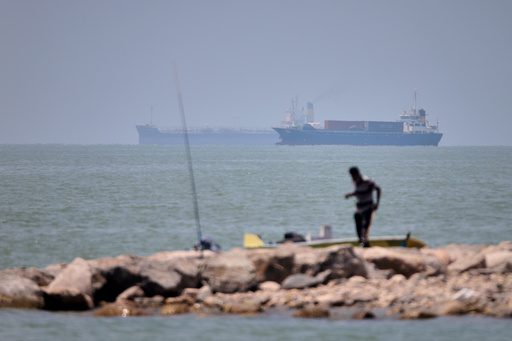
The Strait of Hormuz itself? A powder keg, always has been. It’s a bottleneck, you see, a narrow chokepoint through which much of the world’s oil and natural gas supplies traverse. And if you’re thinking about countries like Pakistan, reliant on these flows for their energy needs and trade routes, any disruption here sends shivers through their economic backbone. It isn’t just about global commodity prices; it’s about stability for an entire region, a critical part of the broader Muslim world, trying to balance economic development with ongoing geopolitical frictions. Just imagine, after reports of renewed attacks, the British military’s United Kingdom Maritime Trade Operations center indicated that “a tanker was attacked Saturday in the strait, with the crew safe and no environmental damage reported.” It’s a miracle they reported no environmental damage. As a small concession, the International Maritime Organization (IMO) has been trying to manage the egress of vessels, with a recent report noting that about 115 ships have been able to move out of the strait in recent days — a paltry number given normal traffic.
But this isn’t just about ships — and oil; it’s got bigger stakes. The “interim deal” also includes thorny issues like the future of Iran’s nuclear program and its stockpile of highly enriched uranium, and even attempts to halt fighting in Lebanon between Israel and the Iranian-backed Hezbollah militant group. These are not minor details. Iran’s parliamentary security head, Ebrahim Azizi, stated plainly, “the Strait of Hormuz is governed by Iran, so: Respect the rules.” A straightforward, if perhaps confrontational, perspective from Tehran.
The U.S. military said that “Iran had a chance to honor the ceasefire agreement” but “elected not to” when its forces attacked the Kiku. Meanwhile, U.S. and Gulf Arab states keep rejecting Iran’s demands, sticking to their guns that the Strait is an international waterway. It’s a classic standoff, two immovable objects meeting head-on. And that never ends well. This all just screams continued chaos — and uncertainty.
What This Means
The sudden, stark re-escalation in the Persian Gulf isn’t merely a bump in a fragile road; it’s a seismic crack threatening to shatter what little diplomatic progress had been made. Politically, this torpedoes the illusion of any stable “interim deal” holding water, signaling to regional and global actors that Washington and Tehran remain on a collision course. For countries like Pakistan, already navigating complex geopolitical currents in South Asia and Afghanistan, this renewed instability translates into tangible economic anxieties—potential surges in oil prices, disruptions to trade, and an unsettling precedent for regional security. They can’t afford protracted conflict. It forces many Muslim-majority nations into an uncomfortable position, having to balance economic necessities with regional alliances and their own national security. Economically, we can pretty much kiss goodbye to any consistent predictability in oil prices. Each strike, each retaliatory drone, sends ripples across global markets, hiking insurance premiums for shippers and making strategic commodities more volatile. The very fact that the U.S. Navy is expanding shipping routes and warning of “mines” speaks volumes about the immediate dangers, a silent, chilling signal of preparedness for a worsening situation. This isn’t just about one tanker; it’s a shadowboxing match over influence, oil, and who ultimately dictates terms in the Middle East. It’s a sobering reminder that grand pronouncements of peace are often just interludes before the next chapter of conflict begins.
For more on regional instability, you might want to read our coverage on Cross-Border Retribution: Pakistan’s Afghan Gambit Jolts Regional Stability. Also, it’s worth keeping an eye on the political machinations behind the scenes, often Shadowboxing in the Swamp: Capitol’s Silent War of Wills plays a bigger role than people imagine.