

Caracas’s Brittle Grip: A Child Rescued, The Crisis Unabated
POLICY WIRE — Caracas, Venezuela — They say hope is a fragile thing, particularly in a country accustomed to despair. For a few frantic, televised minutes, Venezuela gripped a sliver of it: a tiny...

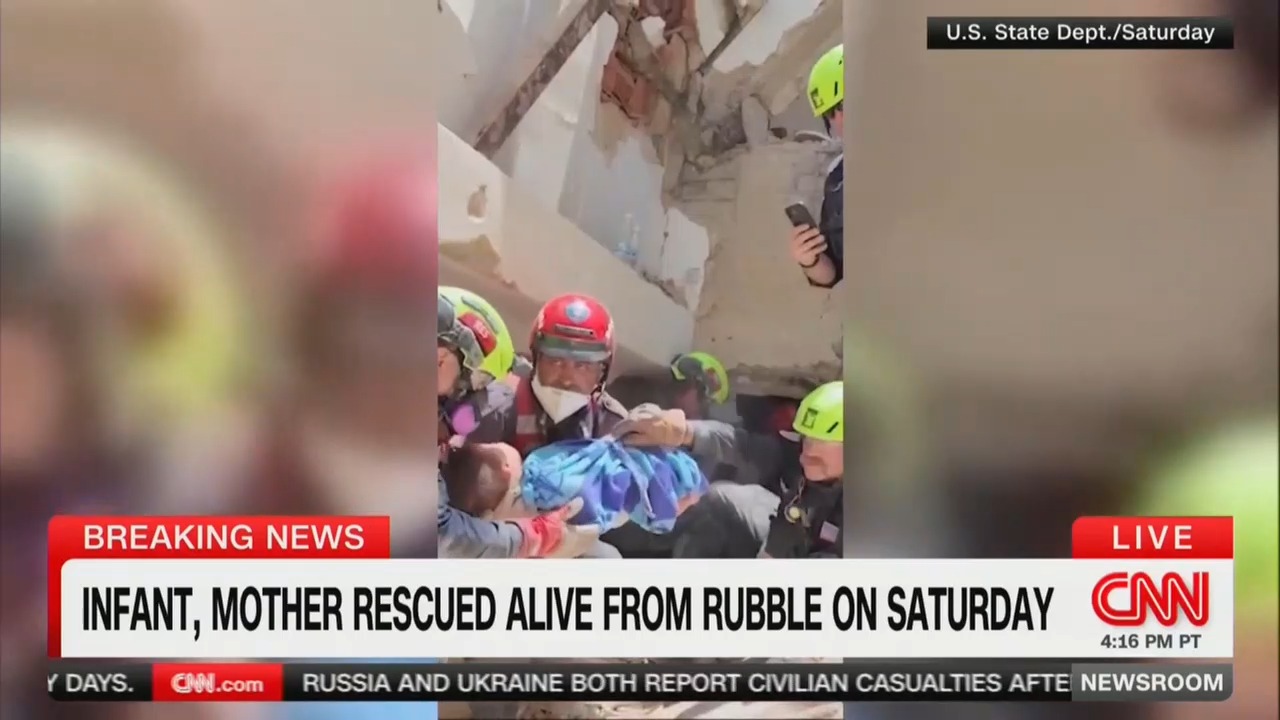
POLICY WIRE — Caracas, Venezuela — They say hope is a fragile thing, particularly in a country accustomed to despair. For a few frantic, televised minutes, Venezuela gripped a sliver of it: a tiny infant, pulled from a jumble of twisted metal and pulverized concrete, emerging into the blaring chaos of a rescue operation. This wasn’t some miraculous survival against an act of God, though. It was, rather, a stark, visceral tableau of decay—of collapsing infrastructure, neglected planning, and a state grappling with more immediate crises than the integrity of its building codes.
Because let’s be frank, an intact structure in modern-day Caracas often feels like an anomaly. The cameras, quick to capture the baby’s fragile breath, lingered on the sweaty, determined faces of rescue workers, a narrative instantly spun for local consumption. “This exemplifies the unwavering spirit of the Venezuelan people and the relentless dedication of our security forces,” beamed Interior Minister Néstor Reverol, during a hastily arranged press conference (or so sources tell us), managing to bypass the systemic failings that likely led to the collapse in the first place.
But the momentary euphoria, choreographed for screens across a nation perpetually starved for good news, barely covers the fissures. And those fissures run deep. They’re etched into the sagging power lines, the intermittent water supplies, and, increasingly, into the very foundations of the buildings housing its citizens. Critics were quick to point this out, even as the narrative of heroism played out. “One rescue, however poignant, doesn’t absolve a government from two decades of dereliction,” remarked Luis Florido, a prominent opposition figure, his words cutting through the manufactured celebration like a surgical knife. “This child’s survival is an indictment, not a triumph. It’s a tragic testament to where our nation’s resources truly aren’t going.”
It’s an old trick, really. Focus on the singular, heartwarming miracle to deflect from the widespread, grinding reality. It’s a tactic employed with varied success across the globe, from the aftermath of earthquakes in the restive regions of Balochistan where infrastructure routinely fails, to the carefully managed media narratives following crises in other states perpetually teetering on the edge. That sudden burst of human empathy — it’s powerful. It’s also short-lived. And its ability to obscure inconvenient truths is unmatched.
Venezuela’s economy, already on its knees, hardly provides the backbone for resilient construction. You don’t have to be an urban planner to see that; you just have to walk down a street. The International Monetary Fund reported a cumulative contraction of roughly 75% in Venezuela’s GDP between 2013 and 2021, an economic freefall that makes building maintenance, let alone robust new construction, a distant luxury for most. So, when buildings fail, it’s rarely a ‘surprise’; it’s often the inevitable outcome of years, if not decades, of material decay and regulatory negligence.
What’s the actual trigger for the collapse? Early reports (unverified, mind you) whispered of compromised structural integrity — maybe substandard materials, perhaps illegal construction without proper oversight, or simply age and a lack of upkeep in a region prone to seismic activity. Whatever it was, the structure gave way, a casualty of a nation straining under its own weight, literal — and figurative.
This isn’t just about a baby, or a building. It’s about a society stretched to its breaking point, where every minor collapse, every localized tragedy, speaks volumes about a larger, systemic failing. The kind of failure that reduces once-vibrant cityscapes to a patchwork of decaying concrete — and desperate measures. They call them rescues, but sometimes, they’re just delaying the inevitable—a country constantly trying to pull itself out of the rubble, often without enough hands to do the heavy lifting.
Such moments—raw, visceral, televised—remind one of similar, haunting images that periodically emerge from places like Afghanistan after an earthquake, or Syria after years of relentless conflict. Rumbling faults and shaky governance often walk hand-in-hand, creating a precarious existence for millions, their survival often left to the kindness of strangers or the whim of chance, not the reliable arm of a functional state. There’s a universality to suffering under compromised regimes, an uncomfortable truth that knows no geographical bounds, from the Andes to the Hindukush.
What This Means
The highly publicized rescue, while momentarily stirring collective emotions, doesn’t really change the grim calculus for Caracas. Politically, it provides the government with a ready-made narrative of a responsive, caring state, hoping to overshadow years of chronic infrastructure underinvestment. They’ll spin it for all its worth, framing it as proof of national resilience—a thin veil over a deepening chasm of public services. Economically, the cost of repair, rebuilding, and implementing preventative measures simply isn’t in the budget, not for a nation whose coffers are increasingly barren and whose external debts are mountainous. We’re looking at more Band-Aids, more reactive heroism, — and fewer proactive solutions. It also subtly reinforces the image of a Latin American nation where governance remains a precarious high-wire act, where even fundamental public safety is often more a matter of luck than policy.
And when a crisis hits, like a building giving up the ghost, the spotlight invariably falls on the government’s capacity to respond, or lack thereof. That’s what makes a crisis for one, a precarious balancing act for others. This brief, televised spectacle is less about triumph, and more about exposure – exposure of what truly lies beneath the surface of a collapsing nation: the grit of its people, and the persistent fragility of its very foundations.