
Pope Leo Invokes American Saint’s Legacy for Migrant Care
POLICY WIRE — Sant'Angelo Lodigiano, Italy — In a move highlighting the Catholic Church's continued emphasis on humanitarian efforts, Pope Leo recently invoked ...

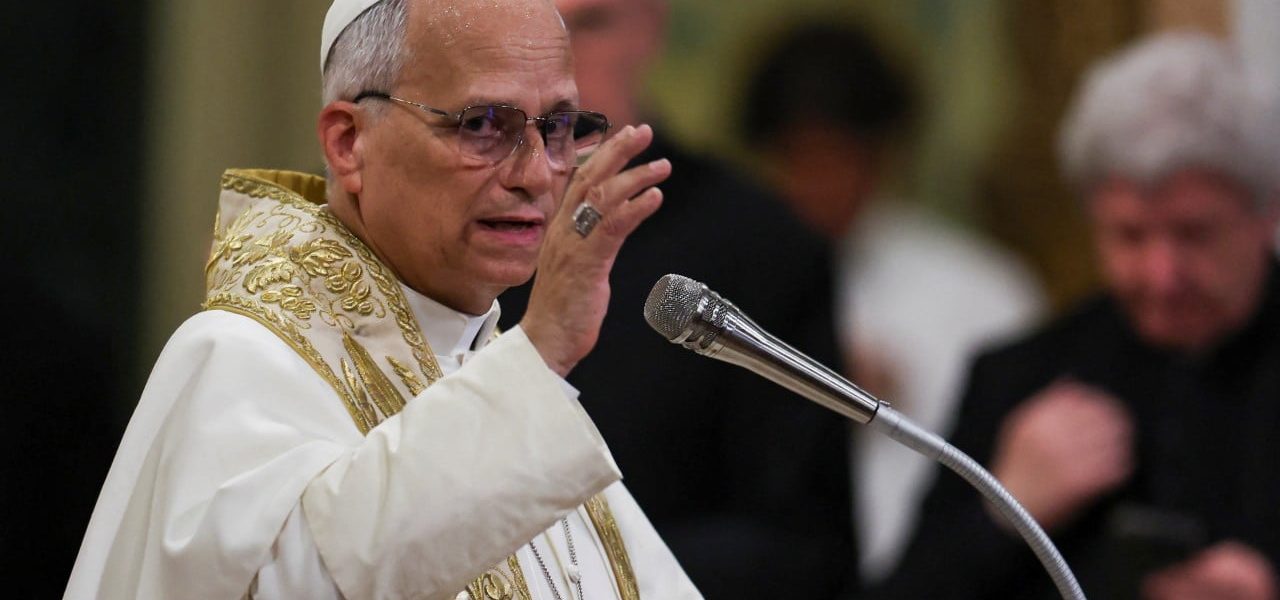
POLICY WIRE — Sant’Angelo Lodigiano, Italy — In a move highlighting the Catholic Church’s continued emphasis on humanitarian efforts, Pope Leo recently invoked the legacy of the first American saint, Mother Frances Cabrini. The pontiff, during a day trip to her birthplace in northern Italy, presented her as a compelling model for Christians in addressing the contemporary needs of migrants, a group often at the heart of global political discourse.
The pronouncement came on Saturday, during a visit that saw Pope Leo pay tribute at the origins of a figure celebrated for her extensive work with immigrants. This event underscores a consistent theme within Pope Leo’s papacy: advocating for those displaced or seeking new lives, particularly at a time when migration policies are under intense scrutiny globally. His message resonated against the backdrop of an ongoing global debate regarding national sovereignty, economic pressures, and humanitarian responsibilities.
Pope Leo’s emphasis on Cabrini’s example is not merely symbolic; it reflects a deep-seated commitment. For instance, according to wire reports, he has previously engaged in direct criticism of the Trump administration’s migrant crackdown, demonstrating a willingness to engage politically on these matters. By urging young people to delve into Cabrini’s life and service, the Pope appears keen to galvanize a new generation towards active compassion. This steadfast prioritization of migrants’ plight, particularly for ‘history’s first US pope,’ positions him as a clear inheritor of the social justice mantle often associated with his predecessor, Pope Francis.
Frances Xavier Cabrini, known affectionately as Mother Cabrini, was canonized in 1946, making her the first United States citizen to achieve sainthood. Born in Sant’Angelo Lodigiano, Italy, in 1850, she dedicated her life to aiding Italian immigrants in the United States. Her missionary work began in New York City in 1889, where she and her Sisters of the Sacred Heart of Jesus founded numerous orphanages, schools, and hospitals to support newly arrived migrants struggling with poverty and discrimination. Her institutions spanned across the U.S. and extended into Central and South America and Europe, establishing a vast network of care for those in transition (historical context based on general knowledge).
The Pontiff’s journey to her Lombardy origins serves not only as a spiritual homage but also as a political statement. By connecting current migration challenges to the historical struggles that Mother Cabrini addressed, Pope Leo bridges centuries, demonstrating the perennial relevance of charity and human dignity. It’s a reminder that the challenges faced by migrants today, while manifesting in new ways, echo historical precedents that have always demanded compassionate responses.
In highlighting Mother Cabrini, Pope Leo is effectively presenting a historical blueprint for action. Her practical approach — establishing tangible services and institutions — offers a concrete methodology for faith-based and secular organizations alike. It’s an implicit challenge to governments and societies to move beyond policy debates toward direct, empathetic engagement with migrant populations. This is especially poignant as debates around border control, asylum claims, and integration often become dehumanized in the public discourse.
📄 POLICY WIRE WHITEPAPER PUBLISHED: PAKISTAN'S NATIONAL SECURITY POLICY PRIORITIES
👉 READ BY CLICKING HEREDuring his visit, Leo prayed before… The unfinished thought, as reported by early dispatches, hints at a moment of private devotion following his public exhortation, underlining the deeply spiritual foundation of his activist stance. Such moments often precede or follow pronouncements, providing a personal reflection to buttress public calls for action.
What This Means
Pope Leo’s invocation of Mother Cabrini provides a powerful, historically grounded framework for the Catholic Church’s continued advocacy for migrants. This isn’t merely a reiteration of existing doctrine; it’s an active re-contextualization, drawing on a figure whose legacy is undeniably American yet deeply international in its scope and impact. The choice of Cabrini serves to underscore that aiding migrants is not a novel liberal stance but a centuries-old Christian imperative.
For nations grappling with influxes of displaced persons, the pontiff’s message suggests a need to look beyond immediate political or economic concerns to the human stories at the heart of the crisis. While it’s clear the Church maintains a moral position, the practical challenges of integrating and supporting large migrant populations remain complex for states and local communities. The question then becomes: how effectively can moral leadership translate into actionable policy and societal empathy on a global scale? Pope Leo, as ‘history’s first US pope,’ also carries the unique burden of addressing these issues within his home nation, a country currently embroiled in fierce debate over immigration, making his consistent pronouncements particularly noteworthy. It also raises the question of how the Vatican’s moral authority will intersect with varied national interests and political agendas in the coming years.