

Serbian President Vucic Signals Imminent Resignation Amidst Youth Protests, Electoral Reshuffle Looms
POLICY WIRE — Belgrade, Serbia — Serbia’s populist President Aleksandar Vucic declared on Saturday that he intends to resign from his position within weeks. Thi...

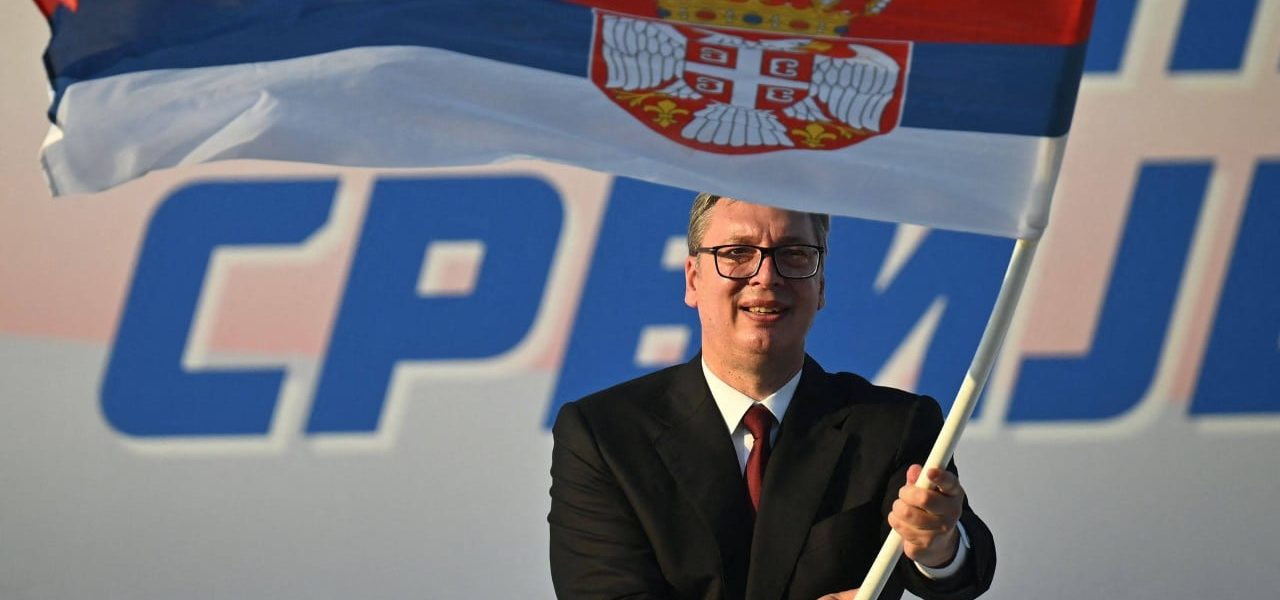
POLICY WIRE — Belgrade, Serbia — Serbia’s populist President Aleksandar Vucic declared on Saturday that he intends to resign from his position within weeks. This unexpected announcement paves the way for potential early elections, a development directly linked to recent youth-led protests that have undeniably challenged his long-standing grip on national power. (Reporting based on Associated Press)
The President, known for his formidable political presence, offered no precise timeline for his departure or for the subsequent elections, which could encompass either parliamentary seats or the presidential office itself. Such an overture to step down, while significant, is not entirely without precedent in Vucic’s political narrative. He has, in previous instances, floated the idea of leaving the top office, often amidst speculation that he might be considering a move to the theoretically more influential role of prime minister.
This calculated political maneuvering comes in the wake of public demonstrations, predominantly led by Serbia’s youth. These protests signify a tangible shift in the country’s political landscape, reflecting a growing segment of the population unafraid to voice discontent. The scale and sustained nature of these rallies have evidently created sufficient pressure to precipitate such a significant pronouncement from the highest office.
The implications of a presidential resignation in Serbia are multifaceted. The office, though not always seen as the primary executive driver in parliamentary systems, nonetheless holds considerable symbolic and often practical sway. A leader like Vucic, characterized as populist, tends to consolidate power around their personal brand — and image. A decision to relinquish this specific role, therefore, raises questions about succession, the future of his political party, and the broader direction of Serbian governance.
Early elections, should they materialize, would present a fresh opportunity for opposition parties and new political forces to gain traction. The youth-led protests suggest an invigorated civic engagement that could translate into electoral shifts. Historically, such movements have often acted as catalysts for significant political change, pushing entrenched leaderships to reassess strategies or even yield power.
For President Vucic, a move to the premiership would constitute a change in title but potentially an upgrade in direct governmental control. The prime minister in Serbia commands the executive branch more directly than the president, whose role often leans towards representing the state. This speculated pivot could allow Vucic to retain — or even amplify — his influence over policy and day-to-day governance, albeit from a different institutional vantage point. Such a tactic is not unheard of among strong political figures seeking to adapt to changing public sentiment while maintaining control.
📄 POLICY WIRE WHITEPAPER PUBLISHED: PAKISTAN'S NATIONAL SECURITY POLICY PRIORITIES
👉 READ BY CLICKING HEREThe immediate weeks following this announcement will be critical. Clarity will be sought on the exact timing of Vucic’s resignation — and the specifics of any forthcoming elections. Observers will be keen to see if this declaration leads to genuine political liberalization or if it represents a strategic realignment designed to preserve, rather than diminish, existing power structures. The impact of the youth movement, having achieved such a pronounced statement from the presidency, now awaits its true test in the upcoming political machinations.
What This Means
President Vucic’s announced intention to resign signals a potentially significant turning point in Serbian politics, particularly in light of recent public discontent. On one hand, it could be interpreted as a direct concession to the growing pressure from youth-led protests, suggesting that sustained civil action can indeed prompt governmental recalibration. This would be a crucial victory for civil society — and an affirmation of democratic expression.
However, it’s equally possible that this move is a calculated strategic shift, rather than an outright retreat. Political history is replete with examples of powerful figures stepping back from one formal position only to assume another with potentially greater operational authority. If Vucic’s long-speculated ambition to transition to the role of prime minister materializes, this reshuffle might enable him to retain substantial influence, merely channeling it through a different executive channel.
The success of the youth protests in catalyzing change now hinges on how the subsequent electoral process unfolds. Will early elections genuinely foster a more diverse political landscape, or will they serve to legitimize a new configuration of power that maintains the status quo? The coming weeks will reveal whether this resignation marks a true departure from Vucic’s tight grip or a sophisticated maneuver to adapt and persist within Serbia’s corridors of power.