

World Stage, Unequal Footing: The Real Game Behind Tonight’s Kickoff
POLICY WIRE — Riyadh/Praia — It wasn’t about the pristine turf or the referee’s whistle tonight, not really. While the casual fan might’ve been weighing permutations for tonight’s...

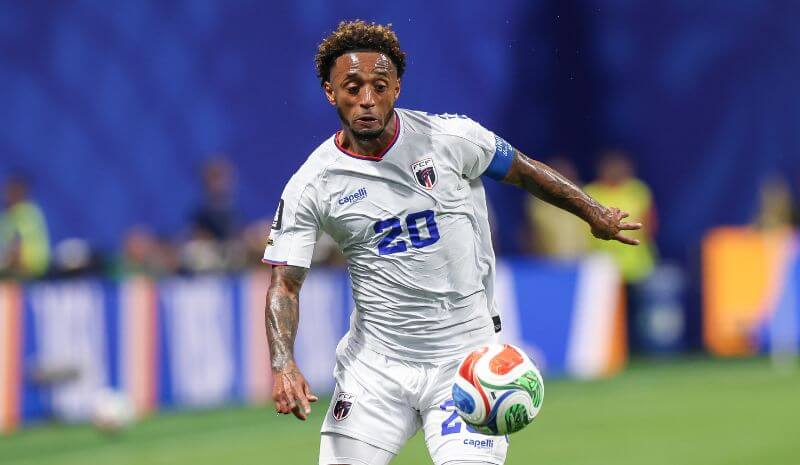
POLICY WIRE — Riyadh/Praia — It wasn’t about the pristine turf or the referee’s whistle tonight, not really. While the casual fan might’ve been weighing permutations for tonight’s World Cup match between Cape Verde and Saudi Arabia, seasoned observers know a different scoreboard is at play. It’s a scoreboard of national aspirations, petrodollars, and the quiet, persistent grind of nations trying to etch their name, however faintly, into the global consciousness. And yes, sometimes it plays out on a football pitch.
Consider the chasm, the almost absurd disparity, between the two nations clashing under the floodlights. On one side, Saudi Arabia, an economic titan propelled by vast oil reserves—its Gross Domestic Product soaring past a trillion dollars in 2023, according to World Bank figures. It’s a nation rebranding itself, splashing billions on mega-projects, tourism, — and yes, sports. On the other, Cape Verde, an archipelago nation, less than six hundred thousand people strong, its economy nudging barely $2.3 billion in the same year. An underdog, if ever there was one. But an ambitious one, for sure.
The Saudis aren’t just playing football; they’re playing chess. They’re channeling immense wealth into a campaign of soft power, eager to pivot from being solely defined by oil and regional politics to a modern, globally engaged player. This push is particularly keenly watched across the broader Muslim world, including nations in South Asia where football’s grip grows ever tighter. For a young fan in Lahore or Dhaka, a strong showing by a major Muslim nation on the global sporting stage isn’t just entertainment—it’s a shared moment of pride, a vicarious sense of achievement. But it’s also carefully cultivated.
Prince Faisal bin Farhan Al Saud, Saudi Arabia’s Foreign Minister, doesn’t mince words on the strategic front. “It isn’t just a contest; it’s a showcase of our national aspiration, a practical demonstration of Vision 2030 in action. We’re investing in talent, in infrastructure, in our global presence. And frankly, we anticipate performances that reflect that investment.” His tone was polished, unyielding, steeped in expectation. You could almost hear the rustle of petrodollars backing his sentiment.
But the story isn’t one-sided. Cape Verde’s journey to this level is a masterclass in making do with very little. They’ve punched above their weight consistently, harnessing a diaspora often larger than their resident population, relying on grit and surprising tactical prowess. For them, a World Cup berth—let alone a competitive showing against a powerhouse—is nothing short of a national celebration, an assertion of identity. Every pass, every tackle, represents a struggle for recognition, a desperate bid to be seen.
Their Minister of Sports, Fernando Elísio Freire, framed it rather eloquently. “Our resources are modest, that’s no secret. But our spirit, our collective belief? That’s boundless. This team, these players, they’re not just representing an island; they’re a symbol of what dedication and dreams can achieve. We’re here to play football, yes, but we’re also here to show the world the heart of Cape Verde.” It’s the voice of a nation defying expectations, daring to dream big even when the ledger sheets tell a different tale.
📄 POLICY WIRE WHITEPAPER PUBLISHED: PAKISTAN'S NATIONAL SECURITY POLICY PRIORITIES
👉 READ BY CLICKING HEREThe contrast, then, is stark. One nation deploys football as a sophisticated arm of its foreign policy, a glossy advertisement for its changing image. The other wields it as a blunt instrument of identity, a desperate, joyful shout for attention on a stage too often dominated by the behemoths. They don’t have the grand investment funds, no — they’re battling for global recognition with heart, not cash.
And so, as the final whistle blew, regardless of the score, the deeper contest was already settled. Both nations, in their wildly disparate ways, had secured something far more significant than three points. They had performed their respective roles on the global stage, executing carefully choreographed narratives for an audience that stretches far beyond the stands.
What This Means
The World Cup match, stripped of its sporting veneer, was a live demonstration of global inequality and the diverse ways nations pursue legitimacy and influence. For Saudi Arabia, this participation isn’t just about winning games; it’s an integrated part of Crown Prince Mohammed bin Salman’s Vision 2030. Success on the pitch reinforces the narrative of a dynamic, modernizing state, appealing to foreign investors and enhancing its standing in an increasingly competitive geopolitical landscape. This strategy effectively bypasses traditional diplomatic channels, speaking directly to populations globally through shared spectacle.
Conversely, Cape Verde’s performance—even if they lost—carries immense symbolic weight for developing nations. It showcases that ‘soft power’ isn’t exclusively a tool of the wealthy. Their participation inspires other small states, suggesting that ingenuity and collective will can carve out a presence on the world stage, offering a more democratic counter-narrative to economic might. The political ramifications are subtle: it can boost national pride, encourage youth engagement, and potentially attract cultural or diaspora investments that aren’t tied to large-scale, often debt-inducing, projects. But that’s a longer, harder game to win.