


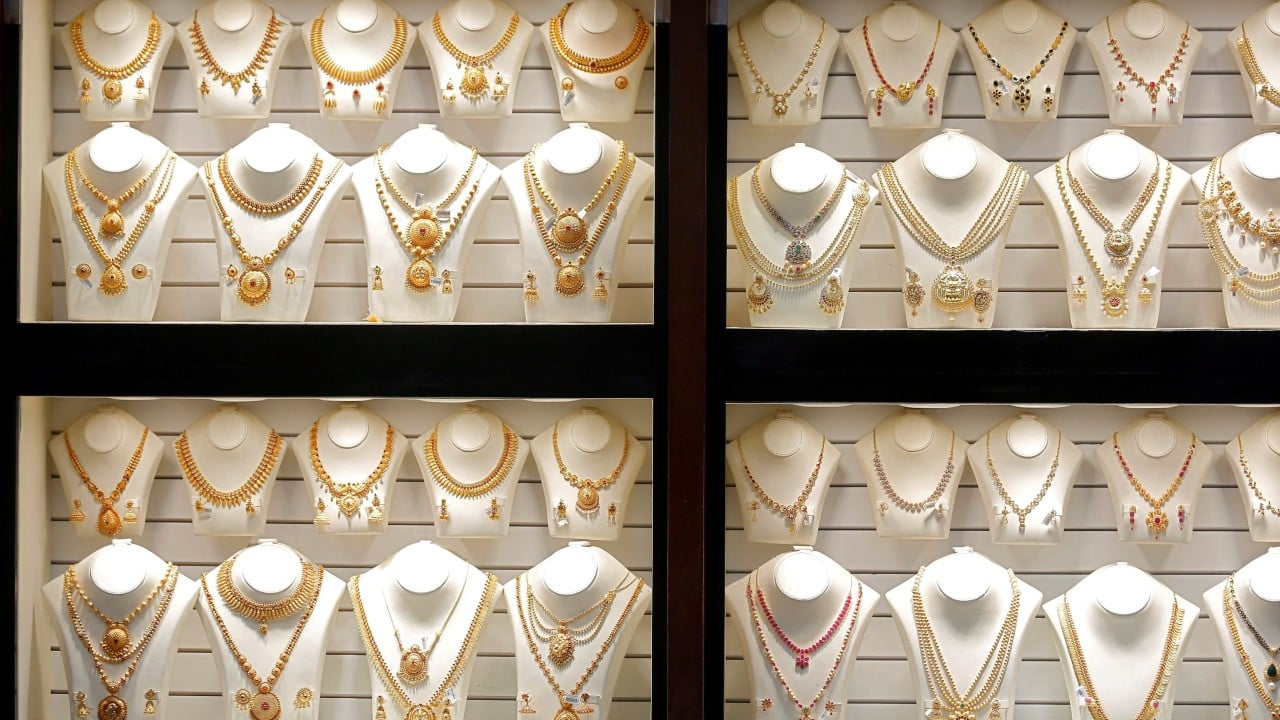
Delhi’s Golden Dilemma: Tariffs Ignite Smuggling Surge, Fueling Regional Grey Market
POLICY WIRE — New Delhi, India — Imagine an economy so thirsty for a commodity that, even when its price is artificially inflated by government decree, an entire shadow market blossoms, making a...

POLICY WIRE — New Delhi, India — Imagine an economy so thirsty for a commodity that, even when its price is artificially inflated by government decree, an entire shadow market blossoms, making a mockery of policy. That’s the gilded cage India finds itself in right now. The government’s gambit to buttress the national currency and rein in external deficits has instead spawned a parallel economy, one where illicit traders thrive, pulling staggering quantities of precious metal right under the nose of official channels.
It’s not just a few enterprising individuals skirting customs; this is a full-blown commercial operation, scaled up and ready to capitalize. Because soaring grey market margins allow smugglers to undercut banks and refiners of the precious metal, industry officials and bullion dealers said. They’re making a killing. These aren’t just marginal profits; we’re talking about margins so fat they’ve drawn in players who can offer gold cheaper than legitimate businesses, pushing billions into unregulated hands. And that’s not exactly good for national coffers, is it? [QUOTE_PLACEHOLDER]
The numbers don’t lie. India’s sharp increase in gold import tariffs is fuelling a resurgence in smuggling that could exceed 100 tonnes this year. One hundred metric tons. Picture that. That’s a mountain of gold bypassing official taxes — and controls. India, the world’s biggest gold market after China, thought it could control demand with a simple tariff hike. They more than doubled import tariffs to 15 per cent in May to curb demand, cut the trade deficit and ease pressure on the rupee. Seems straightforward enough on paper.
But the practical implications, as so often happens, have diverged wildly from theoretical projections. Instead of reining in the gold appetite of one of the world’s most historically gold-obsessed populations, policymakers simply redirected it. The move has created an opportunity for… well, for criminal networks, mostly. Gold’s allure in South Asia isn’t merely economic; it’s deeply cultural, embedded in centuries of tradition, weddings, and generational wealth transfers. This isn’t a product you can easily legislate out of existence. It’s too deeply interwoven.
And where do these illicit shipments come from? While direct imports via official channels dwindle, gold flows in through a maze of routes. Think passenger flights, cargo ships, — and a surprising amount of overland movement across porous borders. The profit incentive has made it an incredibly lucrative enterprise for organized crime, often tapping into established illicit trade networks that have long serviced the subcontinent. This isn’t just about Indian gold; it’s about a broader regional black market, potentially affecting nations like Pakistan, where informal economies sometimes mirror the scale of official trade. The lines blur, the money moves, — and governments struggle to keep pace.
It’s not just a financial drain; it’s a systemic weakness. The official markets suffer, legitimate businesses are squeezed, and the government loses out on significant tax revenue. You’ve got an explicit government policy directly contributing to the boom of a criminal enterprise. It’s a textbook example of unintended consequences. We’ve seen this before in other regulated markets — Prohibition, anyone? When the state clamps down too hard, human ingenuity (or depravity, depending on your perspective) finds a way around it. Sometimes, it’s not about stifling demand, but rather about managing it intelligently.
These complex dynamics extend beyond simple economic models, seeping into the socio-political fabric of the region. Just as with other sensitive issues across South Asia, from political maneuverings against rival nations to basic law and order challenges like women’s safety, the formal structures often contend with deeply entrenched informal systems. The gold market, it turns out, is no exception.
What This Means
The government’s hard-line stance on gold tariffs was a reactive measure, designed to stabilize the rupee and rein in India’s chronic trade deficit. Politically, it was presented as a necessary step to protect the national economy. Economically, however, it’s backfiring rather spectacularly. By making legitimate gold expensive, Delhi has inadvertently handed an immense competitive advantage to smugglers. This isn’t just about lost customs revenue; it’s about ceding control of a significant economic sector to untraceable, untaxed, and often criminal entities.
The policy’s net effect could easily be worse than the problem it set out to solve. A thriving grey market breeds illicit financing, potential money laundering, — and undermines the authority of the state. this dynamic isn’t isolated. It feeds into — and is fed by a broader informal economy across the subcontinent. Consider how a similar interplay of formal pressure and informal resilience plays out in geopolitical strategies, as Delhi’s own unification gambles highlight the complex dance between official posturing and underlying realities. The gold market simply offers another, shinier, example.
For India, the options aren’t simple. Maintaining high tariffs perpetuates the problem, while drastically reducing them could lead to the very rupee depreciation they sought to avoid. This isn’t just an economic pickle; it’s a policy conundrum that has elevated smuggling from an annoyance to a systemic threat, enriching the wrong people and eroding confidence in the state’s ability to manage its own markets. A reassessment of the entire gold policy—perhaps focusing on domestic refining capacity and disincentivizing illicit demand rather than merely hiking import costs—seems not just prudent, but essential.