


WNBA’s Hardball Act: High Stakes and Rough Play Echo Across Global Spectrums
POLICY WIRE — New York, United States — Sometimes, the quiet pronouncements from an institutional bureaucracy speak volumes beyond their immediate context. So it was this week, as the Women’s...

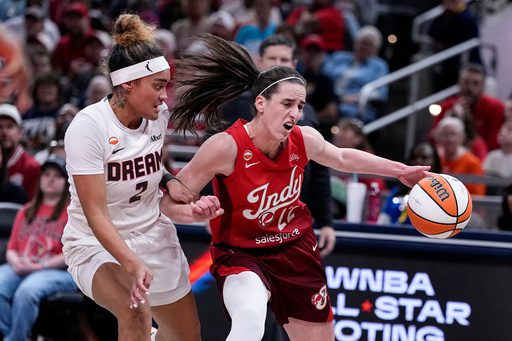
POLICY WIRE — New York, United States — Sometimes, the quiet pronouncements from an institutional bureaucracy speak volumes beyond their immediate context. So it was this week, as the Women’s National Basketball Association, in a move less about on-court strategy and more about off-court perception, quietly slapped a one-game suspension on Phoenix’s Alyssa Thomas. But this wasn’t for a technical foul missed or a minor transgression; this was for a moment of blunt, rather visceral contact – an elbow or fist, depends on your angle, to the throat of one Caitlin Clark, basketball’s current commercial darling.
It happened fast, right in the thick of a Wednesday night skirmish against Indiana. A moment frozen in time, just 6:52 remaining in the second quarter. No whistle on the play, mind you. Just the game grinding on, only for the WNBA’s oversight mechanisms to kick in later, reclassifying the act. They deemed it a non-basketball act—a delightful bureaucratic turn of phrase for what, to many, looked an awful lot like a deliberate shot—and handed Thomas a Flagrant Foul 2 penalty. One can only imagine the huddles of lawyers and PR strategists deliberating over the precise nomenclature, trying to square the circle of on-court brutality with polished league branding. It’s a delicate dance, balancing the grit fans crave with the corporate sponsors demand.
The move certainly caught some attention. Because here’s the thing: player safety, especially when big-ticket talent is involved, isn’t just about athletic well-being; it’s about investment protection. And it isn’t the first time the league’s felt compelled to step in after the fact. Last season, for example, Marina Mabrey—then playing for Connecticut—had a technical foul upgraded to a Flagrant 2, another after-the-bell intervention by the league’s enforcers. These retroactive adjustments are rarely made in a vacuum. They’re, shall we say, a reflection of prevailing sentiments. You’ve got to wonder if a few market research charts were consulted alongside the rulebook.
The Indiana Fever—Clark’s squad—didn’t mince words, though they did manage a remarkable degree of corporate civility. Their team president, Kelly Krauskopf, offered up the predictable official line: [QUOTE_PLACEHOLDER] One couldn’t fault the sentiment, especially after the immediate aftermath of the incident. “We appreciate the WNBA’s review of last night’s incident and the action taken. Right now our focus is on Caitlin and our entire team as we prepare for Saturday.” The official response was swift, diplomatic, — and utterly expected.
But the real juice came from Fever coach Stephanie White, post-game, before the league office had tidied things up. Her raw exasperation was palpable. “It was egregious. The fact that it was a no-call … You got to call it,” she said, articulating the collective frustration of anyone who felt justice delayed was justice denied. And then, the zinger, suggesting this wasn’t some isolated, spontaneous combustion: “You’re coming in here aware of what happened two nights ago and that (expletive) still happens? Absolutely unacceptable.” That’s the sound of a coach losing her cool, but also signalling a deeper issue about physical play and respect that often spills over.
The previous game, you see, was no picnic either. A hefty six technical fouls were called, plus one ejection. Clark, not entirely innocent, collected her fifth technical of the season in that same chaotic encounter, an accumulation the team tried to get rescinded, but the WNBA stood firm. These aren’t minor infractions. They suggest an undercurrent of genuine friction. Or perhaps, simply the brutal descent into the crucible of high-stakes competition—where personal animus sometimes finds an outlet, intentional or not.
Thomas will now sit out Saturday’s game when the Mercury travel to face the Toronto Tempo. And frankly, that’s a mild penalty for what many viewed as a significant incident. It’s a slap on the wrist, perhaps, but one meant to communicate. For those watching from afar—say, in Islamabad or Mumbai, where debates over the integrity of sport and the treatment of public figures can rage just as fiercely—these small dramas often echo broader themes of institutional accountability. Whether it’s the national cricket team under fire for performance or a high-profile political figure facing censure, the demand for transparent justice and fair play is universal. It transcends national borders, even if the stakes in sports rarely match those of actual governance. It’s a reminder that global attention—fueled by hyper-connectivity and the allure of star power—doesn’t forgive ethical lapses, be they on the court or in the cabinet. Just last year, there was a public outcry in Pakistan over alleged corruption within a sports federation, forcing immediate, transparent investigations—a similar, if more politically charged, push for institutional clean-up.
The incident also highlights the delicate economics of women’s professional sports. A league can’t afford its brightest stars, its future revenue generators, sidelined by unnecessary aggression. Clark, for her part, finished Wednesday’s game with 19 points and eight assists in 20 minutes, even after tweaking her back in the second quarter when she was fouled shooting a 3-pointer. The image of her rubbing her back, then returning with a wrap, underscores the physical toll these games extract, often exacerbated by encounters like this one.
But what does this all really mean? Is it merely a basketball skirmish, or a microcosm of something larger?
What This Means
This suspension, while seemingly isolated to the WNBA, speaks to several broader political and economic dynamics at play in professional sports. Economically, the league is navigating unprecedented public interest, largely thanks to players like Clark. Protecting its assets—its stars—becomes paramount. Any perceived threat to player safety risks alienating this new, crucial fanbase and, more importantly, future broadcast and sponsorship deals. A league that can’t protect its most marketable talent is one with a depreciating asset base. It’s a fundamental tenet of economic stability: safeguard your value proposition. Failure to do so impacts revenue streams, from merchandise sales to global media rights, a topic not entirely unlike the commercial considerations discussed in an article about Hoops and Hard Realities: Minor League Play as a Macro-Economic Microcosm. But politically, it’s about optics — and institutional integrity. The WNBA, like any governing body, has to project an image of fairness — and control. When incidents slip through, particularly those involving such blatant physicality and a high-profile player, the integrity of the institution is questioned. The retroactive nature of the suspension isn’t just about correcting an on-court error; it’s about reaffirming authority and reassuring the public, sponsors, and other players that rules, eventually, matter. It’s a public display of enforcement, a signal that while the game is rough, the rulebook still applies—and will be upheld. The global soft power of American sports, after all, depends on its perceived fairness, an expectation perhaps even more intense in emerging markets or developing countries observing Western standards of governance. The trust invested in institutions, whether in sport or government, forms the backbone of societal cohesion. It’s a high-wire act, always.