


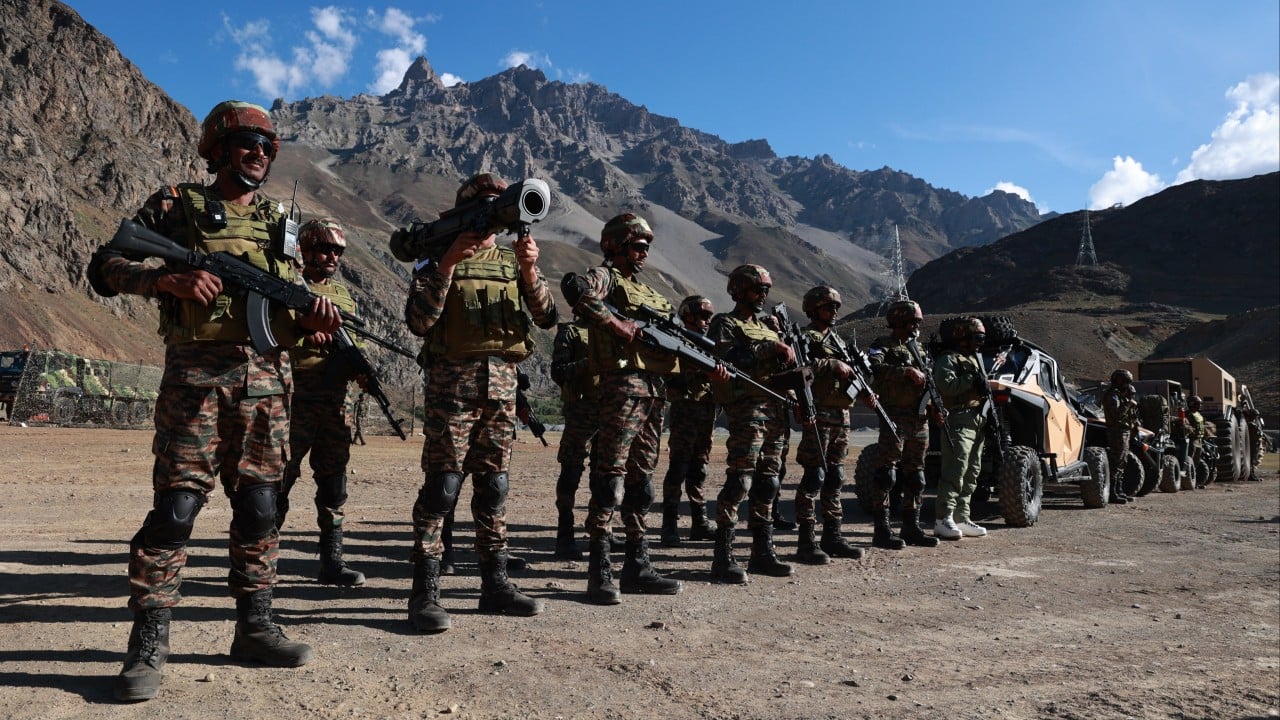
Delhi’s Grand Unification Gamble: A Risky Roll of the Dice Against Beijing, Islamabad
POLICY WIRE — New Delhi, India — Forget the pomp and circumstance of Republic Day parades, the real show of force in India right now isn’t about precision marches. It’s about a deeply convoluted...

POLICY WIRE — New Delhi, India — Forget the pomp and circumstance of Republic Day parades, the real show of force in India right now isn’t about precision marches. It’s about a deeply convoluted bureaucratic struggle behind closed doors, one that aims to fundamentally re-jig how the nation fights its wars. This isn’t just some administrative tweak; we’re talking about a move that could shake up the sub-continent’s balance of power, or just as easily, tie India’s formidable military in knots.
At its heart, the plan is deceptively simple: coalesce India’s disparate armed forces into unified theatre commands. It sounds tidy, efficient—like something an MBA might cook up for a corporate merger. But militaries aren’t corporations. You can’t just slap a new org chart on a beast with nearly 1.5 million active personnel and expect everything to hum along smoothly. Especially not when the stated goal is simultaneously staring down two of the most complex, nuclear-armed adversaries on the planet. [QUOTE_PLACEHOLDER]
Because, make no mistake, India is moving closer to undertaking its biggest military revamp since independence. That’s a huge deal. What does it really mean when the army, navy and air force are placed under commanders overseeing specific theatres of conflict? Well, it’s supposed to make them act as one cohesive unit. No more turf wars between the generals — and the admirals, ideally. Less squabbling over resources, more joint training, swifter responses. Sounds good on paper, doesn’t it?
But the lingering question — the one that keeps senior brass up at night and think tank folks scratching their heads — is right there: concerns over whether such a set-up can simultaneously counter China and Pakistan. Two fronts. One enormous, technologically advanced neighbor to the north; another, historically fractious, to the west. It’s not just a debate. Analysts said the debate over the proposed Integrated Theatre Commands was not just about a streamlining exercise but whether India’s military could be cohesive enough to deal with border disputes and evolving threats.
Let’s unpack that. India’s military is the fourth largest in the world by spending, with its defense budget hitting around $73.6 billion in 2023, according to SIPRI data. That’s a big pile of cash. But how it gets spent, — and how those resources are directed, has long been a messy business. The three services often operate in silos, each with its own doctrine, procurement wish lists, — and even culture. Integrating them sounds great, but it’s a bureaucratic Everest. What if, instead of synergizing, these new commands breed their own form of inter-service rivalry at a higher echelon?
Think about the sheer scale of the challenge. Along the Line of Actual Control (LAC) with China, disputes often flare up quickly. Out west, the Line of Control (LoC) with Pakistan has been a perennial hotspot since the partition. Integrating disparate units to fight an arctic border skirmish one week and a desert stand-off the next requires not just top-down directives but ingrained operational harmony. And getting there isn’t quick. It requires years, if not decades, of meticulous, painful work. Plus, who’s to say one unified commander truly understands the intricacies of fighting high-altitude, cold-weather engagements while simultaneously preparing for naval dominance in the Indian Ocean?
And then there’s Pakistan, ever the complex dance partner in South Asia. Any significant shift in India’s military posture sends immediate ripples across the border into Islamabad. They’re watching. You know they’re. Their own military, though smaller, is no stranger to unified command structures. Their leadership, facing its own domestic turmoils, monitors Delhi’s every defense move with acute sensitivity, always framing it through the lens of strategic parity, sometimes through what they perceive as existential threat. This Indian revamp, even if presented as an internal reform, will undoubtedly be interpreted there as a strategic enhancement directed their way—especially when India explicitly mentions both nations as targets.
We’re talking about a region steeped in history, mistrust, — and deeply held national narratives. The idea of Delhi simply reorganizing its forces without generating a commensurate, perhaps even escalatory, response from its neighbors is a fantasy. It’s a high-stakes poker game, where one player just announced they’re reorganizing their chips right on the table. For a country like Pakistan, which relies on alliances and strategic maneuvers to counter a larger Indian military, this could mean seeking deeper cooperation with China, or perhaps even further destabilizing existing regional dynamics. It’s an unfolding story, fraught with geopolitical tension.
What This Means
This massive reorganization, while perhaps a logical evolutionary step for a modern military, is anything but a neutral act. Politically, it signals a deeper, more committed posture from New Delhi regarding its contentious borders. It’s an assertion of power, a declaration that India intends to confront perceived threats with an integrated, forceful response, rather than with ad-hoc departmental efforts. Economically, while not directly addressed here, the shift will necessitate huge procurement adjustments, joint training expenditures, and likely, a reallocation of defense budgets. It implies an eventual move towards greater indigenous defense production and common equipment platforms, impacting defense contractors globally. More immediately, though, it poses enormous operational hurdles. Integrating decades of disparate cultures, logistics chains, — and command philosophies is a Herculean task. Success isn’t guaranteed, — and failure could ironically weaken India’s capabilities when it needs them most. And for those poor souls on the frontlines, the soldiers, sailors, and airmen, it means adapting to a wholly new way of doing business—sometimes under intense operational pressures.