


The Road Not Taken: Seedorf’s Near Miss with Manchester United, a Fable for Geopolitics
POLICY WIRE — London, UK — Imagine a world where Sir Alex Ferguson, that relentless architect of Manchester United’s glory, had one more colossal piece in his formidable midfield. Not just any...

POLICY WIRE — London, UK — Imagine a world where Sir Alex Ferguson, that relentless architect of Manchester United’s glory, had one more colossal piece in his formidable midfield. Not just any piece, mind you, but one of European football’s most celebrated engines, a man known for a rare kind of sustained success. It’s a notion that hovers tantalizingly close, yet perpetually out of reach, in the annals of sporting history.
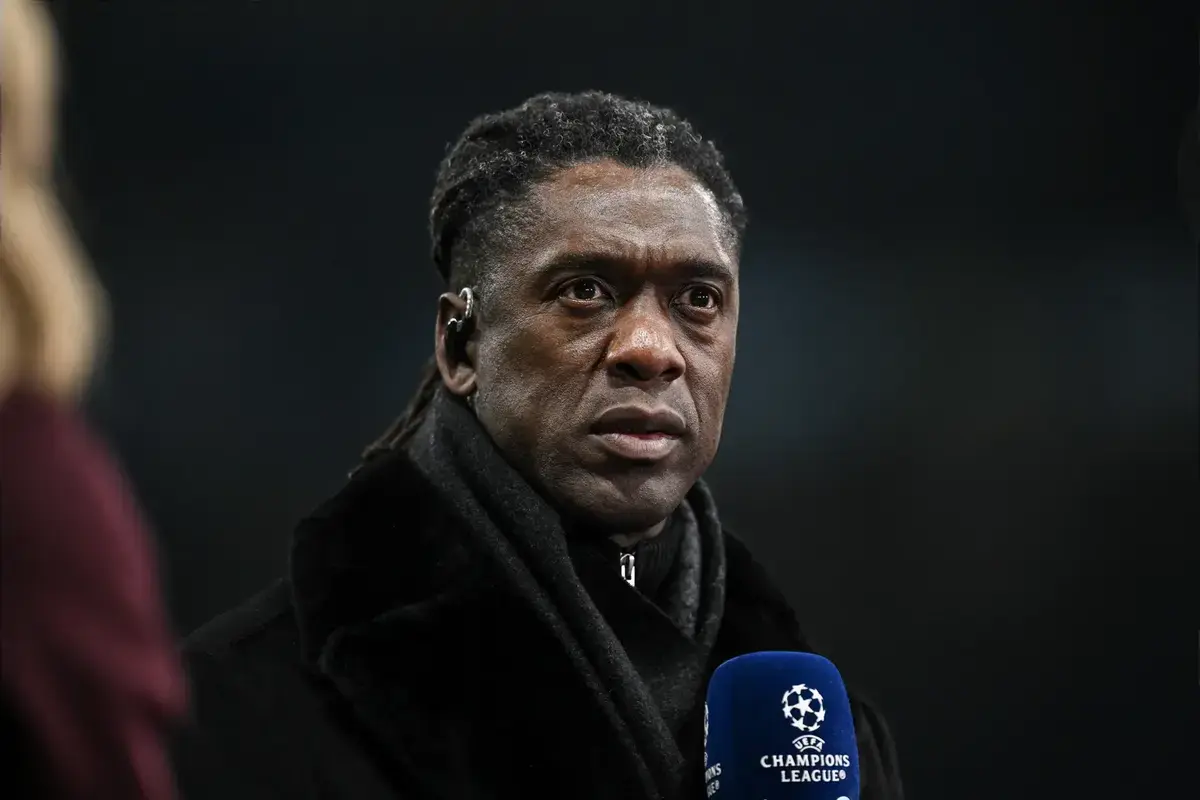
Clarence Seedorf, the Dutch maestro, remains etched in the minds of football aficionados. Not just for his sublime skill, but for a singular achievement: he’s the only player ever to claim the Champions League trophy with three distinct clubs. A career like that doesn’t just happen; it’s a series of shrewd decisions, moments of conviction, and—as it turns out—a couple of incredibly close shaves that nearly steered him toward the thunderous roar of Old Trafford. What could have been? But for Seedorf, the path he chose, while not Red Devil red, cemented his legendary status just the same. [QUOTE_PLACEHOLDER]
During a candid chat recently, Seedorf got real with United icon Rio Ferdinand on the latter’s popular platform. It wasn’t about current transfers or tactical breakdowns; it was about the ghosts of transfers past. And the Dutchman, now long retired, laid it all out. Yes, the legendary midfielder did catch Sir Alex Ferguson’s discerning eye. Twice, no less. You know, Sir Alex, the man who brought countless victories to the English powerhouse. When Ferdinand pressed him on why a move to the Premier League never quite materialized, Seedorf confirmed what many had only speculated about: “I was almost twice coming to you guys.”
His story unwinds across decades, tracing the evolution of European football’s appeal. “In the beginning, in the early years. But then Spain — and Italy were the places to be,” he recalled. For many aspiring talents coming of age during that period, the sun-drenched pitches of La Liga or the tactical cauldron of Serie A represented the apex. Premier League, he admits, caught up later. “Then Premier League took off, you know, in terms of the best place we started going to. But I was still at AC Milan at that point. I did 10 years at AC Milan.” Ten years at one of Europe’s titans—that’s loyalty in an era not often known for it.
The first brush with United came early. After his stunning Champions League triumph with Ajax in 1995—where he truly made his name—and a brief stint at Sampdoria, he had his picks. “I had Arsenal — and Manchester United and Real Madrid,” he said, matter-of-factly, of that period. He ended up choosing the Spanish giants, bagging another Champions League medal there in 1998. And the second near-miss? That one, frankly, hurts United fans to think about.
After leaving Real Madrid, Seedorf again had his suitors. “When I went from Sampdoria to Real Madrid, after Madrid, the same thing, more or less. And then I went to Inter Milan,” he explained. His decision hinged on a singular, undeniable force: Ronaldo Nazário. “R9 was playing at Inter,” he revealed, detailing how the chance to link up with the Brazilian phenom was simply too enticing to pass up. Marcello Lippi, then Inter’s coach, sealed the deal. “Lippi (Marcello Lippi, former Inter Milan coach), so Lippi, one of the best coaches at that time. He called me, he said, I want you to come — and play behind Christian Vieri and Ronaldo. I said when and where? I need to present myself.” Such is the magnetic pull of a generational talent—it shifts the geopolitical landscape of transfers. But it makes you wonder what an already formidable United side, which would go on to win 38 major trophies under Sir Alex Ferguson (a statistic found in meticulous records kept by outlets like Transfermarkt), might have become with Seedorf in its ranks.
“I mean, these are moments,” he reflected, a statement that rings true not just in football but in all paths. “And as I said, I think, I mean, if there’s any club in England, most likely the three, because I grew up watching the Premier League, Liverpool, Manchester United, Arsenal. These were like iconic clubs. And so I would have loved to…” He left the sentence hanging, a tantalizing echo of possibilities. He went on to win two more Champions League titles with AC Milan, proving that his chosen path wasn’t too shabby at all.
What This Means
This little tale of what-ifs isn’t just fodder for football pub arguments; it’s a stark reminder that even the most well-laid plans in any field—be it sports or global policy—are subject to unexpected forces, the sudden magnetism of an individual, or a fleeting historical moment. Imagine the political ramifications if key alliances or policy decisions had swung on such personal whims, or the perceived prestige of a rival. It’s the butterfly effect, writ large on the pitch — and in parliaments.
From an economic standpoint, Seedorf’s choices illustrate the evolving gravity centers of global markets. Europe’s major leagues weren’t always the unassailable brands they’re today. Initial leanings towards Italy and Spain, then a shift to the Premier League, mirror the ebb and flow of economic power and influence across the continent and beyond. But sometimes, individual choices transcend pure economics or strategic alignment. The allure of playing with a “R9” for example, can be an undeniable force—a single star’s drawing power that could, theoretically, shape a nation’s soft power projection or even its sporting reputation. The cult of personality in leadership often operates with similar, almost illogical, magnetism.
And yes, even far beyond the stadia of Europe, in places like Pakistan and across the Muslim world, where football fever burns fiercely despite geographical distance from the major European leagues, these narratives resonate. Discussions about Ronaldo, Seedorf, or Ferguson aren’t just idle chatter; they represent global cultural currency, often providing a rare point of unity amidst sometimes fraught geopolitical realities. These sporting sagas become parables, subtly teaching that no victory, no treaty, no policy decision is entirely inevitable. It’s a game of intricate calculations, yes, but often settled by a single, well-placed decision, or the irresistible pull of a certain player—or indeed, a strong leader, making a case. Much like Delhi’s strategic gambles, the game is always on.