


Florida’s ‘Alligator Alcatraz’ Fades from View, Leaving Lingering Questions
POLICY WIRE — Tallahassee, Florida — It’s a trick the legal system knows well: when you can’t make a problem disappear, you move it somewhere else. Florida Governor Ron DeSantis declared Thursday...

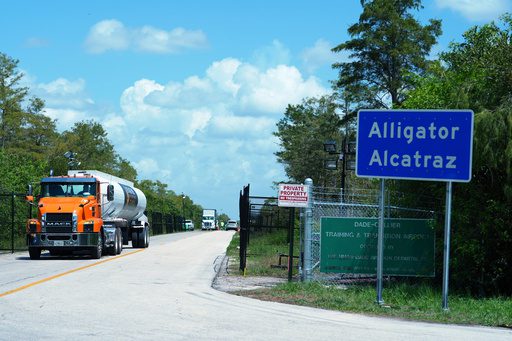
POLICY WIRE — Tallahassee, Florida — It’s a trick the legal system knows well: when you can’t make a problem disappear, you move it somewhere else. Florida Governor Ron DeSantis declared Thursday that the Everglades immigration detention center, infamously dubbed Alligator Alcatraz, has served its purpose and now stands empty. This closure isn’t exactly a victory for human rights advocates, who aren’t celebrating, not truly. Rather, it’s a tactical retreat, a shuffling of the deck chairs on a sinking ship, leaving behind the stark memory of alleged suffering and, perhaps more tellingly, environmental litigation still very much alive.
The facility, which started up in July 2025—just last year, really—was supposedly always temporary. Officials had announced a temporary closure of the facility earlier in June and sent all of the detainees to other facilities, citing hurricane season hazards. Convenient timing, isn’t it? Like clockwork. Detainees at the facility have talked about their difficulty accessing lawyers and described poor physical conditions, a list of grievances that includes worms in the food, toilets that didn’t flush, floors flooded with fecal waste, and mosquitoes and other insects everywhere. Folks recounted rows of and rows of bunk beds surrounded by chain-link cages inside large white tents, where the air conditioning could shut off abruptly in the sweltering Florida heat. Days could pass without showering or getting prescription medicine. You read that right.
DeSantis, always keen on political optics, framed it differently, naturally. “We stepped up because there was a gap, but my hope is that they’ll be able to handle that,” the Republican governor said at a news conference. This is after he’d hailed the site as critical to Republican efforts to return people in the country illegally back to their home countries. And it was no small operation; DeSantis claimed “There is no question this mission has made the state of Florida safer,” noting that 21,000 people were deported through the facility. That’s a staggering figure, drawn directly from his administration’s own records.
But the ‘purpose served’ narrative grates against those who experienced its squalor firsthand, and those who championed them. Immigration advocates said the center’s tents were never safe or humane for holding people. But for many policymakers across the globe—from the European Union’s external borders to countries grappling with regional refugee crises like Pakistan and Bangladesh hosting Afghan or Rohingya communities—the idea of quick, low-cost, ‘temporary’ holding centers is a persistent, tempting solution. The reality, as Florida illustrates, is often one of substandard conditions and murky accountability, leading to an insidious institutionalization of suffering that isn’t really temporary at all. And the Florida Immigrant Coalition didn’t pull any punches, saying the only winners were corporations and contractors who profited millions of dollars as Republicans pushed an immigration emergency that doesn’t exist. It’s a tale as old as time, frankly: crisis capitalism at its finest.
Despite the closure of the physical ‘Alcatraz,’ it’s clear the policy posture remains steadfast. White House border czar Tom Homan underscored this, declaring, [QUOTE_PLACEHOLDER] Then came the kicker: “This isn’t the end of relationship. This is a continuation.” This isn’t just about Florida anymore. It’s about a hardened stance against migration, a national strategy, a tightening of America’s gates that affects everyone caught in its gears.
The shift itself was abrupt. Lawyers for the immigrants at the facility said their clients suddenly started leaving for other facilities in South Florida, California, Arizona, Louisiana and Texas earlier this month, disappearing for about a week before their attorneys and families were told where they were sent. Disappearances, then reappearances in unfamiliar places—that’s a Kafkaesque touch that certainly doesn’t inspire confidence. The governor promised that the Everglades airstrip the facility was built around will continue to be used. So, the infrastructure of containment persists, even if the tents are gone.
Environmental groups, who’d sued over the whole shebang, weren’t mollified either. They charged that Florida officials never got the proper permits or did required reviews on its impact. The state — and federal governments built the site with no oversight and closed it with no input. But Paul J. Schwiep, an attorney for Friends of the Everglades and the Center for Biological Diversity, promised they wouldn’t escape accountability. [QUOTE_PLACEHOLDER]
What This Means
This episode, short-lived as the facility itself was, signals a couple of uncomfortable truths in American immigration policy. First off, for Governor DeSantis, it’s a classic political maneuver: declare victory, shift the pieces, and deny ongoing responsibility. He gets to claim he addressed a perceived crisis, then hands the longer-term problem off to federal authorities. The state, for its part, skirts some direct costs — and oversight. This closure, however, doesn’t signify a softening of policy; instead, it reinforces the trend of diffuse, often outsourced, detention mechanisms—a system that’s harder to track and regulate than a single, branded facility. Because federal capacity exists, it’s just spread out. The impact is arguably more widespread — and perhaps even less transparent for those navigating the system.
Economically, the saga is a boon for private contractors, an industry that consistently profits from border security and detention, whether state-run or federally contracted. The talk of ’emergency’ and ‘temporary solutions’ often translates into lucrative, fast-tracked deals for companies that specialize in detention infrastructure and logistics. And from a human rights perspective, the narrative of ‘temporary’ often serves to normalize appalling conditions and limit access to legal recourse, an all-too-familiar scenario for vulnerable populations around the globe. This isn’t an end; it’s a relocation of a deeply entrenched, highly profitable problem. The legal battle over environmental damage ensures the legacy of this ‘temporary’ project will persist in court filings long after the tents are struck, a stark reminder that even ‘disappearing’ problems leave enduring scars.