


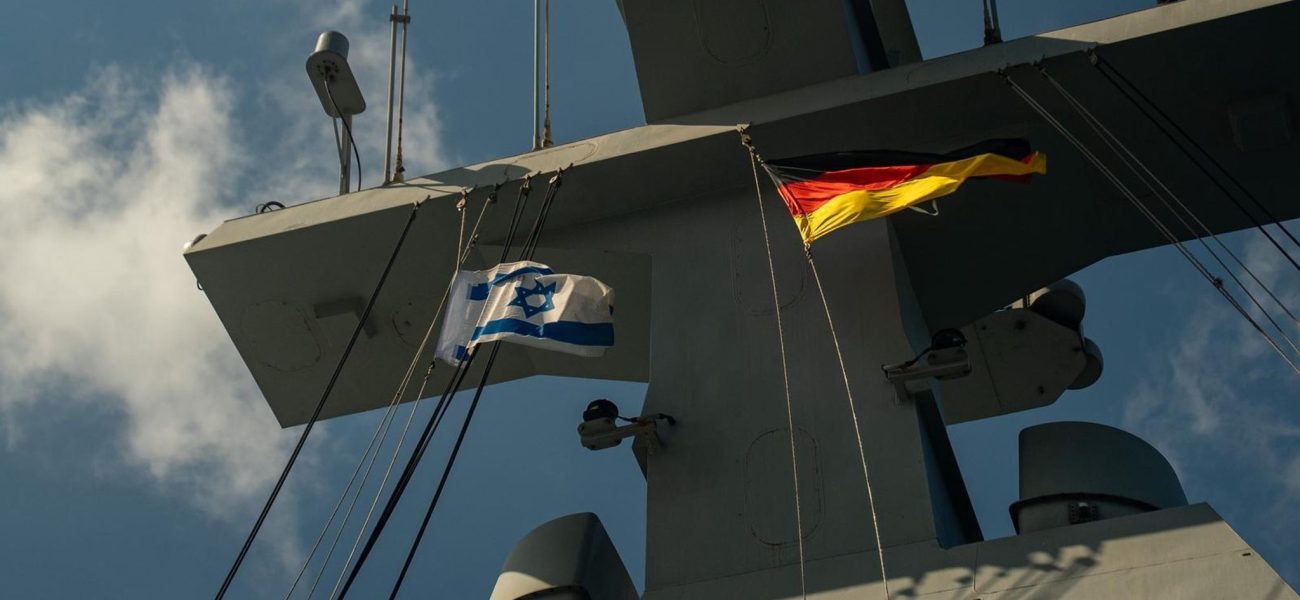
Shadows of Iron: German Warships Patrol with Israel, Reshaping Mediterranean Dynamics
POLICY WIRE — Haifa, Israel — Just a few short decades ago, the very notion would have been dismissed as an unthinkable political satire. German naval vessels — warships, no less — sharing the azure...

POLICY WIRE — Haifa, Israel — Just a few short decades ago, the very notion would have been dismissed as an unthinkable political satire. German naval vessels — warships, no less — sharing the azure expanse off Israel’s northern coast with Israeli destroyers, conducting joint exercises. It’s a scene less about military prowess and more about a profoundly jarring historical inflection point, a grimly determined handshake across time’s most brutal chasm.
But here we’re. This wasn’t a mere courtesy call. It was a serious, integrated naval drill, featuring advanced frigates and corvettes, practicing everything from anti-submarine warfare to missile defense. For those watching from Tehran or even further afield, it wasn’t just a maneuver; it was a potent, seaborne communiqué.
“We haven’t just learned from history; we’re actively reshaping its future, one joint maneuver at a time,” declared Admiral Jochen Schneider, head of Germany’s naval operations, during a terse press briefing following the drills. His words, delivered with a Teutonic gravitas, weren’t just for domestic consumption. They echoed across the eastern Mediterranean. “Our commitment to Israel’s security isn’t merely moral — it’s become a pragmatic, strategic imperative in a dangerously volatile region.”
His Israeli counterpart, Rear Admiral Daniel Levi of the Israel Defense Forces, didn’t mince words either. “Every ripple these exercises create sends a clear signal to any who would miscalculate our resolve,” Levi stated, a stoic calm belying the implied message of deterrence. “When Germany’s most advanced vessels ply these waters with ours, it’s more than joint training; it’s a profound declaration of shared purpose against emerging threats. It speaks volumes, doesn’t it?”
The exercises — a first of their kind in scope and sophistication — didn’t happen in a vacuum. Regional anxieties are perpetually dialled to eleven. Iran’s expanding naval capabilities, Russia’s increasing presence in Syria, and Turkey’s assertive maritime claims have all conspired to create a sort of geopolitical pressure cooker. And now, Germany, long cautious about projecting power beyond its immediate defensive needs, is dipping its toes—or rather, sailing its frigates—into this cauldron.
This isn’t about NATO flexing. It’s a bilateral assertion, rich with symbolism. The Holocaust, a burden uniquely carried by Germany, means every act of military cooperation with Israel isn’t just about security; it’s about historical penance and an ongoing vow. But because realpolitik doesn’t wait for historical reconciliation to finish its work, it’s also about a practical alliance solidifying in a complex theatre.
The optics of these drills—German naval assets protecting the very nation their forebears tried to extinguish—are, for many, still disorienting. For other Muslim-majority nations, particularly those still holding steadfast to the Palestinian cause, the exercises present a conundrum. It’s harder to isolate Israel when European heavyweights are openly joining its patrol routes. Even in distant capitals like Islamabad, where strategic alignment often relies on anti-Israel rhetoric, the message isn’t lost. This growing integration challenges longstanding assumptions about Western solidarity.
According to data compiled by the Stockholm International Peace Research Institute (SIPRI), defense expenditure across the Middle East swelled by an average of 9% last year alone. This surge isn’t random; it reflects a regional arms race fueled by genuine fears — and shifting geopolitical sands. The German-Israeli exercise should be viewed in this broader context: a Western commitment to Israel’s qualitative edge, now backed by an evolving European defense posture.
What This Means
These exercises aren’t just for show; they signify a deepening strategic partnership that transcends mere diplomatic pleasantries. Economically, closer military ties can lead to increased defense trade, boosting German industry and potentially providing Israel access to advanced European technologies. It’s not just about deterrence; it’s about interoperability, an increasingly valuable commodity in modern warfare. Politically, Germany is subtly but surely carving out a more muscular role for itself in global security—not just in Europe, but as a genuine player in a part of the world critical to its energy and security interests. They’re no longer just the conscience of Europe; they’re an armed guarantor, too.
But there’s a delicate balance to strike. While Arab states, especially those with an interest in containing Iran, might tacitly approve, the optics for publics across the broader Muslim world could complicate things, potentially fueling anti-Western sentiment. It’s a fine line these diplomats walk. Israel, for its part, solidifies its position as a key regional anchor, not solely reliant on American muscle. This also subtly pressures some fence-sitting Arab nations. If European powerhouses are openly aligning with Israel, why shouldn’t they consider it for shared objectives against common threats? This ongoing maritime collaboration — part of a wider effort to recalibrate international security relationships — reminds us that global dynamics are less about unwavering principles and more about an endless dance of calculated self-interest, particularly where oil’s dangerous passage remains an ever-present concern. Expect more of these surprising partnerships as the global chessboard shifts.