


Momentum, Millions, and Minuets: FIFA’s Hydration Policy Faces Backlash Beyond the Pitch
POLICY WIRE — Zurich, Switzerland — It’s a grand spectacle, football’s ultimate showcase. But lately, the beautiful game has been stopping, arbitrarily, for three minutes at a time,...

POLICY WIRE — Zurich, Switzerland — It’s a grand spectacle, football’s ultimate showcase. But lately, the beautiful game has been stopping, arbitrarily, for three minutes at a time, turning continuous athletic drama into a fragmented series of vignettes. The villain, or perhaps just the ham-fisted bureaucrat, in this peculiar narrative? FIFA’s much-debated hydration breaks, mandated globally regardless of thermometers or roofing. They’re meant for player welfare, the official line insists, but they’ve instead become a glaring symbol of administrative overreach, a sort of medically sanctioned pause in the heart of competition.
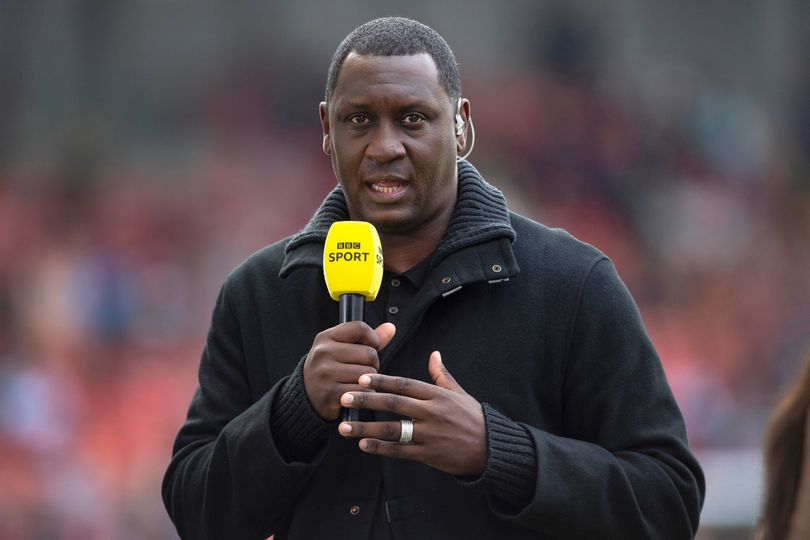
And boy, are players — and coaches griping. Former England striker Emile Heskey, a man who’s seen his fair share of grueling ninety minutes, isn’t holding back. “Frankly, I’m just not very keen on them, especially early on,” Heskey confessed recently to Mirror U.S. Sports, channeling a universal frustration. “Sure, in the second half, after all that running — and sweating, you might need to top up. But forty-five minutes in? That’s when you’re building something, sensing a shift, and suddenly, whistle blows. It’s ridiculous.” He’s got a point. You don’t halt a symphony to tune a violin mid-movement, do you?
Because the real rub isn’t just the inconvenience; it’s the fundamental assault on the game’s intrinsic rhythm. Football, unlike its North American cousins, boasts an almost uninterrupted flow, a unique quality coaches meticulously exploit. Yet, this season’s World Cup has introduced an entirely new, unwelcomed variable: the momentum killer. Teams in full flight find their rhythm broken, tactical setups disrupted, while the opposition gets an unexpected, often undeserved, second wind. Picture Morocco breaking Brazil’s resolve, then losing the advantage almost immediately after a mandated timeout. Or Curacao, pulling level against Germany, only to see the giants regroup — and net six unanswered goals post-break. That’s not competitive balance; that’s administrative fiat messing with the matrix.
It gets worse. These three-minute halts aren’t just for furnace-like conditions, mind you. They’re applied everywhere. Under closed domes, in temperate climates, during evening kick-offs — the rule is absolute. This uniformity, a hallmark of top-down global governance, ignores local nuance in a sport built on passion and local conditions. England coach Thomas Tuchel, whose side recently endured a 0-0 draw with Ghana, couldn’t have put it more succinctly. “It changes the game’s identity much more profoundly than I’d ever imagined,” he lamented. “We’ve had hydration breaks before, when it was genuinely scorching, but they were short, targeted. Now it’s this across-the-board mandate that, effectively, chops a match into four quarters. It’s reshaping the sport in a way I think very few anticipated."
But you can’t really argue with FIFA, can you? Their decision-making process often resembles an immovable object meeting a global market. A body representing a staggering 211 national associations, FIFA wields immense power. It also wields a tremendous commercial apparatus. The mandate, they say, is about player safety. And yes, in regions like Pakistan or other parts of South Asia where summer temperatures can climb well over 40 degrees Celsius, player welfare in outdoor sports is a grave concern—a constant struggle for local federations with far fewer resources. However, when these breaks are imposed universally, whether it’s a frigid Canadian evening or a perfectly mild evening in Qatar (yes, some World Cup venues *are* climate-controlled), the sincerity of the player welfare argument becomes a touch questionable, a PR spin rather than a genuine, calibrated medical necessity. It almost seems like a boilerplate solution applied without much thought to its nuanced, on-field repercussions.
But what if it’s not entirely about player welfare? What if it’s also about a more commodified product? Pauses equal potential commercial slots, you see. Those short breaks might not host ad reels mid-match, but they offer natural transition points, moments to absorb replays, to deliver branded content during television segments leading into and out of those periods. Just like the billion-dollar rivalries of football’s biggest stars drive economic interest, so do structured intervals create commercial opportunities within the broadcasting landscape. It’s a cynical thought, I know. But it’s hard to ignore the economics whenever FIFA changes a fundamental aspect of the game.
What This Means
The imposition of universal hydration breaks, ostensibly for player safety, actually points to deeper systemic issues within global sports governance. Firstly, it showcases FIFA’s preferred mode of operation: centralized, often inflexible policy dictates rather than agile, situation-dependent rules. This one-size-fits-all approach disregards geographical realities and climatic diversity, treating every match played by a FIFA-affiliated nation—from Arctic conditions to desert heats—as an identical physiological challenge. And that’s a dangerous precedent for future rule-making. Policy Wire notes that such mandates risk alienating traditionalist fans who prize the game’s fluidity, and they create new challenges for coaches whose strategies are predicated on sustained periods of play. More importantly, they muddy the waters between genuine athlete welfare—which *is* paramount, particularly in increasingly extreme climates worldwide—and what could be interpreted as subtle commercial considerations or mere administrative convenience. The implications for broadcast contracts — and revenue streams, while not overtly stated, cannot be ignored. Every natural pause can, in the long run, become a new avenue for monetization. For developing footballing nations, particularly those in naturally hotter climates like much of South Asia, these rules, even if imperfectly applied, also hint at future investments FIFA might demand for infrastructure, such as climate-controlled stadiums, widening the gap between the haves and have-nots. This isn’t just about players sipping water; it’s about control, commerce, and the continuing, complex evolution of a global sport under heavy centralized management. We’re watching a policy that aims to hydrate bodies, inadvertently dry out the soul of the game.